 ML
Millard Fillmore White House Library
@FillmoreWhite · X
@somewhat22 @AJRuecker @EvoIutlon Anatomy is closely studied. Very few guesses in science. https://t.co/9479FRLP9V
Jul 4, 2023 · 2 likes · 2,739 followers
View post →
Mentions
Extended reach
Total likes
Video views
AI synopsis
The group generally agrees that the study provides solid fossil evidence supporting whale evolution from early terrestrial mammals, exemplified by comments referencing specific fossils like Ambulocetus and Rodhocetus. However, some posts express skepticism by highlighting inconsistencies or claiming the study oversimplifies genetic data, demonstrating a mix of support and critical engagement driven by scientific curiosity and debate.
Most discussions acknowledge the study as credible and consistent with scientific views on whale evolution, citing specific fossil evidence and referencing the scientific publication.
The discussions show high interest, with users debating implications, questioning credibility, and referencing genetic sequencing and fossil details.
Comments involve detailed analysis of fossil evidence, mentioning bones, morphology, and evolutionary processes, indicating moderate but meaningful engagement.
The discussions revolve around fundamental questions of evolutionary history, suggesting it has a noticeable influence on understanding whale origins and scientific discourse.
@somewhat22 @AJRuecker @EvoIutlon Anatomy is closely studied. Very few guesses in science. https://t.co/9479FRLP9V
@studyrodrigo https://t.co/TvtvtkzJaO toma o estudo revisado por pares mostrando que as baleias LITERALMENTE vieram de um mamífero terrestre que, por sua vez, evoluiu de um mamífero aquático. Quem será que tem mais credibilidade, a SCIENCE, confirmando DARWIN, ou o Rodrigo "Tesla"?
@Thousand335 @JimSichko - 2001 skeleton: Confirmed it was semi-aquatic (heavy limbs for wading, like a hippo. (https://t.co/xEfPW3A6XJ). 2.Ambulocetus(49MYA): Full skeleton found: Webbed feet, aquatic spine, but still could walk. 3. Rodhocetus(47MYA):- Reduced hind limbs, tail for swimming.
@Jesus_is_G_d @bubbacav85 @TertiusIII @TakeThatEpi @carlsmythe @tighe15 @StandBackUp2 @commonsensejan @michellmybell1 @rmbctious @ReviewResist @donholtmac @Cern_lXXl @Loriniowa @TedPerkins10 @LeannEAF @umfpt @Schmoop0521 @andyguy @MaryVMos1 @tklforgiven @geraldpayne25 @surgerysleeper @rorylane @rafearia @the_godparticle @RLBays @zythophiliac @feyeleanor @alan244g @phyzayo @funkydoolah @ScientiaPercept @2Cents69 @Mwforhr @omeagoz @Denbar64 @CollinOctantis @Kopernikus1966 @bobcat7000 @paulr140 @Pamiekp @TiSeven2 @CATGOD20 @delology @SteveTiger999 @amateurexegete Gingerich, Philip D., Munir ul Haq, Iyad S. Zalmout, Intizar Hussain Khan, & M. Sadiq Malkani. 2001. “Origin of Whales from Early Artiodactyls: Hands and Feet of Eocene Protocetidae from Pakistan.” Science 293 (21 September): 2239-2242.
Dr. Gish quit galloping when he read this paper. Origin of whales from early artiodactyls: hands and feet of Eocene Protocetidae from Pakistan - PubMed https://t.co/E9fPknqo8P
@BBPGangsta @am45_001 @NotEvolution1 "no leg or hand bones" We have the hands and legs, which are discussed in a paper from 2001. (though pictures are in the supplementary material) Make me think it's them lying. https://t.co/MibekYVvin https://t.co/9rqEQaEdZG They also seem to ignore genetic sequencing. https://t.co/SLeUVxfAZt
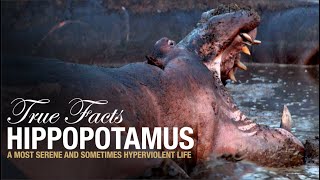
The sweat of the hippopotamus begins as a colorless viscous liquid and quickly transitions to red and brown due to pigment polymerization. This video explores the fascinating pigments responsible for this color change…

Amazing facts about the wall of China, including its history, length, and significance as a tourist attraction. Discover the details behind this iconic structure and its influence on Chinese culture.
RT @_gxbrieu_: @studyrodrigo https://t.co/TvtvtkzJaO toma o estudo revisado por pares mostrando que as baleias LITERALMENTE vieram de um ma…
@studyrodrigo https://t.co/TvtvtkzJaO toma o estudo revisado por pares mostrando que as baleias LITERALMENTE vieram de um mamífero terrestre que, por sua vez, evoluiu de um mamífero aquático. Quem será que tem mais credibilidade, a SCIENCE, confirmando DARWIN, ou o Rodrigo "Tesla"?
@BBPGangsta @am45_001 @NotEvolution1 "no leg or hand bones" We have the hands and legs, which are discussed in a paper from 2001. (though pictures are in the supplementary material) Make me think it's them lying. https://t.co/MibekYVvin https://t.co/9rqEQaEdZG They also seem to ignore genetic sequencing. https://t.co/SLeUVxfAZt
@Thousand335 @JimSichko - 2001 skeleton: Confirmed it was semi-aquatic (heavy limbs for wading, like a hippo. (https://t.co/xEfPW3A6XJ). 2.Ambulocetus(49MYA): Full skeleton found: Webbed feet, aquatic spine, but still could walk. 3. Rodhocetus(47MYA):- Reduced hind limbs, tail for swimming.
Dr. Gish quit galloping when he read this paper. Origin of whales from early artiodactyls: hands and feet of Eocene Protocetidae from Pakistan - PubMed https://t.co/E9fPknqo8P
@somewhat22 @AJRuecker @EvoIutlon Anatomy is closely studied. Very few guesses in science. https://t.co/9479FRLP9V
https://www.youtube.com/watch?v=6pibJ83crQs
@_yakhmak @BlueJakk آفرین یخمک جان دقیقا استخونهای اضافه از پاهای عقبی و دستها باقی مونده چه دقت زیبایی کردی "Origin of Whales from Early Artiodactyls: Hands and Feet of Eocene Protocetidae from Pakistan | Science" https://t.co/R6JpviCZVk
@Jesus_is_G_d @bubbacav85 @TertiusIII @TakeThatEpi @carlsmythe @tighe15 @StandBackUp2 @commonsensejan @michellmybell1 @rmbctious @ReviewResist @donholtmac @Cern_lXXl @Loriniowa @TedPerkins10 @LeannEAF @umfpt @Schmoop0521 @andyguy @MaryVMos1 @tklforgiven @geraldpayne25 @surgerysleeper @rorylane @rafearia @the_godparticle @RLBays @zythophiliac @feyeleanor @alan244g @phyzayo @funkydoolah @ScientiaPercept @2Cents69 @Mwforhr @omeagoz @Denbar64 @CollinOctantis @Kopernikus1966 @bobcat7000 @paulr140 @Pamiekp @TiSeven2 @CATGOD20 @delology @SteveTiger999 @amateurexegete Gingerich, Philip D., Munir ul Haq, Iyad S. Zalmout, Intizar Hussain Khan, & M. Sadiq Malkani. 2001. “Origin of Whales from Early Artiodactyls: Hands and Feet of Eocene Protocetidae from Pakistan.” Science 293 (21 September): 2239-2242.
 G
 A
 RD
 T
 CB
 MS