The overall tone reflects mild skepticism and curiosity, exemplified by comments like shifts in enzyme processing and neurogenesis improvements, using phrases such as 'Why not promote' or referencing potential benefits for Alzheimer's, which signals tentative engagement and interest but no strong consensus or deep impact perceived.
AgreementLow agreement
Most discussions seem skeptical or dismissive about the relevance or implications of the publication, especially with remarks questioning the practical benefits, such as 'Why not promote a shift'.
InterestModerate interest
The posts show moderate interest, focusing on specific biochemical processes like gamma-secretase activity and its relation to neurological functions, indicating curiosity but not deep engagement.
EngagementNeutral engagement
The conversations are somewhat superficial, mainly linking to broader issues like Alzheimer's disease and neurogenesis without detailed analysis of the classification of cannabinoid receptors.
ImpactNeutral impact
The discussions suggest limited perception of immediate impact, mostly exploring theoretical or potential implications rather than concrete applications or significant breakthroughs.
Abstract in brief
Two main types of cannabinoid receptors have been identified: CB1, primarily found in the central nervous system, and CB2, mostly located on immune cells, with both sharing significant amino acid sequence similarity but differing in signaling and tissue distribution.
CB1 receptors are involved in inhibiting neurotransmitter release in neurons and are coupled to G proteins that regulate various ion channels and enzymes, while CB2 receptors influence immune responses and cytokine release.
Endogenous compounds like arachidonoylethanolamide and 2-arachidonoylglycerol activate these receptors, but it's uncertain if they are the only natural ligands, and research is ongoing to discover additional receptor types or ligands.
@KarlHerrup @_keliu_ @amangalmurti Why not promote a shift in γ-secretase substrate processing to favor processing of Notch-1 over APP? Up-regulating Notch-1 signaling with a parallel reduction in APP processing might restore neurogenesis and cognition in AD. Laughter is the best medicine. https://t.co/4BIFcZOveR
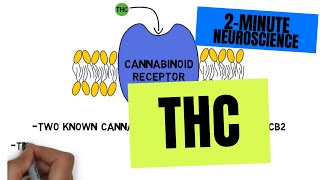
THC is the main psychoactive component of cannabis and affects the nervous system by acting as a partial agonist at CB1 receptors, causing intoxication and therapeutic effects. It remains controversial due to potential…
THC is the main psychoactive component of cannabis, affecting the brain by binding to CB1 receptors. Its effects include euphoria, sedation, increased appetite, and impaired cognition. This video explains THC's role and…
@KarlHerrup @_keliu_ @amangalmurti Why not promote a shift in γ-secretase substrate processing to favor processing of Notch-1 over APP? Up-regulating Notch-1 signaling with a parallel reduction in APP processing might restore neurogenesis and cognition in AD. Laughter is the best medicine. https://t.co/4BIFcZOveR
Lack of Tolerance to Δ9-Tetrahydrocannabinol in Chimpanzees ...
News
https://doi.org/10.1124/pr.54.2.161 · Crossref. Neil T. Smith,. A review of the published literature into cannabis withdrawal symptoms in human users, Addiction ...
 T