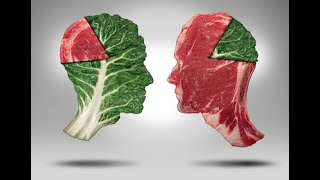
This collection of discussions reflects curiosity about the plant's chemical signaling and its similarities to pain responses, exemplified by phrases like 'pain in plants' and 'alarm response,' which highlight interest and engagement based on the analogy and scientific concepts. The tone is exploratory, emphasizing biological processes without overstating immediate impact.
AgreementModerate agreement
Most posts agree that plant responses, such as ethylene emission, are complex and somewhat resemble biological warning systems.
InterestModerate interest
Participants show moderate interest in understanding plant defense mechanisms and their parallels to animal responses.
EngagementModerate engagement
Posts engage with the idea by discussing the biological processes and implications, such as the potential for pain-like responses in plants.
ImpactNeutral impact
The discussion recognizes the scientific importance but does not suggest immediate practical applications or profound societal impact.
Abstract in brief
Exposure to Tetranychus urticae-induced volatiles triggers the activation of genes involved in ethylene biosynthesis in neighboring lima bean plants, leading to the emission of ethylene.
Both actual T. urticae infestation and artificial wounding also increase ethylene production, but levels of polyamines from SAM do not significantly change, indicating limited polyamine involvement at the metabolic level.
The study suggests that ethylene production is regulated by signaling pathways involving jasmonates (JA), salicylates (SA), and ethylene itself, with JA accumulating in volatile-exposed leaves and both JA and SA increasing in infested leaves.
@TizzyisTizzy There is an argument for something akin to pain in plants, just not classical animal nocioception. So threat>cascade of internal chemical processes>defensive response and/or something akin to an alarm response in certain species.
https://t.co/Vg2z8axz7Y
https://t.co/nVc2MW1Bnh
Recent discoveries reveal an intricate, seemingly global plant network that may function as a collective plant 'mind'. This groundbreaking research uncovers complex interactions among plants above and below ground…
This video explores whether humans can or should eat meat from any animal, discussing dietary restrictions, ethical considerations, and scientific insights into plant communication and plant nervous systems that deepen…
@TizzyisTizzy There is an argument for something akin to pain in plants, just not classical animal nocioception. So threat>cascade of internal chemical processes>defensive response and/or something akin to an alarm response in certain species.
https://t.co/Vg2z8axz7Y
https://t.co/nVc2MW1Bnh
 PT
PT