The discussions demonstrate a moderate level of interest and engagement, with comments referencing the links between tusk presence, cranial features, and sex differences, showing curiosity about the social and evolutionary implications of the research. The tone is analytical but not overly enthusiastic, reflecting a balanced appreciation of the study’s significance.
AgreementModerate agreement
Several discussions support the significance of Diictodon’s sexual dimorphism, especially in the context of evolutionary history, showing moderate agreement on its importance.
InterestModerate interest
The topic is acknowledged as fascinating, with comments highlighting curiosity about ancient behaviors and biological features.
EngagementModerate engagement
Discussions include references to related debates and further exploration of the features, which indicates some depth and active engagement.
ImpactNeutral impact
While the findings are seen as interesting, many acknowledge their importance but do not see immediate, widespread impact beyond academic circles.
Abstract in brief
Diictodon, an ancient Permian herbivorous dicynodont, is notable for being the earliest known example of sexual dimorphism in armaments, mainly through the presence or absence of tusks.
The study of Diictodon's anatomy and distribution shows that tusk presence is linked to other features like cranial bosses and possibly larger skull size, indicating differences between sexes.
This evidence suggests that sexual dimorphism and related social behaviors have been a part of synapsid evolution for a very long time, dating back to the Palaeozoic era.
@TwitiGalli Also relevant are possibly sexually dimorphic and/or display features on the heads. In life such features might have been colourful and exaggerated. A review of sexual dimorphism in dicynodonts is in: https://t.co/b2qnYURDr5
Sexual dimorphism in diictodon: https://t.co/aeAQputXHJ
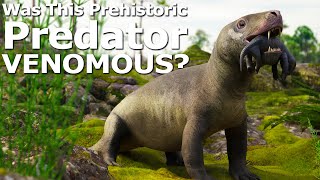
The extraordinary Euchambersia, an ancient relative of mammals, might have had a deadly venomous bite. Join us as we explore evidence of this remarkable creature in South Africa and discuss its significance in…
Diictodon, a Permian herbivorous dicynodont, represents the earliest known sexual dimorphism, mainly through tusks. Despite being vulnerable, it achieved significant evolutionary success before extinction during the…
@TwitiGalli Also relevant are possibly sexually dimorphic and/or display features on the heads. In life such features might have been colourful and exaggerated. A review of sexual dimorphism in dicynodonts is in: https://t.co/b2qnYURDr5
Sexual dimorphism in diictodon: https://t.co/aeAQputXHJ
 HG