Discussions show appreciation for the study’s longevity and relevance, with examples like mentions of it being '~20 years' old yet still being a reference point, and users stating they 'still go back to it' for guidance. The tone reflects respect for its simplicity and enduring value, demonstrating moderate engagement and perceived impact.
AgreementModerate agreement
Most comments acknowledge the study's foundational significance, with some explicitly stating they revisit the research or its findings, reflecting general agreement.
InterestHigh interest
Discussions demonstrate high interest, as posters highlight the relevance of the study to current practice and personal routines.
EngagementModerate engagement
Comments include reflections on the study's methods and implications, indicating thoughtful engagement rather than superficial mentions.
ImpactModerate impact
While not universally emphasized, some posters suggest the study's insights continue to influence training approaches and scientific understanding, signifying moderate impact.
Abstract in brief
This study examined how different work durations in self-paced interval running affect physiological responses like VO2 max, heart rate, perceived exertion, and blood lactate levels in well-trained runners, finding that longer intervals (up to 6 minutes) generally lead to higher physiological strain but perceived exertion remains consistent around 17 on the RPE scale.
Runners achieved their highest VO2 and heart rate during 4-minute intervals, suggesting that this duration might be optimal for maximizing physiological load without increasing perceived effort.
Despite increases in perceived exertion during sessions, blood lactate levels remained similar across all interval durations, indicating that perceived effort does not directly correlate with lactate accumulation in this context.]
It is ~20 years since this simple descriptive study of physiological and perceptual responses to different HIT prescriptions was published, but I still go back to it myself: https://t.co/t3bcXN5sWb
Dec 3, 2023 · 44 likes · 3 shares · 33,277 followersView post →
VG
Vern Gambetta
@coachgambetta · X
RT @StephenSeiler: It is ~20 years since this simple descriptive study of physiological and perceptual responses to different HIT prescript…
Dec 3, 2023 · 3 shares · 26,942 followersView post →
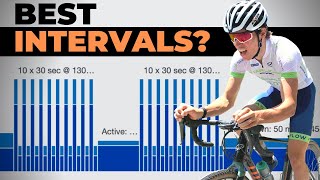
This video explores the most effective high-intensity intervals for cyclists. It details optimal timings, intensities, and rest periods for short interval training, which has shown to markedly improve performance…
High-Intensity Interval Training (HIIT) involves short bursts of intense exercise followed by rest, offering significant health and performance benefits. This video traces HIIT's history from the 1920s and explores its…
It is ~20 years since this simple descriptive study of physiological and perceptual responses to different HIT prescriptions was published, but I still go back to it myself: https://t.co/t3bcXN5sWb
Dec 3, 2023 · 44 likes · 3 shares · 33,277 followersView post →
 SS
 VG

 PK