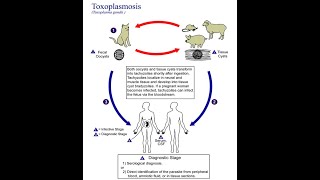
The discussions reflect a recognition of the parasite's remarkable specificity in altering rodent behavior, exemplified by references to evolutionary solutions and biological mechanisms, with phrases like 'clever solution' and mention of brain areas like the amygdala. The tone combines scientific interest with curiosity, especially in relation to the broader implications for understanding host-parasite interactions and neurological effects.
AgreementModerate agreement
Most discussions acknowledge the specificity of Toxoplasma's effects on rodent behavior, indicating general agreement with the study's findings.
InterestModerate interest
Several posts show curiosity about the mechanisms or implications, demonstrating moderate interest.
EngagementHigh engagement
Many participants engage deeply by referencing related concepts, mechanisms, or extending the discussion beyond surface-level reactions.
ImpactModerate impact
The discussions highlight the significance of the study in understanding behavioral manipulation by parasites, suggesting a modest but meaningful impact.
Abstract in brief
Toxoplasma gondii infection in rodents specifically changes their behavior by making them attracted to cat odors, which could increase their chances of being eaten by cats, helping the parasite reproduce.
The study shows that this change is highly targeted, affecting only the rodents' innate fear of cats without impacting other types of fear, anxiety, or learning behaviors, indicating a precise manipulation by the parasite.
These behavioral changes are linked to the parasite's preference for infecting certain brain areas like the amygdala, supporting the idea that Toxoplasma actively manipulates host behavior to enhance its own transmission.
トキソプラズマによってラットはネコ尿を忌避する行動を変容し,尿の臭いにフェロモンのように引きつけるようになる。こわ!
Behavioral changes induced by Toxoplasma infection of rodents are highly specific to aversion of cat odors
https://t.co/qnqnQMgcRH
May 21, 2021 · 31 likes · 13 shares · 15,949 followersView post →
P
PSBaker
@PSBaker10 · X
@NikkiDJohnson @whyamihere_sara @Gab_H_R Maybe Dave’s being jocular, but there’s a good point here … some diseases affect behaviour to enhance spread. E.g. Toxocara alters mouse behaviour making it more likely to be predated and hence spread it. Who knows what C19 might alter in the brain?
https://t.co/UBm9mzHtV3
3. A few million years of evolution led to a clever ‘solution’ – infect and modulate the rat’s amgydala.
The host rat's newfound propensity for fearlessness increases the chances of entering the cat’s GI tract.
https://t.co/pDZRdX1s1Q
@patriciaczora @LCalabreseDO @loscharlos If I understand correctly, the study you mention is about mice and parasites (Toxoplasma gondii). Whereas the neurological damage caused to humans by COVID, while considerable, is not the same:
https://t.co/x4BMOv127h
Nov 25, 2022 · 1 like · 1,541 followersView post →
R
Ross
@GutOptimized · X
Nerd section (for those wanting to dive deep)
https://t.co/ZjWYZQQs3X
https://t.co/WXagxPXOPi
https://t.co/Nktzx12qKx
https://t.co/LC8kzYnYme
https://t.co/tKjq0zmaW6
https://t.co/Fd0glGDD8M
https://t.co/8rEV4ZYqIa
https://t.co/5Cwv5ESpCK
https://t.co/WXagxPXOPi
Toxoplasmosis infects about 33% of the global population and is linked to increased risks of mental health issues like schizophrenia, autism, and anxiety. This video explores how latent infections may influence mental…
When mice are infected with a parasite from cat feces, their fear of cats turns into a fatal attraction, demonstrating behavioral changes induced by Toxoplasma gondii.
This lecture discusses the significant threat posed by free-ranging domestic cats, which are responsible for billions of wildlife deaths annually. Un-owned cats have a particularly devastating effect, necessitating…
3. A few million years of evolution led to a clever ‘solution’ – infect and modulate the rat’s amgydala.
The host rat's newfound propensity for fearlessness increases the chances of entering the cat’s GI tract.
https://t.co/pDZRdX1s1Q
トキソプラズマ
"The protozoan parasite Toxoplasma gondii blocks the innate aversion of rats for cat urine, instead producing an attraction to the pheromone"
https://t.co/qULns7Hq3D
https://t.co/iSTZJpv5Ah
https://t.co/w7X4Npk4UJ https://t.co/MQffZArYek https://t.co/F26iZgKIaI
@patriciaczora @LCalabreseDO @loscharlos If I understand correctly, the study you mention is about mice and parasites (Toxoplasma gondii). Whereas the neurological damage caused to humans by COVID, while considerable, is not the same:
https://t.co/x4BMOv127h
Nov 25, 2022 · 1 like · 1,541 followersView post →
PT
Pat Taggart
@PLTaggart · X
The parasite Toxoplasma is well-known for manipulating the behaviour of its host
https://t.co/uG6eMwMCq7
2/6
@NikkiDJohnson @whyamihere_sara @Gab_H_R Maybe Dave’s being jocular, but there’s a good point here … some diseases affect behaviour to enhance spread. E.g. Toxocara alters mouse behaviour making it more likely to be predated and hence spread it. Who knows what C19 might alter in the brain?
https://t.co/UBm9mzHtV3
@CM_Pina Engineering microbes to sense and eradicate Pseudomonas aeruginosa, a human pathogen
Behavioral changes induced by Toxoplasma infection of rodents are highly specific to aversion of cat odors
RT @konamih: トキソプラズマによってラットはネコ尿を忌避する行動を変容し,尿の臭いにフェロモンのように引きつけるようになる。こわ!
Behavioral changes induced by Toxoplasma infection of rodents are h…
May 21, 2021 · 13 shares · 371 followersView post →
S
syuhuhaha
@syuhuhaha · X
RT @konamih: トキソプラズマによってラットはネコ尿を忌避する行動を変容し,尿の臭いにフェロモンのように引きつけるようになる。こわ!
Behavioral changes induced by Toxoplasma infection of rodents are h…
May 21, 2021 · 13 shares · 988 followersView post →
北野
北斗柄@野巫の六壬者
@hokutohei · X
RT @konamih: トキソプラズマによってラットはネコ尿を忌避する行動を変容し,尿の臭いにフェロモンのように引きつけるようになる。こわ!
Behavioral changes induced by Toxoplasma infection of rodents are h…
May 21, 2021 · 13 shares · 1,164 followersView post →
Y
Yamanami
@yamanamitakeshi · X
RT @konamih: トキソプラズマによってラットはネコ尿を忌避する行動を変容し,尿の臭いにフェロモンのように引きつけるようになる。こわ!
Behavioral changes induced by Toxoplasma infection of rodents are h…
May 21, 2021 · 13 shares · 928 followersView post →
PK
p_Kater
@p_Kater · X
RT @konamih: トキソプラズマによってラットはネコ尿を忌避する行動を変容し,尿の臭いにフェロモンのように引きつけるようになる。こわ!
Behavioral changes induced by Toxoplasma infection of rodents are h…
May 21, 2021 · 13 shares · 444 followersView post →
み宇
みーや★ #宇宙機アクセサリー
@NS944A · X
RT @konamih: トキソプラズマによってラットはネコ尿を忌避する行動を変容し,尿の臭いにフェロモンのように引きつけるようになる。こわ!
Behavioral changes induced by Toxoplasma infection of rodents are h…
May 21, 2021 · 13 shares · 2,653 followersView post →
こ
こっぱ
@gyaroon · X
RT @konamih: トキソプラズマによってラットはネコ尿を忌避する行動を変容し,尿の臭いにフェロモンのように引きつけるようになる。こわ!
Behavioral changes induced by Toxoplasma infection of rodents are h…
May 21, 2021 · 13 shares · 480 followersView post →
千
千葉
@moto_chi_ba · X
RT @konamih: トキソプラズマによってラットはネコ尿を忌避する行動を変容し,尿の臭いにフェロモンのように引きつけるようになる。こわ!
Behavioral changes induced by Toxoplasma infection of rodents are h…
May 21, 2021 · 13 shares · 1,158 followersView post →
MO
Masato ONOUE
@9w9w9w9 · X
RT @konamih: トキソプラズマによってラットはネコ尿を忌避する行動を変容し,尿の臭いにフェロモンのように引きつけるようになる。こわ!
Behavioral changes induced by Toxoplasma infection of rodents are h…
May 21, 2021 · 13 shares · 728 followersView post →
G
Glu
@goo3_tm · X
RT @konamih: トキソプラズマによってラットはネコ尿を忌避する行動を変容し,尿の臭いにフェロモンのように引きつけるようになる。こわ!
Behavioral changes induced by Toxoplasma infection of rodents are h…
May 21, 2021 · 13 shares · 221 followersView post →
こ
こなみひでお
@konamih · X
トキソプラズマによってラットはネコ尿を忌避する行動を変容し,尿の臭いにフェロモンのように引きつけるようになる。こわ!
Behavioral changes induced by Toxoplasma infection of rodents are highly specific to aversion of cat odors
https://t.co/qnqnQMgcRH
May 21, 2021 · 31 likes · 13 shares · 15,949 followersView post →