Participants acknowledge that the study questions long-held beliefs about hip strength's influence on knee movement, with comments like 'the idea might not be valid,' indicating critical reflection. The tone suggests curiosity and a desire to re-examine assumptions, but without strong emotional or motivational language, reflecting moderate engagement and interest.
AgreementModerate agreement
Most discussions agree that the study challenges the common assumption that hip strength directly influences knee movement during lunges.
InterestModerate interest
Participants show moderate interest, engaging with the topic by questioning traditional beliefs and considering alternative factors.
EngagementModerate engagement
Responses include critical analysis and some referencing of the research, indicating a moderate level of thoughtful engagement.
ImpactNeutral impact
The publication may influence future research directions but currently has limited immediate practical impact according to the responses.
Abstract in brief
The study examined whether hip muscle strength influences frontal plane knee movement (valgus or varus) during a forward lunge, which is relevant because excessive knee movement may lead to injuries in tennis players.
Results showed no significant relationship between hip strength and knee movement, indicating that factors like proprioception or core stability might play a more critical role in controlling knee motion.
A moderate positive correlation was found in the varus group between the external-to-internal rotation force ratio and knee varus movement, but overall, hip muscle strength was not a strong predictor of knee movement during lunges.
"Therefore, the idea that the strength of the muscles around the hip is related to the amount of knee movement into valgus or varus during movements such as a forward lunge might not be valid in healthy individuals."
https://t.co/hdfSixVXfK
Oct 20, 2022 · 21 likes · 2 shares · 17,390 followersView post →
NW
Nate Wong
@alliseeisgolf · X
RT @E3Rehab: "Therefore, the idea that the strength of the muscles around the hip is related to the amount of knee movement into valgus or…
Oct 20, 2022 · 2 shares · 911 followersView post →
This systematic review examines the link between hip muscle strength and knee valgus during movement in asymptomatic females, highlighting that weaker hip muscles may be associated with increased knee inward movement…
The video explores the biomechanical alteration known as dynamic knee valgus, characterized by medial deviation of the knee during activities with weight bearing. It discusses the potential link between hip muscle…
RT @E3Rehab: "Therefore, the idea that the strength of the muscles around the hip is related to the amount of knee movement into valgus or…
Oct 20, 2022 · 2 shares · 911 followersView post →
ER
E3Rehab
@E3Rehab · X
"Therefore, the idea that the strength of the muscles around the hip is related to the amount of knee movement into valgus or varus during movements such as a forward lunge might not be valid in healthy individuals."
https://t.co/hdfSixVXfK
Oct 20, 2022 · 21 likes · 2 shares · 17,390 followersView post →
N
Muscle Activity and Flexibility in Individuals With Medial Knee ...
News
10.1136/bjsm.2007.037374. > CrossrefGoogle Scholar; 35.Heiderscheit BC. Lower extremity injuries: is it just about hip strength?J Orthop ...
 ER
ER NW
NW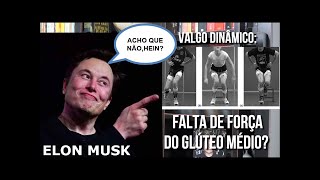

 MS
MS