Michael Hobbes
@michaelhobbes.bsky.social · Bluesky
This guy's videos are so cool https://www.youtube.com/watch?v=cUIRhGIbszw
Aug 6, 2023 · 124 likes · 31 shares
View post →
Mentions
Extended reach
Total likes
Video views
AI synopsis
The overall discussions show strong enthusiasm for the fossil's importance, with statements like 'amazing piece of info' and 'so cool,' highlighting excitement about the scientific implications. Posts referencing the fossil's age and features, such as '28 to 34 million years old' and 'morphological features,' reflect deep interest and contribute to a recognition of its potential impact on understanding bird evolution.
Most posts express enthusiasm and support for the significance of the fossil discovery and its implications for hummingbird evolution.
Posts exhibit high interest, with multiple references to the fossil's age, features, and relevance to evolutionary biology.
Some posts demonstrate deeper engagement through mentions of related concepts like migration, evolutionary processes, and specific aspects of the fossil, indicating active thinking.
The discussions suggest the discovery adds meaningful insights to understanding hummingbird evolution, though they are more exploratory than groundbreaking.
This guy's videos are so cool https://www.youtube.com/watch?v=cUIRhGIbszw
Ce fossile, trouvé en France, dans le Luberon, dans les années 70 mais publié en 2008, est vieux de 28 à 34 millions d'années. Il appartient au genre Eurotrochilus. https://t.co/YWKFhRr4mf https://t.co/pL2vc5WZNJ
Hummingbirds: A brief natural history: https://t.co/Y9pKsmAZ5t
never knew i had so much in common with hummingbirds (excrete my entire body weight in pee every day) https://www.youtube.com/watch?v=cUIRhGIbszw
https://t.co/YD6NsoDiXT This has an amazing piece of info in it about Hummingbirds on the European Landmass
RT @VincentReneleau: Ce fossile, trouvé en France, dans le Luberon, dans les années 70 mais publié en 2008, est vieux de 28 à 34 millions d…

Today Hummingbirds are only found in North and South America, but a fossil discovered in southern Germany dates back over 30 million years and is the oldest known hummingbird fossil. The study highlights an…
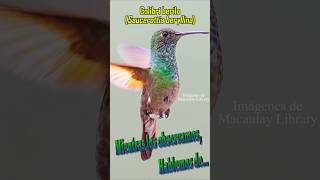
This study describes an exceptionally well-preserved fossil hummingbird from the early Oligocene period in southeastern France, belonging to the genus Eurotrochilus, a stem group related to modern hummingbirds. The…
Open your eyes https://t.co/uAwqXjpRsR
RT @VincentReneleau: Ce fossile, trouvé en France, dans le Luberon, dans les années 70 mais publié en 2008, est vieux de 28 à 34 millions d…
RT @VincentReneleau: Ce fossile, trouvé en France, dans le Luberon, dans les années 70 mais publié en 2008, est vieux de 28 à 34 millions d…
Ce fossile, trouvé en France, dans le Luberon, dans les années 70 mais publié en 2008, est vieux de 28 à 34 millions d'années. Il appartient au genre Eurotrochilus. https://t.co/YWKFhRr4mf https://t.co/pL2vc5WZNJ
never knew i had so much in common with hummingbirds (excrete my entire body weight in pee every day) https://www.youtube.com/watch?v=cUIRhGIbszw
This guy's videos are so cool https://www.youtube.com/watch?v=cUIRhGIbszw
@CamilaCMillan https://t.co/Oo5HYwrmgp https://t.co/J2cZl9ITk9
https://t.co/YD6NsoDiXT This has an amazing piece of info in it about Hummingbirds on the European Landmass
Moth Light is my fav thing about Youtube (i've a really anal interest in evolutionary biology). This is his best piece. I love Hummingbirds https://t.co/ScSknBZfMx
The Evolution of Hummingbirds https://t.co/wO5CHNOfq7 via @YouTube
The Evolution of Hummingbirds https://t.co/Z7KCs0lplM via @YouTube
The Evolution of Hummingbirds https://t.co/EQLDbRJNCK via @YouTube
The Evolution of Hummingbirds https://t.co/T4ut01ovgy #birds #hummingbirds #evolution #science
https://t.co/a8pNJhV9Ck
Hummingbirds: A brief natural history: https://t.co/Y9pKsmAZ5t
 VR
VR C
C RB
RB