The discussions show a high level of interest, with comments like 'It's absolutely fascinating' and plans to review the material over the weekend, indicating genuine curiosity. The tone is academically engaged, referencing specific authors and studies, which reflects recognition of the article's significance and its potential influence on understanding societal biases.
AgreementModerate agreement
Most discussions support the relevance and importance of the article, with phrases like 'absolutely fascinating' and references to the study as a key resource.
InterestHigh interest
The discussions demonstrate high curiosity about the research, with students mentioning they plan to explore it further or find it compelling.
EngagementModerate engagement
Participants actively engage with the topic, sharing summaries and personal reactions, indicating thoughtful consideration.
ImpactModerate impact
The articles and comments suggest the discussion influences academic perspectives and personal viewpoints on societal dehumanization.
Abstract in brief
This article discusses how, despite the decline of explicit racist imagery, many Americans still subconsciously associate Black people with apes, which influences their perceptions and judgments.
Through experiments and analysis of news reports, the researchers show that this implicit association affects people’s visual perception, attention, and even their likelihood of supporting violence and executions of Black suspects.
The study emphasizes that understanding these subtle, historical representations and biases can help us better recognize ongoing forms of discrimination and improve efforts to address dehumanization in society.]
Today in research methods we're talking about content analysis, using this study by Philip Goff et al. as a case study:
Not Yet Human: Implicit Knowledge, Historical Dehumanization, and Contemporary Consequences
It's absolutely fascinating.
Full text: https://t.co/auf2WgibC5 https://t.co/dQCh0au9mT
@The_LS_Project @Dialoguealways @hjvinke @LackingSaint @ames_jane @kflogan @SpeaksAngie @KWintie @MattJCrowley @down_w_lcc @EmericanJohnson I am fine with disadvantaged groups who seek to reclaim a term for themselves, whether or not I personally think its a good idea (I think it depends). I made a video that goes into this more (please avoid the comment section). https://t.co/7JjqxxFIFZ
Mar 5, 2019 · 3 likes · 9,307 followersView post →
DG
DEI-lusional Gooner
@jonomilo · X
Not Yet Human: Implicit Knowledge, Historical Dehumanization, and Contemporary Consequences [PDF Version] https://t.co/6x0sE8DCV4
Jun 14, 2023 · 1 like · 3,212 followersView post →
KP
Katie Pekel
@KatiePekel · X
GOFF, EBERHARDT, WILLIAMS, AND JACKSON (2009) "Not yet human: Implicit knowledge, historical dehumanization, and contemporary consequences"
Available:https://t.co/eKW0Ttcubr @crsl_institute @SchoolEquityPro
for 4/ : See Phillip A. Goff et al., Not Yet Human: Implicit Knowledge, Historical Dehumanization, and Contemporary Consequences, 94 J. PERSONALITY & SOC. PSYCHOL. 292, 304 (2008)
Απο το "Not yet human: implicit knowledge, historical dehumanization, and contemporary consequences" Phillip Goof - Jennifer Eberhardt-Melissa Williams- Matthew Jackson
People have an incredible capacity to view others as less than human. This video explores how dehumanization manifests, its psychological roots, and its influence on perceptions and behavior, including biases against…
This video explores how implicit racist associations still influence perceptions, judgments, and violence toward Black individuals. It highlights the importance of recognizing subtle biases and their societal…
Today in research methods we're talking about content analysis, using this study by Philip Goff et al. as a case study:
Not Yet Human: Implicit Knowledge, Historical Dehumanization, and Contemporary Consequences
It's absolutely fascinating.
Full text: https://t.co/auf2WgibC5 https://t.co/dQCh0au9mT
for 4/ : See Phillip A. Goff et al., Not Yet Human: Implicit Knowledge, Historical Dehumanization, and Contemporary Consequences, 94 J. PERSONALITY & SOC. PSYCHOL. 292, 304 (2008)
Απο το "Not yet human: implicit knowledge, historical dehumanization, and contemporary consequences" Phillip Goof - Jennifer Eberhardt-Melissa Williams- Matthew Jackson
@CuriousnTT @naterocks500 @Brad05234588 @RantingF It really really is easy to tell. Here. Go into the comment section of this video, which I did try to manage for a while, and see if you can Columbo your way to a conclusion. https://t.co/vG4OZQSs5D
@The_LS_Project @Dialoguealways @hjvinke @LackingSaint @ames_jane @kflogan @SpeaksAngie @KWintie @MattJCrowley @down_w_lcc @EmericanJohnson I am fine with disadvantaged groups who seek to reclaim a term for themselves, whether or not I personally think its a good idea (I think it depends). I made a video that goes into this more (please avoid the comment section). https://t.co/7JjqxxFIFZ
Mar 5, 2019 · 3 likes · 9,307 followersView post →
 JN
JN DG
DG KP
KP PS
PS E
E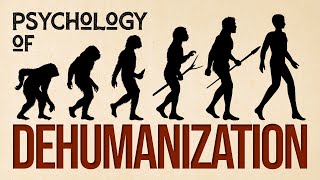

 ZH
ZH RE
RE GF
GF