The collection shows a broad range of responses centered on the method of using radiocarbon dating of lens crystallines and its implications. Some posts highlight the stability of lens proteins and compare to dental enamel, signaling intact turnover data. Others swing toward tangential topics like Greenland sharks or memes, with occasional online remarks that mildly engage with the science. Overall, discussion reads as exploratory and casual, with pockets of direct reference to the paper, but little critical debate or depth of analysis about its broader implications.
AgreementNeither agree nor disagree
Overall mixed to neutral stance. Several posts acknowledge the method and findings without opposing them, while others are unrelated or joking, showing no strong agreement or disagreement about the article itself.
InterestNeutral interest
Moderate to low; some posts show curiosity or mention potential implications, but many reactions are tangential or casual.
EngagementNeutral engagement
Low to moderate engagement; a few posts reference the method or paper directly, but several are memes or off-topic discussions, indicating surface-level engagement.
ImpactNeutral impact
Low potential immediate impact on the article's scientific conclusions; discussions mainly share interest or entertain rather than challenge or apply the findings.
Abstract in brief
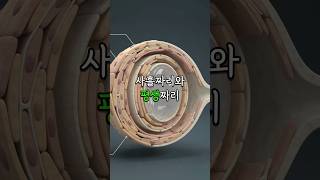
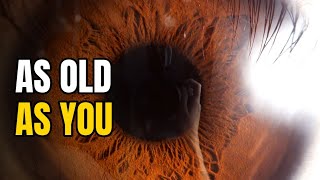
Radiocarbon dating of human eye lens proteins shows that lens crystallines do not undergo turnover or remodeling after formation, essentially capturing biographical data from birth.
The study uses atmospheric 14C levels, especially the bomb pulse from nuclear testing post-World War II, to accurately date when lens proteins were formed, revealing most crystallines are formed around birth with minimal ongoing formation.
This permanence of lens proteins is similar to dental enamel, highlighting that some human tissues can remain unchanged throughout life despite continuous physical deformation, and such 14C analysis can help assess tissue turnover in other organs like the brain.]
The lens proteins called "crystallines" are formed as an embryo and don't get "turned over" or recycled like every other protein in your body.
That means they contain the exact ratio of isotopes of carbon that reflect the environment in which you were born.
journals.plos.org/plosone/arti...
The linked paper on C-14 dating of lens crystallin proteins that, like dental enamel, stay stable for a lifetime & are resistant to decomposition is itself a riveting read. (More recently, lens lipids (sphingomyelin) have proved similarly competent) https://t.co/eg5mKUqhYV
The Greenland shark can grow over 500 cm and has an exceptionally long lifespan, potentially exceeding 272 years. This video explores the biological intricacies and conservation importance of this remarkable species.
Radiocarbon dating of human eye lens proteins reveals that lens crystallines do not undergo turnover after formation, capturing biographical data from birth, and providing insights into the permanence of certain human…
Radiocarbon dating reveals human lens crystallines form around birth and largely remain unchanged, capturing life history data. The method uses bomb-pulse 14C to date protein formation, highlighting tissue permanence…
Greenland sharks are long-lived animals inhabiting cold North Atlantic waters. Their slow growth and unique environmental adaptations are affected by factors like nuclear testing, which helps scientists estimate their…
As we approach Shark Week 2024, this compilation revisits my 2023 videos. It covers the fascinating findings about Cenozoic megatooth sharks, revealing their extremely high trophic positions in marine food chains. Join…
A hypnic jerk is a common, usually harmless sleep transition. The brainstem toggles muscles as you drift to sleep, sometimes causing a sudden body jolt. Causes may include caffeine, stress, or fatigue, with uncertain…
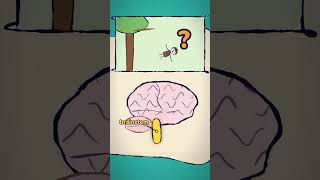
Many cells are ancient, some never replaced. Dating cells with bomb-pulse carbon shows brain neurons and eye lens core often predate life milestones, contradicting the 7-year body turnover idea.
Presbyopia begins early in life as the lens ages. The video explains how lens proteins and aging affect near vision, with references to foundational studies on the eye and aging.
New studies show infant memory exists earlier than once believed, with brain imaging indicating hippocampal activity predicting later recognition. The video discusses how early memories may persist.
About 1% of cells turn over daily, yet many tissues maintain a long-term identity. Neurons and lens proteins often preserve birth-era marks, while other tissues renew at different rates.
Lens crystallin core proteins encode birth year via atmospheric 14C from mid-20th-century nuclear tests. The method, used post-mortem, has precision limits and ongoing debates on dating accuracy.
Core lens proteins capture carbon-14 signatures from the bomb pulse, enabling birth-year dating. The lens core forms at birth and is not renewed, providing a biomarker for life history.
Tracing a carbon atom from birth to death shows how atoms persist beyond life. The talk covers cremation, burial, and how some molecules may travel through time in surprising ways.
The lens center houses long-lived proteins that age with you, contributing to presbyopia. The video links this to deep aging mechanisms in the lens and cites key studies.
14C dating shows that cortical neurons age with you, while many tissues renew rapidly. Explore how carbon-14 in DNA marks cell birth and why the brain’s cortex and eye lens differ in age.
Explains how autophagy maintains cellular and organismal balance, and how its disruption worsens conditions; links autophagy dysfunction to cancer, heart disease, and neurodegenerative disorders, with emphasis on…
New evidence shows adult human hearts renew cardiomyocytes, with turnover declining from ~1%/year at 25 to ~0.45% at 75, and less than half of heart cells exchanged in a lifetime. Explore implications for therapy to…
No. The carbon-14 spike from 1950s–60s nuclear tests lets scientists date cells. Neurons in the cortex are as old as you are; gut lining renews in days; and other tissues show distinct turnover patterns.
6:27 Talk about a successful evolutionary cuntism with terrible optics - literally. Oof, that is narsty.
The Insane Biology of: The Greenland Shark https://t.co/vHheIQToMQ via @YouTube
The lens proteins called "crystallines" are formed as an embryo and don't get "turned over" or recycled like every other protein in your body.
That means they contain the exact ratio of isotopes of carbon that reflect the environment in which you were born.
journals.plos.org/plosone/arti...
@eyoismos @OfeliaLamensky @AMAZlNGNATURE Yes, see this paper which explains how the method was validated with lenses from humans of known age (deceased as you would imagine)
https://t.co/1hfIlUGRmJ
Maybe one day we can age prehistoric creatures with a similar method. I wonder what other ways to date can be possible that have yet to be discovered or innovated.
https://t.co/xJGK9Dr9ZO
The linked paper on C-14 dating of lens crystallin proteins that, like dental enamel, stay stable for a lifetime & are resistant to decomposition is itself a riveting read. (More recently, lens lipids (sphingomyelin) have proved similarly competent) https://t.co/eg5mKUqhYV
A fascinating method to determine the human (or shark) age from carbon-14 content in eye lenses: https://t.co/M3oQa2UAqF
and https://t.co/BB4W5Fxxys
@NewYorker @PLOSONE @PLOS #Greenland #shark #crystallin
 CR
 PX
 ?
 TS








 TS
 AB
 MT
 S
 P
 N
 A
 X
 TG
 PB