John P. Friel, Ph.D.
@friel.bsky.social · Bluesky
Fish Fact of the Day.
Jun 17, 2023 · 22 likes · 5 shares
View post →
Mentions
Extended reach
Total likes
Video views
AI synopsis
The discussions reflect a positive reception to the article's emphasis on social signaling, with phrases like 'evolution favors visibility for communication' and critiques pointing out that colour changes are responses to environmental stimuli, not manipulated images, indicating an overall interest and moderate engagement with the research's implications.
Most discussions acknowledge the research supports the idea that chameleon colour change is mainly for social signaling, reflecting general agreement with the publication's findings.
Posts demonstrate high interest, with mentions of social signals, mating, and territorial displays indicating engagement with the topic.
Some posts engage critically with the content or provide additional context, such as clarifying how colour changes are responses to temperature or displays, showing a modest depth of engagement.
The discussions suggest moderate perceived impact, mainly emphasizing the importance of social signaling in evolution and clarifying misconceptions about camouflage.
Fish Fact of the Day.
@elnarrador @Metalgalamoth @plexaleOK Este video está manipulado digitalmente. Los camaleones no funcionan así: sus cambios de color son respuestas a la temperatura o señales de exhibiciones territoriales o de apareamiento. Un ejemplo: https://t.co/Sn30Lhlpw5

The chameleon sand tilefish can quickly change its color thanks to specialized iridophores. This rapid shift from blue to red involves reorganization of reflecting platelets controlled by adrenergic signals, providing…
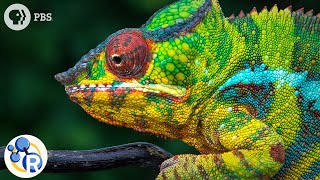
This video explores the chemistry behind chameleon color-changing abilities and advances in artificial camouflage technology using nanotechnology to achieve rapid, full-spectrum color changes for dynamic background…
Fish Fact of the Day.
26/28 5. Stuart-Fox, D., & Moussalli, A. (2008). Selection for social signalling drives the evolution of Chameleon Colour Change. PLoS Biology, 6(1). https://t.co/l8BWAbrLRx
@elnarrador @Metalgalamoth @plexaleOK Este video está manipulado digitalmente. Los camaleones no funcionan así: sus cambios de color son respuestas a la temperatura o señales de exhibiciones territoriales o de apareamiento. Un ejemplo: https://t.co/Sn30Lhlpw5
 JM
JM CC
CC