The overall sentiment reflects a high level of interest and engagement, with comments referencing specific trials, statistical debates, and systematic reviews, such as the mention of the Orange Farm study and questions about p-values. The tone varies from supportive to analytical, emphasizing the significance and complexities of the research's implications for public health strategies.
AgreementModerate agreement
Most discussions acknowledge the findings of the meta-analysis, referencing its significance in HIV prevention strategies, though some pose critical questions about statistical interpretations.
InterestHigh interest
The discussions demonstrate high interest by participants referencing specific studies, statistics, and related research, indicating engagement with the topic's implications.
EngagementModerate engagement
Participants delve into methodologic debates, such as p-value significance and systematic reviews, showing thoughtful analysis and deeper engagement beyond surface-level reactions.
ImpactModerate impact
The social discussions highlight potential policy influence and public health implications, recognizing the importance of male circumcision in HIV prevention as a notable impact.
Abstract in brief
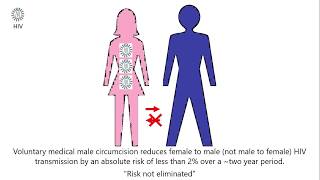
This meta-analysis of three randomized controlled trials involving 11,050 men found that male circumcision significantly reduces the risk of heterosexually acquired HIV infection, with a relative risk of 0.44, meaning circumcised men are less than half as likely to acquire HIV compared to uncircumcised men.
The studies showed that approximately 1 in 72 men need to be circumcised to prevent one new HIV infection, highlighting its potential as an effective prevention strategy.
While male circumcision can significantly lower HIV risk, maintaining safe sexual practices is essential to ensure its protective benefits at the population level.
@LLopezGonzalez @HSRCza #HVTN702 annual male rate of HIV infection, 1%, was lower than 1.8% of control population (18-24 years) in @agenceANRS 1265 trial Orange Farm, South Africa, ~15 years ago.
https://t.co/0e4coCdw5e
@PeterKilmarx @Witmapanga If the gold standard is a meta‐analysis of randomized trials, then:
1) https://t.co/0e4coCdw5e - 56%
2) https://t.co/H20iATaZQZ - 54%
Do you agree with the American Statistical Association position on the p-value?
https://t.co/notdlHASWI
Also, https://t.co/ZwwSLh7BEh
@docmmapris @Witmapanga @TheLancet Apologies if my earlier tweet was unclear https://t.co/0sifG6I3QF
For female-to-male HIV transmission these are the kind of systematic reviews available
1) https://t.co/0e4coCdw5e
2) https://t.co/H20iATaZQZ
For male-to-female HIV transmission, as of Nov 2019 there do not exist.
@Holofernes334 @youness1_9 @ItsMoha07 @letocardducoin Male circumcision for the prevention of heterosexually acquired HIV infection: a meta-analysis of randomized trials involving 11,050 men
This meta-analysis of three randomized controlled trials involving 11,050 men found that male circumcision significantly reduces the risk of heterosexually acquired HIV infection, with a relative risk of 0.44, meaning…
An overview of scientific evidence on whether voluntary medical male circumcision reduces heterosexually acquired HIV transmission, supported by a meta-analysis of randomized trials involving over 11,000 men.
@Holofernes334 @youness1_9 @ItsMoha07 @letocardducoin Male circumcision for the prevention of heterosexually acquired HIV infection: a meta-analysis of randomized trials involving 11,050 men
@LLopezGonzalez @HSRCza #HVTN702 annual male rate of HIV infection, 1%, was lower than 1.8% of control population (18-24 years) in @agenceANRS 1265 trial Orange Farm, South Africa, ~15 years ago.
https://t.co/0e4coCdw5e
@PeterKilmarx @Witmapanga If the gold standard is a meta‐analysis of randomized trials, then:
1) https://t.co/0e4coCdw5e - 56%
2) https://t.co/H20iATaZQZ - 54%
Do you agree with the American Statistical Association position on the p-value?
https://t.co/notdlHASWI
Also, https://t.co/ZwwSLh7BEh
@docmmapris @Witmapanga @TheLancet Apologies if my earlier tweet was unclear https://t.co/0sifG6I3QF
For female-to-male HIV transmission these are the kind of systematic reviews available
1) https://t.co/0e4coCdw5e
2) https://t.co/H20iATaZQZ
For male-to-female HIV transmission, as of Nov 2019 there do not exist.
 GM
GM A
A