Discussions highlight different perspectives about the study, with some users questioning the logic of the evolutionary pathways based on terms like 'contradictions' and 'too many contradictions,' while others emphasize the significance of the findings, calling it a 'game changer' for understanding human evolution. The tone varies from skeptical to intrigued, which reflects the nuanced reception of the publication’s conclusions.
AgreementNeither agree nor disagree
The discussions reflect mixed views, with some challenging the article’s conclusions while others acknowledge its significance, leading to a neutral agreement score.
InterestModerate interest
There is moderate interest, as some posts delve into technical details and implications, but others show more casual engagement.
EngagementModerate engagement
Several posts engage with specific aspects of the research, such as the independence of wrist features, indicating a moderate level of thoughtful discussion.
ImpactModerate impact
While the topic sparks interest and critical debate, it does not seem to cause widespread or transformative shifts in opinions yet.
Abstract in brief
The study shows that the wrist features previously thought to indicate knucklewalking are not consistent across all African apes and are also found in non-knucklewalking primates, suggesting these features are not reliable indicators of locomotor behavior.
Data reveals that different species of African apes have developed these wrist features independently, supporting the idea of two separate evolutionary paths: one for arboreal knucklewalking involving an extended wrist, and another for terrestrial knucklewalking with a columnar hand posture, especially in gorillas.
The findings imply that the wrist features observed in humans are more likely linked to arboreal activity rather than terrestrial knucklewalking, indicating that human bipedalism probably evolved from an ancestor that was adapted to life in the trees.]
@Paleosculpts Miocene Hominins showed very comfortable adaptations for bipedalism still:
https://t.co/9WsnZ2kzWQ
And on the independent evolution of knuckle walking (knuckle-> bipedal transition doesn’t make sense and has too many contradictions in short):
https://t.co/o2jPi5012l
Oct 24, 2022 · 12 likes · 1 share · 5,897 followersView post →
ぽ
ぽこやん
@yokota_tayoko14 · X
Kivell and Schmitt (2009) PNAS
ゴリラとチンパンジーでは手根骨の形に違いがあり、knuckle-walkingの際の手根骨どうしの角度や関節の安定性が異なるという内容。
ゴリラとチンパンジーでは別々にknuckle-walkingを獲得したことを示唆している。
https://t.co/NbPR1iqsU6
May 13, 2022 · 8 likes · 1 share · 538 followersView post →
AK
Andrew Kern
@pastramimachine · X
@guerruhroh @3rdreviewer yep, but differently. e.g. https://t.co/Mcgol90xQ9
RT @Midiaou7: @Paleosculpts Miocene Hominins showed very comfortable adaptations for bipedalism still:
https://t.co/9WsnZ2kzWQ
And on the…
Oct 24, 2022 · 1 share · 2,589 followersView post →
AF
A. Fukuhara
@fukufuku_7 · X
RT @yokota_tayoko14: Kivell and Schmitt (2009) PNAS
ゴリラとチンパンジーでは手根骨の形に違いがあり、knuckle-walkingの際の手根骨どうしの角度や関節の安定性が異なるという内容。
ゴリラとチンパンジーでは別々にkn…
May 13, 2022 · 1 share · 1,096 followersView post →
AW
Arnold Wandago
@ArnoldWandago · X
@engineers_feed Kivell, T. L., & Schmitt, D. (2009). Independent evolution of knuckle-walking in African apes shows that humans did not evolve from a knuckle-walking ancestor. Proceedings of the National Academy of Sciences, 106(34), 14241-14246. https://t.co/jwyYTeusxY https://t.co/JjxpuZXgKP
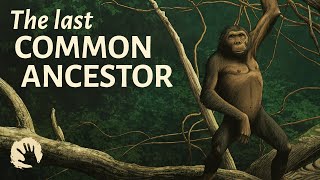
Did we evolve from a knuckle-walking ape? This video explores the debate surrounding human ancestry with insights from Professor DeSilva. Using recent research, we delve into the implications of new findings on the…
This video examines misconceptions about Australopithecus afarensis, focusing on misrepresented fossil evidence and flawed interpretations, aiming to clarify scientific understanding of early bipedal gait biomechanics.
The study shows that wrist features previously thought to indicate knucklewalking are not consistent across all African apes and are also found in non-knucklewalking primates, suggesting these features are not reliable…
This video explores a significant finding of a Denisovan mandible from Pleistocene Taiwan, expanding the understanding of Denisovan distribution in ancient Asia. The mandible, dating between 10,000 to 190,000 years ago…
@engineers_feed Kivell, T. L., & Schmitt, D. (2009). Independent evolution of knuckle-walking in African apes shows that humans did not evolve from a knuckle-walking ancestor. Proceedings of the National Academy of Sciences, 106(34), 14241-14246. https://t.co/jwyYTeusxY https://t.co/JjxpuZXgKP
RT @Midiaou7: @Paleosculpts Miocene Hominins showed very comfortable adaptations for bipedalism still:
https://t.co/9WsnZ2kzWQ
And on the…
Oct 24, 2022 · 1 share · 2,589 followersView post →
M
MD
@Midiaou7 · X
@Paleosculpts Miocene Hominins showed very comfortable adaptations for bipedalism still:
https://t.co/9WsnZ2kzWQ
And on the independent evolution of knuckle walking (knuckle-> bipedal transition doesn’t make sense and has too many contradictions in short):
https://t.co/o2jPi5012l
Oct 24, 2022 · 12 likes · 1 share · 5,897 followersView post →
AF
A. Fukuhara
@fukufuku_7 · X
RT @yokota_tayoko14: Kivell and Schmitt (2009) PNAS
ゴリラとチンパンジーでは手根骨の形に違いがあり、knuckle-walkingの際の手根骨どうしの角度や関節の安定性が異なるという内容。
ゴリラとチンパンジーでは別々にkn…
May 13, 2022 · 1 share · 1,096 followersView post →
ぽ
ぽこやん
@yokota_tayoko14 · X
Kivell and Schmitt (2009) PNAS
ゴリラとチンパンジーでは手根骨の形に違いがあり、knuckle-walkingの際の手根骨どうしの角度や関節の安定性が異なるという内容。
ゴリラとチンパンジーでは別々にknuckle-walkingを獲得したことを示唆している。
https://t.co/NbPR1iqsU6
May 13, 2022 · 8 likes · 1 share · 538 followersView post →
 M
 ぽ
 AK
 SA
 AF
 AW