@MiddeldorpS @AntoniousAttall @Almanfi_Cardio @Babar_Basir @bkolskk @heartdoc101 @ifarooqMD @DrAmirKaki @matheenkhuddus @ZekeMD @jaygirimd @vikasaggarwalmd @PERTConsortium May be you'd like to review AHA scientific consensus statement here? https://t.co/aHenuMrdNM
Management of massive and submassive pulmonary embolism, iliofemoral deep vein thrombosis, and chronic thromboembolic pulmonary hypertension: a scientific statement from the American Heart Association.
Mentions
Extended reach
Total likes
Video views
Mentions per month
Apr 2017 – May 2019Where it's discussed
-
YouTube2 videos
-
X / Twitter1 posts
AI synopsis
What people are saying
The overall tone reflects a moderate but meaningful engagement, with examples like urging colleagues to review the statement and referencing its guidance on managing complex VTE cases, indicating recognition of its significance without overwhelming emotional language. The tone remains professional yet inquisitive, emphasizing practical implications and collaborative discussion.
Most discussions endorse the importance of the scientific statement, with some emphasizing the need for tailored treatment decisions.
Participants show moderate interest, with some prompting others to review the consensus and referencing the relevance to clinical practice.
Posts engage with the content by asking for reviews, suggesting implementation, or referencing specific authors, indicating thoughtful involvement.
The discussions highlight the publication's role in informing clinical guidelines and decision-making, suggesting an appreciable impact on practice.
Abstract in brief
- The scientific statement discusses the management of severe forms of venous thromboembolism (VTE), including massive and submassive pulmonary embolism, iliofemoral deep vein thrombosis, and chronic thromboembolic pulmonary hypertension, highlighting the need for practical guidelines amid limited data on some advanced treatments.
- It emphasizes that while evidence-based guidelines exist for acute and chronic VTE, clinicians often face situations where optimal treatment strategies, especially involving thrombolysis and catheter-based interventions, remain uncertain; thus, individualized decision-making is crucial.
- The document aims to help healthcare providers make informed treatment choices considering patient preferences, quality of life, age, and other health conditions, recognizing that management should be tailored to each patient's specific circumstances.]
Top posts
Most liked on X and BlueskyAll mentions
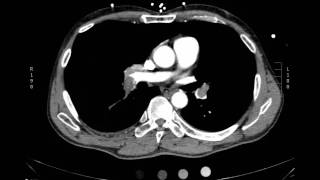
Management of Massive Pulmonary Embolism and Right Heart Strain Using CT Imaging
This video discusses a case of acute massive pulmonary embolism with right heart strain, highlighting the importance of CT imaging, bedside ultrasound, and emergent thrombolytic therapy to improve patient outcomes in…
Management of Massive Pulmonary Embolism with Right Heart Strain
A 63-year-old male with massive pulmonary embolism and right heart strain requires emergent thrombolytic therapy. This case highlights assessment, imaging, and urgent management strategies for severe venous…
@MiddeldorpS @AntoniousAttall @Almanfi_Cardio @Babar_Basir @bkolskk @heartdoc101 @ifarooqMD @DrAmirKaki @matheenkhuddus @ZekeMD @jaygirimd @vikasaggarwalmd @PERTConsortium May be you'd like to review AHA scientific consensus statement here? https://t.co/aHenuMrdNM
DS