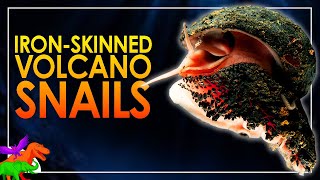
The collection reflects a fascination with the 'metal snail' and the discovery's biological significance, using lively phrases like 'most METAL gastropod' and appreciative attributions to image sources. This tone, along with references to specific species and scientific papers, reveals high interest and engagement, though the perceived impact remains moderate, emphasizing curiosity and appreciation for biodiversity discovery.
AgreementModerate agreement
Most posts celebrate the discovery of new hydrothermal vent fields and unique species, indicating strong support for the research findings.
InterestHigh interest
The enthusiasm about the 'metal snail' and the emphasis on new species and ecosystems demonstrate high curiosity and engagement with the subject.
EngagementHigh engagement
Discussions include references to specific species, scientific studies, and visual sources, showing active involvement and detailed interest.
ImpactModerate impact
While the posts highlight the novelty and biological diversity, the overall emphasis is more cultural and scientific enthusiasm than immediate practical impact.
Abstract in brief
Researchers have discovered two new hydrothermal vent fields, Dodo and Solitaire, on the Central Indian Ridge, expanding knowledge of Indian Ocean hydrothermal ecosystems.
The faunal communities at these sites differ significantly, with Solitaire hosting a diverse range of species, including a new morphotype of the scalyfoot gastropod that lacks the previously unique ironsulfide coating.
These findings enhance understanding of biodiversity and biogeography in Indian Ocean vent ecosystems, revealing new species and adaptations related to chemosynthesis and hydrothermal life.]
Chrysomallon squamiferum, the scaly-footed gastropod, or volcano snail, lives exclusively near volcanic vents at the bottom of the Indian Ocean, and friends, it is the most METAL gastropod imaginable.
It has no eyes & no jaw, but it does have:
FIRE ARMOR +100.
Let's talk about the metal snail.
Huge thanks also to our image sources. Blobfish, brittle star, and glass sponge: @oceanexplorer Scaly-foot gastropod: Nakamura et al., doi:10.1371/journal.pone.0032965. Anglerfish: Robbie N. Cada. Icefish: Alfred Wegener Institute, PS118 AWI OFOBS team.
Feb 14, 2022 · 3 likes · 7,091 followersView post →
D
DOSI
@DeepStewardship · X
These snail pictures come from Nakamura et al. 2012, "Discovery of New Hydrothermal Activity and Chemosynthetic Fauna on the Central Indian Ridge at 18°–20°S." You can read the original Open Access paper here: https://t.co/vEbyF8rIxL
Feb 9, 2022 · 3 likes · 1 share · 7,091 followersView post →
KG
Kristina Gjerde
@4kgjerde · X
RT @DeepStewardship: These snail pictures come from Nakamura et al. 2012, "Discovery of New Hydrothermal Activity and Chemosynthetic Fauna…
Feb 10, 2022 · 1 share · 2,860 followersView post →
The study explores the unique anatomy of the deep-sea scalyfoot gastropod, highlighting its enlarged circulatory system and reliance on endosymbiotic bacteria to survive in sulfide-rich hydrothermal vents, illustrating…
This video explores the internal anatomy of the deep-sea scalyfoot snail, highlighting its enlarged circulatory system and adaptation to extreme environments like hydrothermal vents, supported by endosymbiotic bacteria.
Researchers discovered two new hydrothermal vent fields, Dodo and Solitaire, revealing diverse chemosynthetic faunal communities and new species, including a unique scalyfoot gastropod morphotype, expanding…
Chrysomallon squamiferum, the scaly-footed gastropod, or volcano snail, lives exclusively near volcanic vents at the bottom of the Indian Ocean, and friends, it is the most METAL gastropod imaginable.
It has no eyes & no jaw, but it does have:
FIRE ARMOR +100.
Let's talk about the metal snail.
Huge thanks also to our image sources. Blobfish, brittle star, and glass sponge: @oceanexplorer Scaly-foot gastropod: Nakamura et al., doi:10.1371/journal.pone.0032965. Anglerfish: Robbie N. Cada. Icefish: Alfred Wegener Institute, PS118 AWI OFOBS team.
Feb 14, 2022 · 3 likes · 7,091 followersView post →
KG
Kristina Gjerde
@4kgjerde · X
RT @DeepStewardship: These snail pictures come from Nakamura et al. 2012, "Discovery of New Hydrothermal Activity and Chemosynthetic Fauna…
Feb 10, 2022 · 1 share · 2,860 followersView post →
D
DOSI
@DeepStewardship · X
These snail pictures come from Nakamura et al. 2012, "Discovery of New Hydrothermal Activity and Chemosynthetic Fauna on the Central Indian Ridge at 18°–20°S." You can read the original Open Access paper here: https://t.co/vEbyF8rIxL
Feb 9, 2022 · 3 likes · 1 share · 7,091 followersView post →
N
Deep-Sea Hydrothermal Vent Communities | PDF
News
doi: 10.1371/journal. Sea Res. Pt. II 56: 1586–1598. pone.0032965. Marsh, A. G., L. S. Mullineaux, C. M. Young, and D. T. Manahan. 2001. Nees, H. A., R. A. ...
 D
D KG
KG