Overall, discussions show enthusiasm for understanding how interactions like predation and competition over deep time influenced insect sizes, with phrases like 'main driver' and 'evolutionary history' highlighting their significance. The tone’s curiosity and mention of specific periods and factors indicate a genuine interest, supporting the high interest and agreement scores.
AgreementModerate agreement
Most comments acknowledge the role of biotic interactions, aligning with the article's main argument that predators and competitors influenced insect size evolution.
InterestHigh interest
Discussion about historical patterns and factors like predator-prey dynamics demonstrates high engagement and curiosity about the topic.
EngagementModerate engagement
Posts referencing specific periods, such as the Mesozoic and Cenozoic, show moderate depth, though some are more general.
ImpactModerate impact
The emphasis on how biotic factors shaped insect evolution suggests these discussions could influence future research or understanding, but the overall sentiment remains informational.
Abstract in brief
The study shows that insect body size was primarily influenced by atmospheric oxygen levels during the first 150 million years, explaining giant insects of the Carboniferous and Permian periods, but this relationship changed after the Jurassic period.
After the Jurassic, maximum insect size remained constant despite fluctuations in oxygen levels, likely due to evolutionary adaptations in other flying animals like early birds and bats that reduced the advantage of larger size.
The decoupling of insect size from oxygen availability indicates that biotic factors such as predation and competition, especially with the rise of birds and bats, became the dominant forces shaping the evolution of insect body size.]
Mar 23, 2022 · 3 likes · 10,956 followersView post →
冠諸
冠龍 諸々を執筆中
@Guanlong_wucaii · X
"Environmental and biotic controls on the evolutionary history of insect body size."
[著者] Matthew E. Clapham, et al.
[出版] PLoS One 9.11 (2014): e111154.
[要旨] 昆虫のサイズは、酸素濃度ではなく天敵(翼竜・鳥・蝙蝠)が決めた?
https://t.co/uVFQgtMRCA
Dec 10, 2023 · 3 likes · 1 share · 2,195 followersView post →
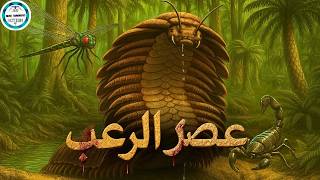
This video explores how atmospheric oxygen levels influenced insect size in the past and how evolutionary adaptations with birds and bats affected these relationships, highlighting the shift from oxygen dependency to…
Explore the rise and fall of giant arthropods during the Carboniferous period, including arthropleura and Meganeura, and examine the environmental and biotic factors influencing insect size evolution over 330 million…
Aug 1, 2025 · 5 likes · 4,054 followersView post →
I
InvertebratePosting
@invertposting · X
faunal interactions were the main driver, and have been
through all insect evolution, as shown by trends during the Mesozoic and Cenozoic -
https://t.co/ODnvdPu6U0
https://t.co/FIHJKpIG4s
https://t.co/VuCkxghGSn
"Environmental and biotic controls on the evolutionary history of insect body size."
[著者] Matthew E. Clapham, et al.
[出版] PLoS One 9.11 (2014): e111154.
[要旨] 昆虫のサイズは、酸素濃度ではなく天敵(翼竜・鳥・蝙蝠)が決めた?
https://t.co/uVFQgtMRCA
Dec 10, 2023 · 3 likes · 1 share · 2,195 followersView post →
P
peㇼォㇳㇿ
@PaleontoloShi · X
RT @Guanlong_wucaii: @PaleontoloShi 翼竜と昆虫に限った内容ではないですが、昆虫のサイズと環境・生物の関係についての論文がありましたぜ
"Environmental and biotic controls on the evolutionary…
@PaleontoloShi 翼竜と昆虫に限った内容ではないですが、昆虫のサイズと環境・生物の関係についての論文がありましたぜ
"Environmental and biotic controls on the evolutionary history of insect body size."
著者] Matthew E. Clapham, et al.(2012)
https://t.co/uVFQgtMRCA
 H年
 J
 草
 冠諸

 I
 P
 紙
 T
 秋