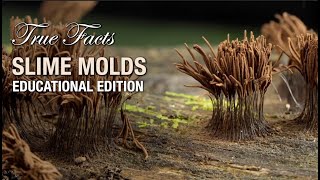
The discussions emphasize the remarkable problem-solving skills of slime molds, citing examples like navigating mazes and comparing the externalized memory to artificial intelligence methods. The tone is curious and appreciative, highlighting the research's importance and innovative nature, which signals high relevance and transformative potential.
AgreementStrong agreement
Most posts strongly affirm the significance of the research, emphasizing the mold’s problem-solving abilities and externalized memory, indicating full agreement with the study’s implications.
InterestHigh interest
Posts demonstrate high curiosity, referencing related papers and broader implications, reflecting strong engagement with the topic.
EngagementHigh engagement
Comments include detailed examples, such as comparing slime mold's navigation to deep reinforcement learning and mentioning external cognition, showing deep analytical discussion.
ImpactHigh impact
Discussions highlight the revolutionary potential of understanding non-neuronal memory systems, suggesting significant influence on fields like robotics, AI, and cognitive science.
Abstract in brief
The slime mold Physarum polycephalum, which has no brain, can develop an external form of spatial memory by avoiding areas it has previously explored, helping it navigate complex environments.
This externalized memory allows the slime mold to solve the Ushaped trap problem, a test requiring it to bypass barriers and reach a goal, demonstrating advanced navigational skills without gradient-following.
The study suggests that such external spatial memory in slime molds supports the idea that simple, non-neuronal organisms use external memory systems as a precursor to the internal memory seen in more complex animals.
A slime mold can solve what millions of steps of tabula-rasa deep reinforcement learning can't.
Reid, C. R., Latty, T., Dussutour, A., & Beekman, M. (2012). Slime mold uses an externalized spatial “memory” to navigate in complex environments. Proceedings of the National Academy https://t.co/ZRdSr0h5Sw
Jan 4, 2025 · 70 likes · 6 shares · 39,813 followersView post →
MW
Mary WildBehav
@wildbehav · X
Os dejo por aquí unos papers sobre este fascinante moho que en realidad es una ameba
#NingunHiloSinSuPaper
https://t.co/2ZrCMukXg5
https://t.co/YxKr74e3LI
https://t.co/OyrVdtdKKd
https://t.co/WFitTz5Ryj
https://t.co/GtIiICxsEV
May 2, 2023 · 12 likes · 2 shares · 11,346 followersView post →
UD
Umberto León Domínguez
@umbertoleon · X
El Slime Mold (fungi) tiene extended cognition
https://t.co/s79GaaJTzZ https://t.co/mNMqyUUZGM
Jan 30, 2024 · 1 like · 5,268 followersView post →
PM
Pasquale Minervini
@PMinervini · X
RT @_rockt: A slime mold can solve what millions of steps of tabula-rasa deep reinforcement learning can't.
Reid, C. R., Latty, T., Dussut…
Jan 4, 2025 · 6 shares · 9,364 followersView post →
SR
Sharath Raparthy
@sharathraparthy · X
RT @_rockt: A slime mold can solve what millions of steps of tabula-rasa deep reinforcement learning can't.
Reid, C. R., Latty, T., Dussut…
Jan 5, 2025 · 6 shares · 1,532 followersView post →
ZH
Zhipeng Huang
@nopainkiller · X
RT @_rockt: A slime mold can solve what millions of steps of tabula-rasa deep reinforcement learning can't.
Reid, C. R., Latty, T., Dussut…
Jan 4, 2025 · 6 shares · 1,445 followersView post →
Researchers demonstrate that the slime mould Physarum polycephalum can exhibit habituation, a form of learning typically associated with neural organisms. This groundbreaking discovery suggests non-neural organisms…
This video explores the capabilities of slime molds, specifically Physarum polycephalum, to exhibit habituation—a learning process seen in neural organisms. Discover how these remarkable creatures respond to repeated…
Ni animal ni végétal ni champignon le Blob fait preuve de capacités étonnantes telles que l'apprentissage. This video explores five surprising facts about Physarum polycephalum, a unicellular organism capable of memory…
RT @_rockt: A slime mold can solve what millions of steps of tabula-rasa deep reinforcement learning can't.
Reid, C. R., Latty, T., Dussut…
Jan 4, 2025 · 6 shares · 9,364 followersView post →
TR
Tim Rocktäschel
@_rockt · X
A slime mold can solve what millions of steps of tabula-rasa deep reinforcement learning can't.
Reid, C. R., Latty, T., Dussutour, A., & Beekman, M. (2012). Slime mold uses an externalized spatial “memory” to navigate in complex environments. Proceedings of the National Academy https://t.co/ZRdSr0h5Sw
Jan 4, 2025 · 70 likes · 6 shares · 39,813 followersView post →
UD
Umberto León Domínguez
@umbertoleon · X
El Slime Mold (fungi) tiene extended cognition
https://t.co/s79GaaJTzZ https://t.co/mNMqyUUZGM
Jan 30, 2024 · 1 like · 5,268 followersView post →
DY
Dios, que pereza ser yo
@JCHxD1 · X
RT @wildbehav: Os dejo por aquí unos papers sobre este fascinante moho que en realidad es una ameba
#NingunHiloSinSuPaper
https://t.co/2Z…
RT @wildbehav: Os dejo por aquí unos papers sobre este fascinante moho que en realidad es una ameba
#NingunHiloSinSuPaper
https://t.co/2Z…
May 2, 2023 · 2 shares · 1,165 followersView post →
MW
Mary WildBehav
@wildbehav · X
Os dejo por aquí unos papers sobre este fascinante moho que en realidad es una ameba
#NingunHiloSinSuPaper
https://t.co/2ZrCMukXg5
https://t.co/YxKr74e3LI
https://t.co/OyrVdtdKKd
https://t.co/WFitTz5Ryj
https://t.co/GtIiICxsEV
May 2, 2023 · 12 likes · 2 shares · 11,346 followersView post →
Came across this great paper while doing some out-of-the-box research while coding a ConceptNet literal to metaphor translator.
You don't necessarily need internal intelligence to come up with smart solutions.
https://t.co/VII0bCE99g
# How Can a Slime Mold Solve a Maze? The Physiology Course is Finding Out, 2017
https://t.co/nz5ZCknyTL
_________________________
#Slime mold uses an externalized spatial “memory” to navigate in complex environments, 2012
https://t.co/Vy3i5iilqT
Slime mold uses an externalized spatial “memory” to navigate in complex environments
https://t.co/eg2wzWrPUi
I use the placement of objects as externalized memory, not just for spatial memory, but also for task memory.