The comments highlight key themes like hunting pressures and ecological interactions, as seen in statements about wallaby hunting and the role of prey declines, which reflect a nuanced understanding of extinction factors. The tone varies from curiosity to recognition of the study's significance, contributing to the moderate scores across all dimensions.
AgreementModerate agreement
Most discussions support or acknowledge the article's findings, with some emphasizing the role of factors like prey decline rather than disease in extinction.
InterestModerate interest
Participants show moderate interest, often discussing the implications of the research and its relevance to the ongoing search for the Tasmanian tiger.
EngagementModerate engagement
Several comments delve into specifics, such as historical hunting practices and ecological interactions, indicating thoughtful engagement.
ImpactModerate impact
The discussions suggest that the publication influences ongoing debates and awareness about species extinction causes, potentially shaping future research and conservation perspectives.
Abstract in brief
The study introduces a new PVA method that explicitly includes species interactions by integrating multiple models into a single "metamodel," which helps better understand extinction causes.
Traditional single-species models struggled to explain the thylacine's extinction without assuming high human hunting or small initial populations, whereas the multispecies metamodel suggested that declines in prey populations, especially from competition with introduced sheep, could explain the extinction without invoking disease.
The results imply that complex interactions, like prey declines due to introduced species, played a significant role in the thylacine's extinction, and the new multispecies PVA approach offers a more realistic tool to study species declines and extinctions caused by multiple factors.]
@crocutamatata This is not to mention the fact that around the time, wallabies were being hunted on mass for their pelts. This in combination with over 2,000 bounties being collected, crippled the already small thylacine population (possibly of around 4,000 individuals).
https://t.co/vrePRu0Z94
Jun 5, 2024 · 41 likes · 1 share · 3,509 followersView post →
S
SciShow
@SciShow · X
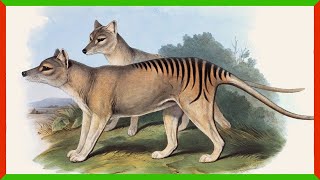
The Tasmanian tiger was officially declared extinct in 1986, but some still have hope these marsupial wolves will reappear.
https://t.co/btQ5y5Ml3z https://t.co/dklcyowHI1
May 20, 2021 · 27 likes · 3 shares · 115,433 followersView post →
AB
Alex Richter-Boix
@BoixRichter · X
https://t.co/GAjYsMAWxA
Jun 16, 2019 · 11 likes · 4 shares · 51,659 followersView post →
The Tasmanian tiger was officially declared extinct in 1986, but some hope remains. A new multi-species model suggests prey decline from introduced species, not disease, may explain its extinction, highlighting complex…
This video explores extinct animals from the Pacific region, highlighting their history and causes of extinction, including ecological interactions and human impacts. It emphasizes the importance of multi-species models…
RT @Visceral9000: @crocutamatata This is not to mention the fact that around the time, wallabies were being hunted on mass for their pelts.…
Jun 5, 2024 · 1 share · 4,706 followersView post →
V
Visceral9000
@Visceral9000 · X
@crocutamatata This is not to mention the fact that around the time, wallabies were being hunted on mass for their pelts. This in combination with over 2,000 bounties being collected, crippled the already small thylacine population (possibly of around 4,000 individuals).
https://t.co/vrePRu0Z94
Jun 5, 2024 · 41 likes · 1 share · 3,509 followersView post →
RN
Reality Matters-Whether You Believe In It Or Not
@IainSim55659177 · X
The Search for Tasmanian Tigers Continues https://t.co/fkbOV9NxZG
@PaulineGrierso1 Thanks Pauline. There's been no evidence yet to suggest a disease and this paper (https://t.co/sNHeUJHXE9) did what you suggested for thylacines though we don't know whether this holds for Tasmanian devils
Prowse, T. A., Johnson, C. N., Lacy, R. C., Bradshaw, C. J., Pollak, J. P., Watts, M. J., & Brook, B. W. (2013). No need for disease: testing extinction hypotheses for the thylacine using multi‐species metamodels. Journal of Animal Ecology, 82(2), 355-364.
"... If we don't, then this species will stand as a reminder that the actions of our species can have permanent consequences, no matter how much we wish they didn't"
Why we keep looking for tasmanian tigers?
https://t.co/s45K6Ww14i
RT @SciShow: The Tasmanian tiger was officially declared extinct in 1986, but some still have hope these marsupial wolves will reappear.…
May 20, 2021 · 3 shares · 1,840 followersView post →
WW
William Wallace
@bill14051 · X
RT @SciShow: The Tasmanian tiger was officially declared extinct in 1986, but some still have hope these marsupial wolves will reappear.…
May 20, 2021 · 3 shares · 380 followersView post →
S
SciShow
@SciShow · X
The Tasmanian tiger was officially declared extinct in 1986, but some still have hope these marsupial wolves will reappear.
https://t.co/btQ5y5Ml3z https://t.co/dklcyowHI1
May 20, 2021 · 27 likes · 3 shares · 115,433 followersView post →
K
Kitty
@kittybravofan · X
Why We Keep Looking for Tasmanian Tigers https://t.co/Fy6fPaQc3h via @YouTube
 V
 AB

 C
 SM
 A
 EL
 Z
 SP