The discussions reflect strong support for the research, exemplified by praises like 'stunning' and references to detailed microCT examinations, demonstrating both admiration and curiosity for the scientific advancements. The tone is enthusiastic and appreciative, emphasizing the importance of the fossil’s preservation and the new insights gained from imaging techniques.
AgreementModerate agreement
Most discussions praise the research, highlighting its effectiveness in revealing new details about ancient amphibians, indicating general support and approval.
InterestHigh interest
The posts show curiosity and enthusiasm about the fossil preservation and the scientific importance of the findings, reflecting high interest.
EngagementModerate engagement
Participants reference specific aspects such as microCT imaging and fossil preservation techniques, showing they are engaged with the scientific content.
ImpactModerate impact
While the discussions emphasize the significance of preserving and understanding ancient fossils, the overall impact on scientific or educational fields appears moderate.
Abstract in brief
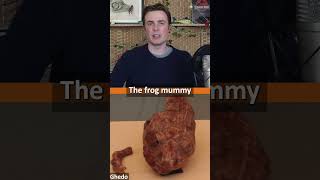
This study reexamines a fossilized frog from the Quercy Phosphorites in France, originally thought to be Rana plicata, but later renamed Rana cadurcorum, based on external features.
Using microCT scanning, researchers discovered that the internal skeleton, especially the skull, closely resembles that of Thaumastosaurus gezei, a frog from the same region and time period, indicating they are likely the same species.
The findings, including postcranial (body) details, challenge prior ideas about the frog's relationships, showing it is more closely related to Ranoids than previously thought, highlighting how modern imaging helps uncover new fossil details without damaging specimens.]
Image: Laloy, F., Rage, J. C., Evans, S. E., Boistel, R., Lenoir, N., & Laurin, M. (2013). A re-interpretation of the Eocene anuran Thaumastosaurus based on microCT examination of a ‘mummified’specimen. PLoS One, 8(9), e74874.
(3/3)
Mar 20, 2023 · 53 likes · 6 shares · 12,874 followersView post →
AG
Aline Ghilardi
@alinemghilardi · X
Mais informações sobre ele podem ser encontradas aqui: https://t.co/2DtrMADqHw
Aug 16, 2020 · 16 likes · 2 shares · 30,107 followersView post →
RS
Roberto Sáez
@robertosaezm · X
La increíble conservación de este fósil de una rana de hace ¡40-34 millones de años!
Fuente: https://t.co/vjlp33HDF0 https://t.co/krbdRXXQ3o
Aug 25, 2020 · 15 likes · 4 shares · 12,477 followersView post →
TG
Tyler Greenfield
@TylerGreenfieId · X
@jodirowley https://t.co/Ave1zcAjbn
Aug 16, 2020 · 14 likes · 2 shares · 6,373 followersView post →
TG
Tyler Greenfield
@TylerGreenfieId · X
@HStiles1 @TetZoo https://t.co/Ave1zcAjbn
Aug 16, 2020 · 5 likes · 2 shares · 6,373 followersView post →
PB
Prof. Christine Böhmer
@VertEvo · X
@mennecart_b Wow! Thanx for these references!
(Link to the paper on the toad mummy worked well, but the other one might be broken?)
Laloy et al 2013 @PLOSONE A Re-Interpretation of the Eocene AnuranThaumastosaurusBased on MicroCT Examination of a‘Mummified’ Specimen
https://t.co/MmMdlH9aDe https://t.co/gHKudoEADt
A recent study on an Edmontosaurus mummy shows that soft tissue preservation can occur without extreme conditions like rapid burial. This video explores how desiccation and incomplete scavenging contributed to the…
A mummified frog fossil discovered in France is reexamined using microCT scans. This advanced imaging reveals internal structures, showing the fossil is closely related to Thaumastosaurus, challenging previous…
Image: Laloy, F., Rage, J. C., Evans, S. E., Boistel, R., Lenoir, N., & Laurin, M. (2013). A re-interpretation of the Eocene anuran Thaumastosaurus based on microCT examination of a ‘mummified’specimen. PLoS One, 8(9), e74874.
(3/3)
Mar 20, 2023 · 53 likes · 6 shares · 12,874 followersView post →
I
Iker
@iker__bg · X
RT @robertosaezm: La increíble conservación de este fósil de una rana de hace ¡40-34 millones de años!
Fuente: https://t.co/vjlp33HDF0 http…
Aug 25, 2020 · 4 shares · 181 followersView post →
LE
Laura escarlata
@laura_escarlata · X
RT @robertosaezm: La increíble conservación de este fósil de una rana de hace ¡40-34 millones de años!
Fuente: https://t.co/vjlp33HDF0 http…
Aug 25, 2020 · 4 shares · 188 followersView post →
SM
Sr Mateu
@mateu_sr · X
RT @robertosaezm: La increíble conservación de este fósil de una rana de hace ¡40-34 millones de años!
Fuente: https://t.co/vjlp33HDF0 http…
Aug 25, 2020 · 4 shares · 152 followersView post →
RS
Roberto Sáez
@robertosaezm · X
La increíble conservación de este fósil de una rana de hace ¡40-34 millones de años!
Fuente: https://t.co/vjlp33HDF0 https://t.co/krbdRXXQ3o
Aug 25, 2020 · 15 likes · 4 shares · 12,477 followersView post →
Aug 17, 2020 · 2 shares · 672 followersView post →
KK
Krista Koeller
@KristaLerista · X
Who do I contact about this outrage? Someone clearly stole this clay figure from an art gallery and is now trying to pass it off as a fossil.
But for real this is amazing! And the bones are beautiful too! https://t.co/N787PHknuV https://t.co/n9Ng2IoVqw
Aug 17, 2020 · 1 like · 2,887 followersView post →
@mennecart_b Wow! Thanx for these references!
(Link to the paper on the toad mummy worked well, but the other one might be broken?)
Laloy et al 2013 @PLOSONE A Re-Interpretation of the Eocene AnuranThaumastosaurusBased on MicroCT Examination of a‘Mummified’ Specimen
https://t.co/MmMdlH9aDe https://t.co/gHKudoEADt
@VertEvo A very nice paper with wonderful fossils. Some of the specimens (most of ?) are hosted in our collections ;) #Basel Quercy specimens have a crazy preservation (3D mummified toad and salamander with last meal in the belly) !!!
https://t.co/65p9aFPmWi
https://t.co/qyARU2lS3x https://t.co/0kdO0dHbq3
Vertebrate fossils were partly preserved in astonishing detail, like the “mummified” frog shown here. I highly recommend the article by Laloy et al. 2013: https://t.co/Lqg0Ayk2KH. But back to the insects… https://t.co/o0jziSNkrI
 E
 AG
 RS
 TG
 PB

 ビ
 IK
 く
 らH
 WD
 LD
 LJ
 I
 LE
 SM
 EH
 KK
 迫ゆ
 D
 I
 RR
 K
 BM
 O
 TK