The overall discussions demonstrate a keen interest and moderate engagement with the article’s implications, such as mentions of species diversity and evolutionary origins. For example, some comments reference how the findings 'challenge previous ideas,' and others criticize or question the methods, highlighting an analytical tone that underscores the article's potential to influence the understanding of early human evolution.
AgreementModerate agreement
Most discussions support the idea that this research challenges previous notions of hominin diversity.
InterestHigh interest
The discussions reveal high curiosity about evolutionary implications and fossil interpretation.
EngagementModerate engagement
Participants engage with detailed scientific hypotheses and critique, reflecting moderate-depth involvement.
ImpactModerate impact
The posts suggest the findings could influence ongoing debates in paleoanthropology, though not universally transformative.
Abstract in brief
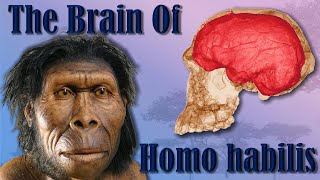
The reconstructed OH 7 skull suggests that early Homo species, including Homo habilis, exhibited significant diversity in jaw and skull features, challenging the idea that they belonged to just one or two species.
The study's findings indicate that the morphology of OH 7's jaw is more primitive and different from other early Homo fossils like Homo rudolfensis and Homo maxilla (AL 666-1), implying that the early Homo lineage is more ancient and diverse than previously thought, possibly originating before 2.3 million years ago.
Despite differences in jaw shape, the brain sizes of early Homo species overlap significantly, suggesting that species distinctions were more about jaw and facial features than brain capacity.
Reconstructed Homo habilis type OH 7 suggests deep-rooted species diversity in early Homo https://t.co/AnzVIREztA https://t.co/3TptFfKDAx
Mar 2, 2020 · 52 likes · 13 shares · 12,481 followersView post →
CS
Chris Stringer
@ChrisStringer65 · X
RT @robertosaezm: Reconstructed Homo habilis type OH 7 suggests deep-rooted species diversity in early Homo https://t.co/AnzVIREztA https:/…
Mar 2, 2020 · 13 shares · 29,935 followersView post →
JH
John Hawks
@johnhawks · X
@SwiecickiTony Indeed, some scientists favor the hypothesis that H. habilis began to differentiate from the stem of other Homo species more than 3 million years ago. This would make H. habilis and H. erectus at 1.9 million more of a chimpanzee-bonobo difference. https://t.co/VoKFTTDsho
Homo habilis, an early human species living between 24 and 16 million years ago, shows significant brain and skull variability. The reconstructed OH 7 skull indicates extensive species diversity and suggests an earlier…
Homo habilis was an early human species that lived 2.4 to 1.65 million years ago in East Africa. This video covers their physical traits, increased brain size, bipedalism, arboreal habits, and their survival as…
Reconstructed Homo habilis type OH 7 suggests deep-rooted species diversity in early Homo | Nature
Coupled ESR and U-series dating of the northernmost evidence of Gigantopithecus from Jianshi Longgudong site, China - ScienceDirect
@ChappyLeo @dan_cameron99 @redharehorse @RogerTidy @in_the_sky34221 @iwriteforme @Bill_Capehart @MONSTERDROID_ @WoopsWoah @TakeThatDarwin @th1rt3en_TM @pgannon18 @lettherebespite @RichardDawkins @GenesisWeek If you want to use your paleontological skills you gained from your 2 year bible course from Patriot University to expose the fraud from these completely distinct fossils. Go right ahead.
https://t.co/1LLfh5imvB
https://t.co/O6ebCvUrEX
https://t.co/QHRYatzCuD
@SwiecickiTony Indeed, some scientists favor the hypothesis that H. habilis began to differentiate from the stem of other Homo species more than 3 million years ago. This would make H. habilis and H. erectus at 1.9 million more of a chimpanzee-bonobo difference. https://t.co/VoKFTTDsho
RT @robertosaezm: Reconstructed Homo habilis type OH 7 suggests deep-rooted species diversity in early Homo https://t.co/AnzVIREztA https:/…
Mar 2, 2020 · 13 shares · 2,135 followersView post →
JG
John Greene
@Greene_Thoughts · X
RT @robertosaezm: Reconstructed Homo habilis type OH 7 suggests deep-rooted species diversity in early Homo https://t.co/AnzVIREztA https:/…
Mar 2, 2020 · 13 shares · 1,705 followersView post →
DC
d'Oliveira Coelho
@Gangryong · X
RT @robertosaezm: Reconstructed Homo habilis type OH 7 suggests deep-rooted species diversity in early Homo https://t.co/AnzVIREztA https:/…
Mar 2, 2020 · 13 shares · 605 followersView post →
LP
Luisma Pana
@luismaelpana · X
RT @robertosaezm: Reconstructed Homo habilis type OH 7 suggests deep-rooted species diversity in early Homo https://t.co/AnzVIREztA https:/…
Mar 2, 2020 · 13 shares · 1,475 followersView post →
CS
Chris Stringer
@ChrisStringer65 · X
RT @robertosaezm: Reconstructed Homo habilis type OH 7 suggests deep-rooted species diversity in early Homo https://t.co/AnzVIREztA https:/…
Mar 2, 2020 · 13 shares · 29,935 followersView post →
RS
Roberto Sáez
@robertosaezm · X
Reconstructed Homo habilis type OH 7 suggests deep-rooted species diversity in early Homo https://t.co/AnzVIREztA https://t.co/3TptFfKDAx
Mar 2, 2020 · 52 likes · 13 shares · 12,481 followersView post →
N
Human Evolution: John H. Langdon | PDF | Foot
News
... 10.1038/260293a0. Johanson, D. C., Taieb, M., Coppens, Y., & Roche, H. (1980) ... nature14224. Susman, R. L., & Stern, J. T. (1982). Functional morphology ...
DOI 10.1038/nature14224. Straus Jr WL. 1948. The humerus of Paranthropus robustus. American Journal of Physical Anthropology 6:285–311 DOI 10.1002/ajpa ...
doi:10.1038/nature14224. PMID 25739632. Pollard, Elizabeth (2014-12-16). Worlds Together, Worlds Apart. 500 Fifth Avenue, New York, N.Y. 10110. صفحة 11 ...
Oldest known member of human family found in Ethiopia | New ...
Blogs
... 10.1038/nature14224. Topics: evolution. Advertisement. Sign up to our weekly newsletter. Receive a weekly dose of discovery in your inbox. We'll ...
 RS
 CS
 JH
 IF
 AM
 JG

 PA
 PG
 IU
 C
 MH
 L
 DC
 LP