The overall tone reflects curiosity and appreciation for the ants' unique survival strategies, illustrated by mentions of videos and studies that highlight the ants' ability to escape predators using their mandible-powered jumps. The references to contests and research highlights suggest a community interested in scientific discovery, but without strong argumentation or controversy that would heighten engagement or perceived impact.
AgreementNeither agree nor disagree
The discussions mention the research and related videos, but do not clearly express strong agreement or disagreement with the findings.
InterestModerate interest
There is moderate interest, especially surrounding the intriguing escape mechanism and the attention from entomology communities.
EngagementModerate engagement
Comments show some engagement, referencing studies and contests, but lack in-depth analysis or debate.
ImpactNeutral impact
The impact appears limited to academic and enthusiast circles, with little indication that the research influences broader scientific or public policy discussions.
Abstract in brief
Trapjaw ants use their powerful mandible strikes not only for hunting but also to launch themselves into the air as an escape response from predators.
In natural encounters with antlions, about half of the trapjaw ants escaped predation by performing these mandible-powered jumps, which helped them avoid being caught.
When researchers prevented the ants from jumping, their chances of escaping from predators decreased significantly, indicating that these jumps are a key survival mechanism and an example of how traits can evolve for new uses.]
@bugbiter and @AndrewVSuarez study how trap-jaw ants escape antlion pits by catapulting with their jaws! #OpenAccessArticle https://t.co/Nkw37S4dnO #2019MMM
Mar 11, 2019 · 38 likes · 8 shares · 2,611 followersView post →
Dec 3, 2022 · 9 likes · 30,944 followersView post →
EA
Entomological Society of America
@EntsocAmerica · X
In 2015, @DrAdrianSmith's video on trap-jaw ants earned 1st Place in the ESA YouTube Your Entomology Contest. This year, could your video win? Entries for the 2019 contest are due July 8. https://t.co/CWeqvAi99V https://t.co/DNgSNE81tK
May 9, 2019 · 3 likes · 32,930 followersView post →
MM
March Mammal Madness
@MMMletsgo · X
RT @c_n_anderson: @bugbiter and @AndrewVSuarez study how trap-jaw ants escape antlion pits by catapulting with their jaws! #OpenAccessArtic…
Mar 11, 2019 · 8 shares · 31,215 followersView post →
AS
Andrew Suarez
@AndrewVSuarez · X
RT @c_n_anderson: @bugbiter and @AndrewVSuarez study how trap-jaw ants escape antlion pits by catapulting with their jaws! #OpenAccessArtic…
Mar 12, 2019 · 8 shares · 1,516 followersView post →
BL
Beth Lyons
@elizabethe_jane · X
RT @c_n_anderson: @bugbiter and @AndrewVSuarez study how trap-jaw ants escape antlion pits by catapulting with their jaws! #OpenAccessArtic…
Mar 11, 2019 · 8 shares · 293 followersView post →
Antlions are real creatures known for building pitfall traps to catch prey. This video explores their different habitats, life stages, and behaviors, highlighting their role in the ecosystem and their fascinating…
Trapjaw ants use powerful mandible strikes not only for hunting but also to launch themselves into the air as an effective escape mechanism from predators like antlions, significantly improving their survival chances.
Dec 3, 2022 · 9 likes · 30,944 followersView post →
JA
Jeff Klein; ACE
@BedbugXpert · X
EntsocAmerica: In 2015, DrAdrianSmith's video on trap-jaw ants earned 1st Place in the ESA YouTube Your Entomology Contest. This year, could your video win? Entries for the 2019 contest are due July 8. https://t.co/tMTjK5A72C https://t.co/sw6ZnO4hNN
In 2015, @DrAdrianSmith's video on trap-jaw ants earned 1st Place in the ESA YouTube Your Entomology Contest. This year, could your video win? Entries for the 2019 contest are due July 8. https://t.co/CWeqvAi99V https://t.co/DNgSNE81tK
May 9, 2019 · 3 likes · 32,930 followersView post →
WA
WHS_APES
@WHS_APES · X
RT @c_n_anderson: @bugbiter and @AndrewVSuarez study how trap-jaw ants escape antlion pits by catapulting with their jaws! #OpenAccessArtic…
RT @c_n_anderson: @bugbiter and @AndrewVSuarez study how trap-jaw ants escape antlion pits by catapulting with their jaws! #OpenAccessArtic…
Mar 11, 2019 · 8 shares · 293 followersView post →
ML
muppet lady
@gremlin_mama · X
RT @c_n_anderson: @bugbiter and @AndrewVSuarez study how trap-jaw ants escape antlion pits by catapulting with their jaws! #OpenAccessArtic…
Mar 11, 2019 · 8 shares · 236 followersView post →
MC
Mandy Cooper
@mandycooper05 · X
RT @c_n_anderson: @bugbiter and @AndrewVSuarez study how trap-jaw ants escape antlion pits by catapulting with their jaws! #OpenAccessArtic…
Mar 11, 2019 · 8 shares · 168 followersView post →
MM
March Mammal Madness
@MMMletsgo · X
RT @c_n_anderson: @bugbiter and @AndrewVSuarez study how trap-jaw ants escape antlion pits by catapulting with their jaws! #OpenAccessArtic…
Mar 11, 2019 · 8 shares · 31,215 followersView post →
CA
Chris Anderson
@c_n_anderson · X
@bugbiter and @AndrewVSuarez study how trap-jaw ants escape antlion pits by catapulting with their jaws! #OpenAccessArticle https://t.co/Nkw37S4dnO #2019MMM
Mar 11, 2019 · 38 likes · 8 shares · 2,611 followersView post →
T
Insectes et Biodiversité : Le Challenge Toulousain | TikTok
TikTok
PLOS ONE 10, no 5 (mai 2015): e0124871. https://doi.org/10.1371/journal.pone.0124871. Patek, S. N., J. E. Baio, B. L. Fisher, et A. V. ...
 CA
CA FH
FH MM
MM AS
AS BL
BL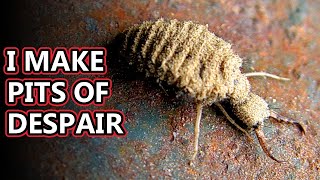

 WA
WA AB
AB ML
ML MC
MC