Discussions demonstrate strong interest and engagement, with users referencing previous studies, mechanisms involving gut bacteria, and environmental applications, highlighting how the research could influence plastic waste management and inspire further scientific development.
AgreementModerate agreement
Most discussions acknowledge the significance of mealworms digesting polystyrene, showing general support for the findings.
InterestHigh interest
Posts reveal high curiosity and enthusiasm about the environmental implications and mechanisms involved.
EngagementModerate engagement
Participants reference related research, mention microbiome mechanisms, and discuss applications, indicating active engagement.
ImpactModerate impact
The conversations highlight potential environmental benefits and innovative solutions, suggesting moderate to high impact.
Abstract in brief
The study demonstrates that mealworms (larvae of Tenebrio molitor) can efficiently biodegrade and mineralize polystyrene (PS), such as Styrofoam, within their gut in less than 24 hours, with no adverse effects on larval survival when fed solely on PS.
Chemical and physical analyses confirmed that PS molecules are broken down into smaller metabolites inside the larvae, with nearly 48% of ingested Styrofoam carbon being converted into CO2 within 16 days, showing active mineralization.
Using labeled PS, researchers verified that the carbon from PS is both converted into CO2 and incorporated into the larvae's lipids, indicating that PS not only biodegrades but also contributes to the larvae's biomass, revealing a potential environmental pathway for plastic waste degradation.]
there are bacteria that live inside mealworm guts, and can break down polystyrene if the worm eats jt, and they can do it a lot more efficiently in the gut than outside of it in a lab culture setting (probably several reasons there) https://t.co/mfM17wYVE4
May 20, 2023 · 11 likes · 7,647 followersView post →
PB
Phil Booth
@EinsteinsAttic · X
A year later, in 2015, Jun Yang and colleagues including Wei-Min Wu, an environmental engineer at @Stanford, published two papers
@insetologia2 Saiu um estudo em 2015 com larvas de tenebrio molitor decompondo isopor também. https://t.co/XCq3NwQQOL
Eu lembro disso pq eu AMEI. acho que as primeiras pesquisas foram com tenébrio e um lixão de uma cidade do interior de SP comprou larvas pra começar a testar.
Le Saviez-vous? Je l'ai déjà signalé!
La seule façon connue de biodégrader le polystyrène est dans l'intestin d'un ver de farine.
https://t.co/zuYuA5bUnv
Bonne chance aux Végans et aux consommateurs d'insectes!
Feb 16, 2025 · 3 likes · 2 shares · 2,218 followersView post →
Mealworms can efficiently biodegrade and mineralize polystyrene within their gut in less than 24 hours, converting nearly 48% of ingested Styrofoam into CO2 in 16 days, presenting a promising biological solution for…
This study demonstrates that mealworms can efficiently biodegrade and mineralize polystyrene within 24 hours, with nearly 48% of the ingested plastic carbon converted into CO2 over 16 days, showing active degradation…
This video discusses recent developments in polyethylene degradation, focusing on microbial biodegradation using mealworms and bacteria. It highlights how mealworms efficiently mineralize polystyrene within their gut…
@emma_ducros Le Saviez-vous? Je l'ai déjà signalé!
La seule façon connue de biodégrader le polystyrène est dans l'intestin d'un ver de farine.
https://t.co/zuYuA5bUnv
Bonne chance aux Végans et aux consommateurs d'insectes!
RT @Xochipelli1953: Le Saviez-vous? Je l'ai déjà signalé!
La seule façon connue de biodégrader le polystyrène est dans l'intestin d'un ve…
Feb 16, 2025 · 2 shares · 1,061 followersView post →
XG
Xochi/Dominique Guillet
@Xochipelli1953 · X
Le Saviez-vous? Je l'ai déjà signalé!
La seule façon connue de biodégrader le polystyrène est dans l'intestin d'un ver de farine.
https://t.co/zuYuA5bUnv
Bonne chance aux Végans et aux consommateurs d'insectes!
Feb 16, 2025 · 3 likes · 2 shares · 2,218 followersView post →
Mar 15, 2024 · 6 shares · 501 followersView post →
Jθ
juni θ∆
@JUNIUS_64 · X
there are bacteria that live inside mealworm guts, and can break down polystyrene if the worm eats jt, and they can do it a lot more efficiently in the gut than outside of it in a lab culture setting (probably several reasons there) https://t.co/mfM17wYVE4
May 20, 2023 · 11 likes · 7,647 followersView post →
PB
Phil Booth
@EinsteinsAttic · X
A year later, in 2015, Jun Yang and colleagues including Wei-Min Wu, an environmental engineer at @Stanford, published two papers
@sennoma @Chemjobber This paper is not doing itself favors with the speculative mechanism but there is solid evidence for the chemical modification of these materials by the microbiome of larvae. (E.g. https://t.co/xkgA3eLrqn) The mechanisms do remain to be elucidated. @MarkBlenner @laure_kayser https://t.co/8uTfoczq8c
Jun 14, 2022 · 2 likes · 1,982 followersView post →
@insetologia2 Saiu um estudo em 2015 com larvas de tenebrio molitor decompondo isopor também. https://t.co/XCq3NwQQOL
Eu lembro disso pq eu AMEI. acho que as primeiras pesquisas foram com tenébrio e um lixão de uma cidade do interior de SP comprou larvas pra começar a testar.
The following article describes a Stanford experiment where they analyzed whether mealworms would eat styrofoam if it was their only option, and this has tremendous environmental applications when it comes to polystyrene degradation.
https://t.co/rHhRurpgSI
Feb 18, 2019 · 1 share · 2,061 followersView post →
CB
Carol B.
@Child_Of_Lions · X
@Barryabfreedom @Corbynsmama @GeraldJacklin @canadian000 @GerryxSimons @nostradamous195 @kate_canadian @nemo_gratis @SherriMcLynn @JohnAll63815927 @Katalytical87 @DanMCalgary @Qualifyfor @medwoman1 @deCaptRon @safety_canada7 @muchmore2cents @unEZ_p3ac3 @FelixAnchor__ @staines_andyjoy @RickRMehta @DavidMilley @GregJen56304807 @IiJudge @catchercharlie @vesnalaurie8 @VermeirenRob @mehtamutebutton @CalloutCanada @famousgaurav @PAngebrandt @Canadian_Chris_ @SledzKevin @MicheleSobering @CaptainDick12 @SageThinker99 @gorvin1971 @Hope2Casagem @lindco22 @MapleLeafForevr @esteetabernac @SharpishMitch @Perkel @jay_slatter @nwriverrock @barbara_starr62 @robyn_call @CATGovernment Oh and quick search on google scholar reveals science is also developing meal worms who can digest plastic (the enzyme is too new to be described in a paper). https://t.co/PJqXqkhGcz
Feb 17, 2019 · 2 likes · 1 share · 925 followersView post →
 Jθ
Jθ PB
PB BD
BD 光健
光健 XG
XG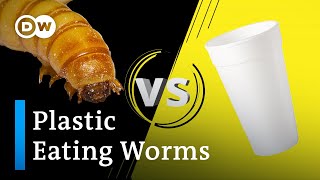



 D
D B
B 籠
籠 KS
KS T
T C
C P
P CB
CB