The impact of re-transurethral resection on clinical outcomes in a large multicentre cohort of patients with T1 high-grade/Grade 3 bladder cancer treated with bacille Calmette-Guérin.
The posts show moderate agreement and interest by referencing the article and emphasizing its relevance to clinical decision-making for bladder cancer patients. The tone is neutral and factual, with mentions of terms like 'clinical outcomes' and 'importance,' reflecting a cautious recognition of the study's significance without extensive debate or critique.
AgreementModerate agreement
The posts generally acknowledge the significance of the study, suggesting agreement on the importance of reTUR in specific scenarios, especially when muscle is absent in initial specimens.
InterestModerate interest
Both posts show moderate interest by highlighting key aspects like clinical outcomes and methodological importance, but lack enthusiasm or deep discussion.
EngagementModerate engagement
Comments mention the article and related clinical concepts but don't delve deeply into analysis or critique, indicating a moderate level of engagement.
ImpactNeutral impact
While the publication's findings are recognized as clinically relevant, posts indicate that the discussion remains superficial without exploring broad implications or future research.
Abstract in brief
A large study of 2451 patients with T1 high-grade bladder cancer treated with BCG showed that repeat transurethral resection (reTUR) improves outcomes like recurrence, progression, cancer-specific survival, and overall survival mainly when muscle was not found in the initial TUR specimen.
When muscle was absent in the first TUR, reTUR was associated with better outcomes, but it did not provide benefits if muscle was already present, suggesting that reTUR may not be needed in such cases.
Overall, the study indicates that the presence of muscle in the initial TUR specimen can help decide whether a reTUR is beneficial for patients with this high-grade bladder cancer.
#ThrowbackThursday: The impact of re‐TUR on clinical outcomes in a large multicentre cohort of patients with T1 high‐grade/Grade 3 #BladderCancer treated with bacille Calmette–Guérin https://t.co/JcHVNGPdGh #blcsm
A large study of 2451 patients shows reTUR improves outcomes when muscle was absent in the initial TUR specimen, aiding treatment decisions for T1 high-grade bladder cancer treated with BCG.
#ThrowbackThursday: The impact of re‐TUR on clinical outcomes in a large multicentre cohort of patients with T1 high‐grade/Grade 3 #BladderCancer treated with bacille Calmette–Guérin https://t.co/JcHVNGPdGh #blcsm
 BI
BI KU
KU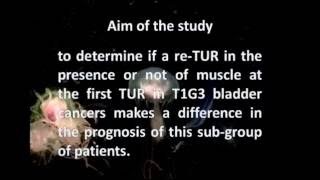
 DC
DC