The collection includes comments emphasizing the importance of evolutionary understanding, such as recognizing the study’s role in clarifying vertebrate evolution, alongside dismissive remarks and unsure responses, illustrating a mix of recognition and uncertainty. The tone varies from academic to casual, and the focus ranges from biological implications to mere social discussions, leading to a neutral overall evaluation.
AgreementNeither agree nor disagree
The comments show mixed reactions, with some recognizing the importance of the study and others dismissing or questioning its relevance, leading to a neutral overall agreement.
InterestNeutral interest
Discussions display varied levels of interest; some focus on the evolutionary significance, while others express uncertainty or minimal engagement.
EngagementNeutral engagement
Participants show superficial engagement, with some posts only sharing vague or peripheral comments without deep analysis.
ImpactNeutral impact
The overall impact appears limited, as the posts reflect curiosity or skepticism rather than widespread enthusiasm or significant influence on broader scientific conversations.
Abstract in brief
The study investigates the evolution of the phallus in amniotes by examining tuatara embryos, which lack an adult phallus, to understand if external genitalia have a common origin.
Researchers reconstructed three-dimensional images of tuatara embryos and found that they develop initial stages of external genitalia (genital anlagen), indicating a conserved developmental process across amniotes.
These findings suggest that despite differences in adult external genitalia, amniotes likely share a single evolutionary origin for their external genitalia, rather than multiple independent evolutions.]
O estudo da evolução do Pênis é fundamental para se entender a evolução dos vertebrados terrestres, já que a maioria deles tem fecundação interna.
Enfim, Pênis não é só sacanagem, já diria a @VColoridos
https://t.co/Rn1C5b9Pmc
Nov 24, 2020 · 17 likes · 1 share · 8,692 followersView post →
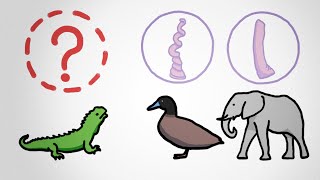
This video explores why many birds lack penises, highlighting that internal fertilization does not require a penis. It discusses natural and sexual selection, and the evolutionary development of external genitalia based…
Snakes possess two penises called hemipenes, which vary widely in shape and size. This feature may be linked to their limbless evolution, illustrating unique reproductive adaptations in reptiles.
The study investigates the evolution of the phallus in amniotes by examining tuatara embryos, which lack an adult phallus, to understand if external genitalia have a common origin. Researchers reconstructed…
RT @herpaid: O estudo da evolução do Pênis é fundamental para se entender a evolução dos vertebrados terrestres, já que a maioria deles tem…
Nov 24, 2020 · 1 share · 3,888 followersView post →
HÉ
Herpaid'égua
@herpaid · X
O estudo da evolução do Pênis é fundamental para se entender a evolução dos vertebrados terrestres, já que a maioria deles tem fecundação interna.
Enfim, Pênis não é só sacanagem, já diria a @VColoridos
https://t.co/Rn1C5b9Pmc
Nov 24, 2020 · 17 likes · 1 share · 8,692 followersView post →
ES
Eduardo Chávez-Sahagún
@EduardoChvezS · X
El (posible) origen único y evolución del pene en los tetrápodos amniotas
Fuente: https://t.co/IFBDGe8Ymc https://t.co/xVsKjCnXaS
 HÉ
 AP
 KN
 TL


 ES