Discussions around the article are characterized by a focus on detailed trial data and long-term survival rates, such as mentioning the 15-year survival figures from COURAGE. Phrases like 'spin' and references to specific data points reflect a critical tone and active engagement with the scientific content, illustrating how users are deeply analyzing the significance of PCI's long-term benefits.
AgreementModerate agreement
Most discussions agree that the long-term benefits of PCI are limited, referencing the COURAGE trial data and emphasizing that PCI does not significantly improve survival over medical therapy alone.
InterestModerate interest
Participants show moderate interest, engaging with detailed trial results and long-term follow-up data, rather than broad or superficial discussions.
EngagementModerate engagement
Conversations include references to specific datasets, trials, and statistical findings, indicating active weighing of evidence and implications.
ImpactModerate impact
The discussion appears to influence opinions about clinical decision-making and guidelines, highlighting the importance of the findings in treatment choices.
Abstract in brief
The study compared long-term survival in patients with stable ischemic heart disease who received either optimal medical therapy alone or combined with PCI, and found no significant difference in survival rates over up to 15 years.
Extended follow-up data showed similar survival outcomes between the two groups, with roughly equal mortality rates, suggesting PCI does not improve long-term survival in these patients.
Overall, the results indicate that while PCI can relieve angina, it does not provide a survival benefit compared to medical therapy alone for patients with stable ischemic heart disease.]
The talk about crossing curves and the possibility of long-term benefit from PCI is spin.
See results of Courage up to 15 years >
https://t.co/WqeHnzIV1l
#aha19
Nov 16, 2019 · 36 likes · 9 shares · 69,008 followersView post →
LC
Less-Is-More Cardiologist
@DavidLBrownMD · X
@djc795 @bogdienache @boback @BobDreyfuss2017 @iamritu @mad_sters @ProfDFrancis @rallamee @DrJHoward @mshunshin @MikeTPhD @drjohnm @rwyeh @imperialcollege Then you would have used the COURAGE 10-year data which is 53% of the original cohort?
https://t.co/IfZmfK5C0H
Feb 20, 2020 · 3 likes · 22,242 followersView post →
YP
Yuri Pride
@yuripridemd · X
@ajaykirtane @webmd11 P.P.P.S. Ha! I was right! 15-year survival after TKR 66.6%. COURAGE 15-year survival was 75% in both arms. Now tell me which disease is more deadly!
(I jest, of course)
https://t.co/WzTiNk2f6J
https://t.co/Sco5FJObON
Dec 7, 2019 · 3 likes · 3,839 followersView post →
BZ
Boback Ziaeian
@boback · X
A similar publication with long-term #COURAGE follow-up was published in the @nejm in 2015, but did not focus on the number of lesions or quantifying severity of ischemia on prognosis. https://t.co/X7pwAAWoDK
Mar 12, 2019 · 2 likes · 3,366 followersView post →
DB
Dr Linda Dykes has moved to Bluesky
@DrLindaDykes · X
RT @drjohnm: The talk about crossing curves and the possibility of long-term benefit from PCI is spin.
See results of Courage up to 15 yea…
Nov 16, 2019 · 9 shares · 31,879 followersView post →
R
rafavidalperez
@rafavidalperez · X
RT @drjohnm: The talk about crossing curves and the possibility of long-term benefit from PCI is spin.
See results of Courage up to 15 yea…
Nov 16, 2019 · 9 shares · 13,847 followersView post →
This video discusses whether PCI prolongs survival in patients with stable ischemic heart disease, highlighting recent research findings that show no significant difference in long-term survival between PCI plus medical…
This video explores whether stents improve long-term survival for patients with stable ischemic heart disease, based on the COURAGE trial's extended follow-up showing no significant survival benefit over medical therapy…
@djc795 @bogdienache @boback @BobDreyfuss2017 @iamritu @mad_sters @ProfDFrancis @rallamee @DrJHoward @mshunshin @MikeTPhD @drjohnm @rwyeh @imperialcollege Then you would have used the COURAGE 10-year data which is 53% of the original cohort?
https://t.co/IfZmfK5C0H
Feb 20, 2020 · 3 likes · 22,242 followersView post →
YP
Yuri Pride
@yuripridemd · X
@ajaykirtane @webmd11 P.P.P.S. Ha! I was right! 15-year survival after TKR 66.6%. COURAGE 15-year survival was 75% in both arms. Now tell me which disease is more deadly!
(I jest, of course)
https://t.co/WzTiNk2f6J
https://t.co/Sco5FJObON
Dec 7, 2019 · 3 likes · 3,839 followersView post →
PM
Paul Sufka, MD
@psufka · X
RT @drjohnm: The talk about crossing curves and the possibility of long-term benefit from PCI is spin.
See results of Courage up to 15 yea…
Nov 18, 2019 · 9 shares · 8,369 followersView post →
FB
Fernando Biguria
@FernandoBiguria · X
RT @drjohnm: The talk about crossing curves and the possibility of long-term benefit from PCI is spin.
See results of Courage up to 15 yea…
Nov 17, 2019 · 9 shares · 789 followersView post →
PA
Pedro Lopez-Ayala
@LopezAyalaP · X
RT @drjohnm: The talk about crossing curves and the possibility of long-term benefit from PCI is spin.
See results of Courage up to 15 yea…
Nov 17, 2019 · 9 shares · 276 followersView post →
RF
Raj Khandwalla, MD, MA, FACC
@rajkmd · X
RT @drjohnm: The talk about crossing curves and the possibility of long-term benefit from PCI is spin.
See results of Courage up to 15 yea…
Nov 16, 2019 · 9 shares · 1,079 followersView post →
KF
Khalid Minhas, MD FACC
@minhaskh · X
RT @drjohnm: The talk about crossing curves and the possibility of long-term benefit from PCI is spin.
See results of Courage up to 15 yea…
Nov 16, 2019 · 9 shares · 11,367 followersView post →
GW
Gareth Wynn
@MelbourneEPdoc · X
RT @drjohnm: The talk about crossing curves and the possibility of long-term benefit from PCI is spin.
See results of Courage up to 15 yea…
Nov 16, 2019 · 9 shares · 1,754 followersView post →
AM
Alison L. Bailey, MD
@a_l_bailey · X
RT @drjohnm: The talk about crossing curves and the possibility of long-term benefit from PCI is spin.
See results of Courage up to 15 yea…
Nov 16, 2019 · 9 shares · 5,298 followersView post →
DB
Dr Linda Dykes has moved to Bluesky
@DrLindaDykes · X
RT @drjohnm: The talk about crossing curves and the possibility of long-term benefit from PCI is spin.
See results of Courage up to 15 yea…
Nov 16, 2019 · 9 shares · 31,879 followersView post →
R
rafavidalperez
@rafavidalperez · X
RT @drjohnm: The talk about crossing curves and the possibility of long-term benefit from PCI is spin.
See results of Courage up to 15 yea…
Nov 16, 2019 · 9 shares · 13,847 followersView post →
JM
John Mandrola, MD
@drjohnm · X
The talk about crossing curves and the possibility of long-term benefit from PCI is spin.
See results of Courage up to 15 years >
https://t.co/WqeHnzIV1l
#aha19
Nov 16, 2019 · 36 likes · 9 shares · 69,008 followersView post →
BZ
Boback Ziaeian
@boback · X
A similar publication with long-term #COURAGE follow-up was published in the @nejm in 2015, but did not focus on the number of lesions or quantifying severity of ischemia on prognosis. https://t.co/X7pwAAWoDK
Mar 12, 2019 · 2 likes · 3,366 followersView post →
 JM
JM LC
LC YP
YP BZ
BZ DB
DB R
R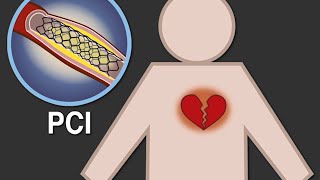

 PM
PM FB
FB PA
PA RF
RF KF
KF GW
GW AM
AM