The discussions show enthusiasm for the topic, exemplified by comments like 'I liked this video a lot' and references to a documentary series on brain evolution, which reflect excitement and curiosity. Derivative mentions such as 'the origins of the action potential' and discussions about competition among ciliates highlight their engagement with the scientific content, with some referencing specific mechanisms like calcium influx and contraction, demonstrating moderate to deep interest.
AgreementModerate agreement
Most discussions acknowledge the significance of the research, with some explicitly supporting the evolutionary hypothesis presented.
InterestHigh interest
Participants demonstrate high interest, often highlighting curiosity about the origins of neural functions and evolutionary processes.
EngagementModerate engagement
Comments include references to related videos and detailed queries, indicating moderate to deep engagement with the topic.
ImpactModerate impact
The discussions reflect a recognition that understanding early neural evolution could influence broader fields like neuroscience and microbiology, though this recognition is somewhat implied rather than explicitly stated.
Abstract in brief
The text presents an evolutionary hypothesis suggesting that the depolarization-contraction-secretion (DCS) coupling mechanism in animal neuromuscular systems originated in unicellular stem eukaryotes as a response to calcium influx caused by membrane damage.
It explains that this initial emergency response was later adapted into an ancient mechanosensory-effector pathway in the last common ancestor of eukaryotes, facilitating movement and cellular responses.
Additionally, it discusses how the development of voltage-sensitive sodium-calcium channels in cilia allowed for rapid, coordinated action potentials that spread throughout the cell, leading to specialized cells like neurons and muscle cells, foundational to the nervous system.]
I wanted to dig into the origins of the action potential. Well, you may know it isn’t a nervous system invention. It has been ‘borrowed’ from mechanosensory contractile cells. https://t.co/eLYvz9Smv7
Mar 29, 2022 · 22 likes · 5 shares · 2,811 followersView post →
JM
Journey to the Microcosmos
@JourneyToMicro · X
In order to avoid being eaten by predators, certain ciliates have evolved the ability to flinch to get out of the way.
And when they contract, they can travel as fast as 1,200 body lengths per second! https://t.co/dBz5HYkZhy
Jun 7, 2021 · 20 likes · 4 shares · 7,975 followersView post →
MP
Miles Wischnewski - Psyched!
@MilesWischnews1 · X
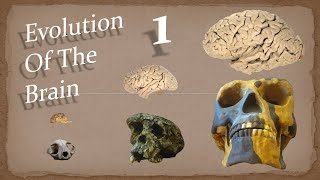
Check out our new YouTube mini-series! A documentary about how the brain evolved. Today, the first episode: The first brains. #brain #neuroscience #evolution #Documentary
If you like this episode, feel free to share!
https://t.co/9CUlgFbkKz
From damage response to action potentials: early evolution of neural and contractile modules in stem eukaryotes https://t.co/FizWRHn9gt
Feb 18, 2019 · 6 likes · 1 share · 206 followersView post →
SR
Sarah Reiff
@sbreiff · X
@RomainBrette @matthewcobb @WiringTheBrain On a related note, I found this paper by @thibaut_brunet particularly interesting, though the focus isn't primarily ciliates: https://t.co/2NSR4k2r0n
Nov 7, 2022 · 2 likes · 1 share · 333 followersView post →
S
smekkens
@pandemic_de · X
https://t.co/WpVYxf4mvQ
Jun 26, 2021 · 1 like · 1 share · 1,143 followersView post →
This video explores the origin of neural and muscle systems from unicellular ancestors, focusing on how calcium influx from membrane damage led to early depolarization-contraction mechanisms that evolved into complex…
Discover how the brain evolved from basic nerve nets responding to touch to complex structures with autonomous movement, examining early neural and contractile modules and the development of specialized cells like…
RT @sbreiff: @RomainBrette @matthewcobb @WiringTheBrain On a related note, I found this paper by @thibaut_brunet particularly interesting,…
Nov 8, 2022 · 1 share · 40,418 followersView post →
SR
Sarah Reiff
@sbreiff · X
@RomainBrette @matthewcobb @WiringTheBrain On a related note, I found this paper by @thibaut_brunet particularly interesting, though the focus isn't primarily ciliates: https://t.co/2NSR4k2r0n
Nov 7, 2022 · 2 likes · 1 share · 333 followersView post →
D
DirtyBirdGrey
@grey_dirty · X
Evolution Of The Brain: The First Brains | Mini-Series Documentary - Epi... https://t.co/zT3817fRsc via @YouTube
RT @JulioMTNeuro: I wanted to dig into the origins of the action potential. Well, you may know it isn’t a nervous system invention. It has…
Mar 30, 2022 · 5 shares · 1,795 followersView post →
KD
Kathy DelGiorno
@DelgiornoKathy · X
RT @JulioMTNeuro: I wanted to dig into the origins of the action potential. Well, you may know it isn’t a nervous system invention. It has…
Mar 29, 2022 · 5 shares · 1,913 followersView post →
HY
Hao Yin
@HaoYin20 · X
RT @JulioMTNeuro: I wanted to dig into the origins of the action potential. Well, you may know it isn’t a nervous system invention. It has…
Mar 29, 2022 · 5 shares · 12,488 followersView post →
JM
Julio Martinez
@JulioMTNeuro · X
I wanted to dig into the origins of the action potential. Well, you may know it isn’t a nervous system invention. It has been ‘borrowed’ from mechanosensory contractile cells. https://t.co/eLYvz9Smv7
Mar 29, 2022 · 22 likes · 5 shares · 2,811 followersView post →
In order to avoid being eaten by predators, certain ciliates have evolved the ability to flinch to get out of the way.
And when they contract, they can travel as fast as 1,200 body lengths per second! https://t.co/dBz5HYkZhy
Jun 7, 2021 · 20 likes · 4 shares · 7,975 followersView post →
MP
Miles Wischnewski - Psyched!
@MilesWischnews1 · X
Check out our new YouTube mini-series! A documentary about how the brain evolved. Today, the first episode: The first brains. #brain #neuroscience #evolution #Documentary
If you like this episode, feel free to share!
https://t.co/9CUlgFbkKz
 JM
JM SM
SM SR
SR
 BM
BM KM
KM JK
JK K
K KD
KD HY
HY