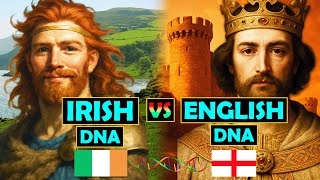
The discussions touch on various aspects of the article, such as the genetic relationships between contemporary Irish populations and historical migrators. For instance, some users point out that 'the Irish are genetically the same as the first Indo-Europeans' and debate the extent of migrations throughout history, using phrases like 'this will rip the heart out of many.' The tone is predominantly inquisitive and often confrontational, with contributors challenging each other's assertions, which reflects the contentious nature of the topic and emphasizes the perceived significance of the findings.
AgreementModerate agreement
Overall, most discussions reflect a supportive stance towards the findings of the publication, recognizing the significance of the genetic changes it discusses.
InterestHigh interest
There is strong curiosity evident in the posts, with many users expressing a desire to understand the implications of the research on Irish ancestry.
EngagementModerate engagement
While some posts merely share links, others delve into specifics of the methodology and results, indicating a moderate level of engagement.
ImpactHigh impact
Many contributors view the research as impactful, believing it reshapes narratives about Irish heritage and immigration.
Abstract in brief
The Neolithic and Bronze Age migrations to Ireland were driven by early farmers from the Near East and herders from the Pontic Steppe, leading to significant cultural and genetic changes.
Whole genome analysis of prehistoric Irish individuals revealed that Neolithic individuals had predominantly Near Eastern ancestry, indicating a substantial influx of early farmers.
Bronze Age individuals exhibited substantial Steppe genetic heritage, suggesting connections to broader European population movements and the potential introduction of Indo-European languages, alongside identified genetic traits that are prevalent in modern Irish populations.
@PeteFarrell14 And yet there are many of us that carry the same hereditary gene from the earliest bog bodies found on the island 4,000 years ago.
https://t.co/qHgA3glWlR
Jun 15, 2024 · 73 likes · 1 share · 2,290 followersView post →
OM
Owen McCormick
@owen_mccor · X
@SydSteyerhart I would say since 2,500 BC… the Irish are genetically the same as the first Indo-Europeans who arrived on the island over 4,000 years ago, before the Jews even existed. https://t.co/u9iTxxKBVH https://t.co/Nh1LFlmVKQ
May 14, 2025 · 11 likes · 3,420 followersView post →
C
Chigeorge
@Chigeorge72 · X
@Ataturksmen @eftimia60 @bigjohn53979259 @TheRisingFinix @WaffenSS70520 @lolita194636511 @kolonjar @GrecoStrategos @APsilos @GBrezftohti @theoperi @andros_sk_mari @_Makedonuts_ @TheCross_ICXCN @PallasGlaux @StopYourBsSerb @dsgsdfg51647791 @Darnakas3 @G7uQ40F6VP1Rv2U @tricomtech @THE_GREEK_007 @DinosPalaio @Konstan16204029 @TreloKomio5 @Tutunarot1 @DirectorMKD @JordanTviterka @vladegv @No_Grik_Style @helleniccanuck1 @aleviyemem @haha_bou @MAKEDONMMA @max_zek_x @Aretitheta @Ar_MA_ge_don @SrebreniKopja @OKOTOnaSE @panbog2 @YiosDia @mmamakedonia @BasilesNikolaou @MakedonPaeon @AITWLOS @dokurcev @PegoEmpresa @dondon90820793 Because it's not Turkic ancestry from Central Asia you clown. It's ancestry from Neolithic farmers who lived in Asia Minor. There weren't Turkish speaking people living in Anatolia 6000 years ago. God you are such a fool
Feb 26, 2024 · 10 likes · 3 shares · 552 followersView post →
K
KB
@KB6233 · X
@real_eire He needs to do more reading clearly…
https://t.co/j10TNgATDm
Jun 4, 2025 · 7 likes · 1 share · 971 followersView post →
K
KB
@KB6233 · X
@tcddublin @rte @IrishTimes @MarkHennessy Researchers found that while there were substantial migrations during the Neolithic and Bronze Age periods, leading to significant genetic shifts, the modern Irish population shows strong genetic continuity with these ancient individuals.
https://t.co/j10TNgATDm
#ireland
Jun 3, 2025 · 7 likes · 2 shares · 971 followersView post →
K
KB
@KB6233 · X
@MichealMartinTD A Revisionist…educate yourself…no mongrels here.
https://t.co/j10TNgBrsU
Jun 3, 2025 · 6 likes · 1 share · 971 followersView post →
What are the DNA differences and similarities between Ireland and England? This video explores ancient DNA variations due to migrations in the Neolithic and Bronze Age, examining factors like lactose tolerance…
This video explores the genetics of Celtic peoples, their history, and the prevalence of red hair, including insights from ancient populations and societal structures during the Iron Age in Europe.
Why do some countries drink milk while others do not? Approximately 30% of adults can digest lactose, the sugar in milk. This video examines the link between Neolithic and Bronze Age migrations and how they influenced…
@PogoSkyBlues42 The newspaper article is from 2009, which is about a century ago in genetic studies
Whole genome sequencing became the norm in archaeogenetics years later, so any sources need to be post-2015
https://t.co/dXYAJcRoNa
Oct 13, 2025 · 1 like · 9,258 followersView post →
C
Coliege
@Colieg133742 · X
RT @Colieg133742: Link
https://t.co/mKLhrm2zmf
Aug 11, 2025 · 2 shares · 2,468 followersView post →
@LoudSil89342659 @terroristjords @grok Cassidy, L. M., et al. (2016). "Neolithic and Bronze Age migration to Ireland and establishment of the insular Atlantic genome." Proceedings of the National Academy of Sciences (PNAS), 113(2), 368–373.
Summary: This seminal study sequenced the first ancient human genomes from
@Pay1707 @OptimusGael @vicentedpsantos @punishablepress This wiki also in the part titled "Mesolithic People of Ireland" talk about that https://t.co/fqe43mVODt but if you want an accademic source, here the university of dublin study:
https://t.co/MGwpiPU6hu
https://t.co/rYXrf3Tvzf
9/?
@OptimusGael @Pay1707 @vicentedpsantos @punishablepress Immigrants breed and mixed togheter with the already present population of ireland since the begining hence irish today are different from the irish 33000 years ago. Immigration shape Ireland.
Study from the trinity college of dublin: https://t.co/2n9P9BMmjd
@paddymcgael Source is this study, https://t.co/4ZRssGmzCB.
That question is exactly what I'm wondering. There could have been some small percentage of intermarriage, but we see even greater intermarriage between Anglo-Saxons in east Britain, and we have no continuity in oral tradition. So https://t.co/kTZLqHYHvO
Jun 17, 2025 · 2 likes · 1 share · 5,020 followersView post →
@tcddublin @rte @IrishTimes @MarkHennessy Researchers found that while there were substantial migrations during the Neolithic and Bronze Age periods, leading to significant genetic shifts, the modern Irish population shows strong genetic continuity with these ancient individuals.
https://t.co/j10TNgATDm
#ireland
Jun 3, 2025 · 7 likes · 2 shares · 971 followersView post →
LC
Luke C
@LukeColeman89 · X
@lefthandpathed @westie1988ie This is not actually true. Those of the Neolithic period (time of Newgrange being built) share common genetics with the Basque region
https://t.co/CJLbOZmRwS
@NotAPornDev @TooWhiteToTweet The oldest ancestors of the irish migrated from the middle east. Sorry to burst your and her bubble.
https://t.co/secKoYnVrx
@SydSteyerhart I would say since 2,500 BC… the Irish are genetically the same as the first Indo-Europeans who arrived on the island over 4,000 years ago, before the Jews even existed. https://t.co/u9iTxxKBVH https://t.co/Nh1LFlmVKQ
May 14, 2025 · 11 likes · 3,420 followersView post →
Dec 22, 2024 · 2 shares · 2,468 followersView post →
C
Coliege
@Colieg133742 · X
Link
https://t.co/mKLhrm2zmf
Dec 22, 2024 · 1 like · 2 shares · 2,468 followersView post →
TB
Tom Booth
@boothicus.bsky.social · Bluesky
In Britain at least, incoming groups seem to be interested in and reuse older monuments that were not built by their ancestors so it would be surprising if they were totally unaware of Newgrange.
pubmed.ncbi.nlm.nih.gov/26712024/
Interesting ...We have a J halpgroup.I never knew DNA from middle east existed in Ireland at all.
https://t.co/ZvaOMERH0E https://t.co/0UthtNCBXQ
Nov 29, 2024 · 1 like · 1,466 followersView post →
B
BUGENHAGEN
@BU6ENHA6EN · X
@hubiegallagher @EmmaCDeSouza People aren't single celled organisms.
Ancient peoples migrated, settled, and diverged from others due to geography and sexual selection. Sub-groups form and become the precursory celtic peoples we refer to today.
R1b is a good start though...
https://t.co/tqbq8oarCE
Oct 29, 2024 · 4 likes · 4,837 followersView post →
MC
Martin Corry
@MartinCorryTD · X
Neolithic and Bronze Age migration to Ireland and establishment of the insular Atlantic genome | PNAS https://t.co/cM7gxNtbUT
Oct 13, 2024 · 3 likes · 1,373 followersView post →
MC
Martin Corry
@MartinCorryTD · X
@Mousketeer @brodban @faoljew " investigation shows" our DNA mostly originated on the Pontic–Caspian steppe . you should stop talking about things you know nothing about. https://t.co/cM7gxNtbUT
Oct 13, 2024 · 1 like · 1,373 followersView post →
P
Pogo
@PogoSkyBlues42 · X
@Colieg133742 @Mick_O_Keeffe If you had read the piece, you'd have seen the link to the scientific paper. Lara Cassidy is the DNA expert.
https://t.co/mCLxCKNR01
Oct 4, 2024 · 2 likes · 3,237 followersView post →
C
claire
@claire15187974 · X
RT @prodlegacy: Thhs will rip the hhart out of many with the results or ancient remains on the island of ireland.
Putting the "planter" com…
Thhs will rip the hhart out of many with the results or ancient remains on the island of ireland.
Putting the "planter" comments to bed and proving modern Irish claims of Gaels/(K)Celts here from the beginning of time to be a lie https://t.co/LdgGF7ujzo
Sep 14, 2024 · 1 like · 1 share · 7,896 followersView post →
HW
hull_wifi447
@hullwifi44766 · X
@real_ClauTau @consciousphilos @MusclesMcSexy this is the best which i could quickly find for Basques: https://t.co/5ubvygscDq
Daniel G. Bradley of Trinity College was well received when he published this paper on Irish population genetics (https://t.co/0XBwF9mlLD), so his reputation is held in fairly high regard iirc
@john_mcguirk “Hard ethno-nationalism” - in the sense of the Harry Potter film - “pure blood”? There is a close DNA affinity between the Irish, and the Scots. This suggests “a degree of continuity stretching over 4,000 y at the insular Celtic edge of Europe.” https://t.co/x5UAi29RHu https://t.co/J8soNyPyf8
RT @MutedIrish: @PeteFarrell14 And yet there are many of us that carry the same hereditary gene from the earliest bog bodies found on the i…
Jun 17, 2024 · 1 share · 1,218 followersView post →
MM
Mick Maguire
@MutedIrish · X
@PeteFarrell14 And yet there are many of us that carry the same hereditary gene from the earliest bog bodies found on the island 4,000 years ago.
https://t.co/qHgA3glWlR
Jun 15, 2024 · 73 likes · 1 share · 2,290 followersView post →
C
Cathy
@cathyby · X
@CarterW1169 @Maurice20887816 No, they didn't.
There's no supporting archaeological evidence of an invasion then.
DNA evidence doesn't support it. There's continuity between modern day Irish populations and the Bronze Age people who arrived 4,500 years ago. https://t.co/bxkfNd2cZ4.
Feb 26, 2024 · 3 shares · 210 followersView post →
C
Chigeorge
@Chigeorge72 · X
@Ataturksmen @eftimia60 @bigjohn53979259 @TheRisingFinix @WaffenSS70520 @lolita194636511 @kolonjar @GrecoStrategos @APsilos @GBrezftohti @theoperi @andros_sk_mari @_Makedonuts_ @TheCross_ICXCN @PallasGlaux @StopYourBsSerb @dsgsdfg51647791 @Darnakas3 @G7uQ40F6VP1Rv2U @tricomtech @THE_GREEK_007 @DinosPalaio @Konstan16204029 @TreloKomio5 @Tutunarot1 @DirectorMKD @JordanTviterka @vladegv @No_Grik_Style @helleniccanuck1 @aleviyemem @haha_bou @MAKEDONMMA @max_zek_x @Aretitheta @Ar_MA_ge_don @SrebreniKopja @OKOTOnaSE @panbog2 @YiosDia @mmamakedonia @BasilesNikolaou @MakedonPaeon @AITWLOS @dokurcev @PegoEmpresa @dondon90820793 Because it's not Turkic ancestry from Central Asia you clown. It's ancestry from Neolithic farmers who lived in Asia Minor. There weren't Turkish speaking people living in Anatolia 6000 years ago. God you are such a fool
Feb 26, 2024 · 10 likes · 3 shares · 552 followersView post →
MC
Martin Corry
@MartinCorryTD · X
@Big_Frank88LFC @EoinODuffy70964 @CBhearra @ThoughtsToby we have no genetic relationship to the people that were here 12,000 years ago. our earliest ancestors here arrived circa 2000BC and the genetic profile of this island has remained remarkably stable since. stop posting about things you know nothing about https://t.co/cM7gxNtbUT
@badgers_no @EamonnDwyer @CityBureaucrat Neolithic remnants in Ireland are Iberians! The later celts (King Milesias/Breogan) took the same path their neolithic predecessors did in their invasion of Ireland.
https://t.co/5sI4v8Bm2Y https://t.co/uA4NKXtX0n
@wayfaringael @RawWarSis @nrken19 That’s great! Does the site feature have these older Bronze Age and Neolithic Irish DNA samples? https://t.co/eNSONGbfdA
Neolithic and Bronze Age migration to Ireland and establishment of the insular Atlantic genome | Proceedings of the National Academy of Sciences https://t.co/YbV5bSVY7g
@GrayConnolly 'Neolithic and Bronze Age migration to Ireland and establishment of the insular Atlantic genome'
PNAS January 12, 2016 113 (2) 368-373; first published December 28, 2015; Edited and approved November 18, 2015 (received for review September 18, 2015)
https://t.co/s2baR9nRSy
RT @Al_batross: Neolithic and Bronze Age migration to Ireland and establishment of the insular Atlantic genome | Proceedings of the Nationa…
May 31, 2022 · 1 share · 1,617 followersView post →
日
日月日
@Al_batross · X
Neolithic and Bronze Age migration to Ireland and establishment of the insular Atlantic genome | Proceedings of the National Academy of Sciences https://t.co/FdwVj02VEU
May 31, 2022 · 1 like · 1 share · 325 followersView post →
NF
Neil Foxlee
@FoxleeNeil · X
@castlvillageman The academic study in question was published in 2015 (https://t.co/MuS7wPWLjD ), alongside a BBC article about it (https://t.co/knYd55OV37 ).
@_pileoflaundry_ @AshDahlstrom 'Neolithic and Bronze Age migration to Ireland and establishment of the insular Atlantic genome'
PNAS January 12, 2016 113 (2) 368-373; first published December 28, 2015; Edited and approved November 18, 2015 (received for review September 18, 2015).
https://t.co/dt33LcxwPz
@p_pakira ①はちょっと古いですけど『Toward a phylogenetic chronology of ancient Gaulish, Celtic, and Indo-European』での島嶼-大陸ケルト語の分裂時期の算定です。②は『Neolithic and Bronze Age migration to Ireland and establishment of the insular Atlantic genome』です。いずれもPNASで公開され