The discussions reflect strong agreement with the publication's conclusions, illustrated by comments such as 'exercise makes our natural killer cells more active' and references to immune mechanisms like epinephrine and IL-6, which show high engagement with the scientific details and implications for therapy. Words like 'important adjuvant therapy' and phrases about tumor suppression convey a sense of high impact and relevance.
AgreementStrong agreement
Most discussions support the article's findings, emphasizing the beneficial role of exercise in tumor suppression and immune function.
InterestHigh interest
Posts demonstrate high interest, referencing specific mechanisms like NK cell mobilization and metabolic pathways, indicating engagement with the scientific content.
EngagementHigh engagement
Discussions include detailed references to molecular pathways (epinephrine, IL-6) and real-world implications, showing deep engagement and analytical thinking.
ImpactHigh impact
Many posts highlight potential clinical applications and the significance of exercise as an adjunct therapy, suggesting perceived high impact of the research.
Abstract in brief
Regular voluntary exercise significantly reduces tumor growth and incidence in mice, with over 60% reduction observed across different tumor models.
Exercise promotes immune function, especially increasing natural killer (NK) cell infiltration into tumors.
The mobilization and activity of NK cells during exercise are driven by epinephrine and IL6, and blocking these pathways diminishes the tumor-suppressing effects of exercise.]
Exercise via epinephrine-induced mobilization of NK cells reduces tumor growth in mouse models.
@tnseyfried @DominicDAgosti2 @ProfTimNoakes
https://t.co/TImOVG89FH https://t.co/9dkwu00w28
Aug 22, 2020 · 14 likes · 1 share · 45,068 followersView post →
LS
Lykke Sylow
@LykkeSylow · X
Exercise training may be an important adjuvant therapy to counteract cancer cachexia (as has also previously been shown by Pernille Højmann’s group https://t.co/Tc3VZkAlz5) Mechanisms may involve COPS2 to regulate myotube homeostasis.
https://t.co/cfzhpifmJw
May 13, 2020 · 10 likes · 1 share · 3,011 followersView post →
Regular voluntary exercise significantly reduces tumor growth and boosts immune function, particularly increasing natural killer cell activity, driven by epinephrine and IL6, which are crucial for tumor suppression.
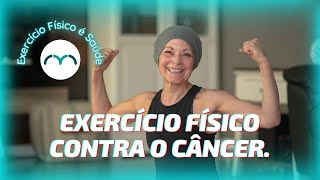
This video explores the transformative power of physical activity for cancer patients, highlighting evidence supporting its safety and benefits during treatment and recovery. Exercise improves quality of life, reduces…
Referencia: Pedersen, L., Idorn, M., Olofsson, G. H., et al. (2016). Voluntary running suppresses tumor growth through epinephrine- and IL-6-dependent NK cell mobilization and redistribution. Cell Metabolism, 23(3), 554-562.
4 Improving immune system function
There is evidence that exercise makes our natural killer cells more active and able to infiltrate and kill tumor cells more effectively
https://t.co/8cDjH9hIUr
RT @LDLSkeptic: Exercise via epinephrine-induced mobilization of NK cells reduces tumor growth in mouse models.
@tnseyfried @DominicDAgost…
Aug 22, 2020 · 1 share · 2,829 followersView post →
DD
David Diamond
@LDLSkeptic · X
Exercise via epinephrine-induced mobilization of NK cells reduces tumor growth in mouse models.
@tnseyfried @DominicDAgosti2 @ProfTimNoakes
https://t.co/TImOVG89FH https://t.co/9dkwu00w28
Aug 22, 2020 · 14 likes · 1 share · 45,068 followersView post →
C
CB
@cebentrena · X
RT @LykkeSylow: Exercise training may be an important adjuvant therapy to counteract cancer cachexia (as has also previously been shown by…
Exercise training may be an important adjuvant therapy to counteract cancer cachexia (as has also previously been shown by Pernille Højmann’s group https://t.co/Tc3VZkAlz5) Mechanisms may involve COPS2 to regulate myotube homeostasis.
https://t.co/cfzhpifmJw
May 13, 2020 · 10 likes · 1 share · 3,011 followersView post →
 DD
DD LS
LS 筋
筋 JD
JD A
A C
C
 PM
PM FC
FC D
D SC
SC GP
GP RP
RP C
C