layomi
@_layomi_ · X
@chidustarr i can be bothered to explain it but this video helped me understand https://t.co/EQrdiFbgeL
May 21, 2023 · 1 like · 1,898 followers
View post →
Mentions
Extended reach
Total likes
Video views
AI synopsis
The overall tone reflects curiosity and recognition of the article's relevance, with posts like 'this video helped me understand' indicating interest. The use of words like 'ELI5' and 'neuroscience' shows a desire to simplify and engage with complex scientific concepts, but the lack of strong agreement or disagreement points to a moderate overall impact.
Most posts are neutral, with some showing understanding or acknowledgment of the topic without strong support or doubt.
There is a modest level of curiosity, as seen in posts that find the topic educational or worth learning about.
Participants show some effort to connect with the material, such as simplifying complex ideas or referencing related discussions.
The discussions don't suggest that the publication causes major shifts in opinions or practices, but they do promote some level of awareness.
@chidustarr i can be bothered to explain it but this video helped me understand https://t.co/EQrdiFbgeL
ELI5: 2-Minute #Neuroscience: #LSD | Neuroscientifically Challenged [Apr 2020] @neurochallenged https://t.co/fF4MHfKo26
Receptor interaction profiles of novel psychoactive #tryptamines compared with classic #hallucinogens
2-Minute Neuroscience: LSD or Lysergic acid diethylamide https://t.co/tveNQWUpvs

Psilocybin is a psychoactive substance found in various mushrooms. It is metabolized into psilocin, which significantly affects the brain. Recent research connects psychedelics to serotonin receptors, revealing…
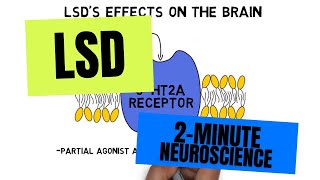
Lysergic acid diethylamide, or LSD, is a potent psychoactive substance classified as a hallucinogen. This video discusses LSD's effects on the brain, highlighting its action at serotonin 5-HT2A receptors, which play a…
@chidustarr i can be bothered to explain it but this video helped me understand https://t.co/EQrdiFbgeL
ELI5: 2-Minute #Neuroscience: #LSD | Neuroscientifically Challenged [Apr 2020] @neurochallenged https://t.co/fF4MHfKo26
Receptor interaction profiles of novel psychoactive #tryptamines compared with classic #hallucinogens
2-Minute Neuroscience: LSD or Lysergic acid diethylamide https://t.co/tveNQWUpvs
 P
P