Participants interpret the publication as highlighting the complex interplay between differentiation and cell division, with comments referencing epigenetic stability, chromatin, and the reversibility of cellular states. The tone suggests curiosity and recognition of the article's significance for fields like cellular biology and neuroscience, with phrases like 'interesting article' and questions about whether cell differentiation and division are simply correlated or causally connected.
AgreementModerate agreement
The discussion indicates a general agreement with the article's insights about the relationship between differentiation, cell division, and epigenetic factors.
InterestHigh interest
Participants show high curiosity, especially regarding the implications of neurons' inability to divide and epigenetic mechanisms.
EngagementModerate engagement
Comments involve thoughtful considerations about the connection between cell differentiation and division, suggesting moderate to deep engagement.
ImpactModerate impact
The discussion hints at the broader importance of these findings for understanding cellular processes and potential implications in neuroscience and regenerative medicine.
Abstract in brief
Cortical neurons are postmitotic cells, meaning they are specialized to not divide, but under certain conditions, they can reenter the cell cycle and replicate DNA.
Their inability to divide is due to the high stability of their nuclear structure, which creates an energy barrier that prevents physical processes like mitosis.
If cortical neurons attempt to replicate DNA without dividing, they typically die through apoptosis, mainly because their nuclear structure cannot support successful cell division.
@WallaceUcsf Necessary or just a correlation? Maybe differentiation & cell division just "finish" at same time. Epigenetic marks & chromatin must survive cell division in determination, and must be reversible in transdeterm & transdiff. Interesting article here: https://t.co/kkYazJ4M89
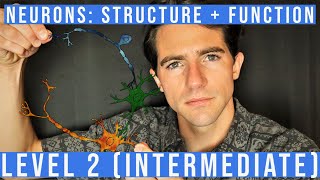
This video explains what neurons are, their structures, and functions, including the three main types of neurons. It covers the basics of neuron anatomy, activity, and their role in brain function, providing clear…
This 30-second video introduces the essential concepts about neurons, the main cell type in the brain. For more detailed information, check out the intermediate and advanced videos on neuron structure and function.
This video briefly answers what neurons are, their appearance, and their functions. For a more in-depth explanation and information on neuron types, check out the Level 3 advanced video. It also covers how neurons…
@WallaceUcsf Necessary or just a correlation? Maybe differentiation & cell division just "finish" at same time. Epigenetic marks & chromatin must survive cell division in determination, and must be reversible in transdeterm & transdiff. Interesting article here: https://t.co/kkYazJ4M89
 MG
MG