The central role of arterial retention of cholesterol-rich apolipoprotein-B-containing lipoproteins in the pathogenesis of atherosclerosis: a triumph of simplicity.
The discussions reflect strong agreement and deep interest, with references to experimental evidence, critiques of traditional views, and emphasis on ApoB's causal role, which collectively indicate that this publication significantly influences understanding and debate about atherosclerosis mechanisms.
AgreementStrong agreement
Most discussions agree with the article's assertion that ApoB-rich lipoprotein retention causes atherosclerosis, citing evidence and emphasizing its central role.
InterestHigh interest
The variety of references, mentions of historical human studies, and debates about mechanisms show high engagement and curiosity about the topic.
EngagementHigh engagement
Numerous posts reference specific studies, mechanisms (like ApoB’s role), and critique or support ideas, indicating deep involvement.
ImpactHigh impact
The discussions underscore the importance of this model in understanding and potentially treating cardiovascular disease, suggesting high relevance.
Top posts
Most liked on X and Bluesky
GP
Gil Carvalho MD PhD
@NutritionMadeS3 · X
"It's tempting to think of atherosclerosis as a disease of modern lifestyle. Yet it has plagued humans for thousands of years and has been detected in 4000yo Egyptian mummies"
beware the story-telling!
https://t.co/wDzHOM4EhP
Mar 19, 2022 · 58 likes · 16 shares · 27,911 followersView post →
SB
Simon Hill MSc, BSc
@theproof · X
5/ Genetic studies, observational studies and RCT’s unequivocally show that elevated LDL-C, and more specifically ApoB, CAUSES atherosclerosis. Yes this is considered adequate evidence to make a causal claim.
https://t.co/T7wvsDfjyH https://t.co/LEmZmN9siu
Dec 27, 2021 · 45 likes · 1 share · 34,241 followersView post →
SB
Simon Hill MSc, BSc
@theproof · X
3/ Firstly, the mechanism by which elevated LDL cholesterol (LDL-C) increases risk of atherosclerotic CVD is by increasing the # of circulating ApoB containing lipoproteins.
https://t.co/T7wvsDfjyH
Dec 27, 2021 · 41 likes · 2 shares · 34,241 followersView post →
TD
Thomas Dayspring
@Drlipid · X
@NathanEqualsOne @DrNadolsky @DaveDixonPharmD @DineshKalra @dmljmd @ethanjweiss You need nothing more than this https://t.co/A3r3DabtM0
Jun 13, 2019 · 25 likes · 4 shares · 42,050 followersView post →
A
Agingdoc
@agingdoc1 · X
The central role of arterial retention of cholesterol-rich apolipoprotein-B-containing lipoproteins in the pathogenesis of atherosclerosis: a triumph of simplicity (2016)
Cardiologist reasoning: our recommendations are pro-oxidant, therefore oxidation can't be harmful.
It's not simple, it's simple-minded.
"The Central Role of Arterial Retention of Cholesterol-Rich Apolipoprotein-B-Containing Lipoproteins in the Pathogenesis of Atherosclerosis: A https://t.co/qrModakt2z
Jan 4, 2024 · 13 likes · 3 shares · 28,293 followersView post →
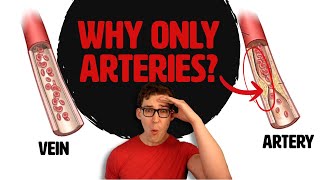
This video explores why plaque develops in arteries but not in veins. Learn about the role of cholesterol-rich lipoproteins in atherosclerosis and the factors influencing arterial and venous health.
This video discusses the retention hypothesis of early atherogenesis and the role of cholesterol-rich lipoproteins in artery health. It highlights the impact of cholesterol accumulation on vascular health and its…
Higher dietary fiber intake is linked to a lower risk of cardiovascular disease (CVD) and can improve blood pressure and health factors. This video explores the impact of fiber consumption on overall mortality…
@Alicewants2know @MohammedAlo “LDL and other cholesterol-rich, apoB-containing lipoproteins, once they become retained and modified within the arterial wall, cause atherosclerosis.”
https://t.co/d5iexXaFOX
Cardiologist reasoning: our recommendations are pro-oxidant, therefore oxidation can't be harmful.
It's not simple, it's simple-minded.
"The Central Role of Arterial Retention of Cholesterol-Rich Apolipoprotein-B-Containing Lipoproteins in the Pathogenesis of Atherosclerosis: A https://t.co/qrModakt2z
Jan 4, 2024 · 13 likes · 3 shares · 28,293 followersView post →
HM
Hojun Rhee MD
@dUPktOojEnoulHK · X
RT @agingdoc1: The central role of arterial retention of cholesterol-rich apolipoprotein-B-containing lipoproteins in the pathogenesis of a…
The central role of arterial retention of cholesterol-rich apolipoprotein-B-containing lipoproteins in the pathogenesis of atherosclerosis: a triumph of simplicity (2016)
@ifixhearts A Century of Cholesterol and Coronaries: From Plaques to Genes to Statins
https://t.co/3u2CIOGa5z
The central role of arterial retention of cholesterol-rich apolipoprotein-B-containing lipoproteins in the pathogenesis of atherosclerosis
https://t.co/UQsNHcQS7z
@PKennedyeMD 1) lowering particle number via diff mechanisms (pharma, diet, genetics etc) lowers risk, raising them raises it. this huge body of evidence disproves the "firefighter" idea
2) transcytosis from the lumen occurs thru SRB-I
https://t.co/HhTpIh09Mk
https://t.co/wDzHOM4EhP
@giedriusci @dylanarmbruste3 "If there is progression" being the key phrase. This study explains how ApoB is essential in atherosclerosis. No ApoB, no CVD. Best to keep it low. https://t.co/UVbXyuWPOA
@giedriusci No "if" was mentioned or implied.
That explanation doesn't hold up and was abandoned for a better explanation from Williams. https://t.co/hxLtDT8dSl https://t.co/0b3spmsBvX
RT @NutritionMadeS3: "It's tempting to think of atherosclerosis as a disease of modern lifestyle. Yet it has plagued humans for thousands o…
Mar 24, 2022 · 16 shares · 225 followersView post →
JT
Jamie Timmons
@metapredict · X
RT @NutritionMadeS3: "It's tempting to think of atherosclerosis as a disease of modern lifestyle. Yet it has plagued humans for thousands o…
Mar 20, 2022 · 16 shares · 2,056 followersView post →
MD
Mike D
@n0madd · X
RT @NutritionMadeS3: "It's tempting to think of atherosclerosis as a disease of modern lifestyle. Yet it has plagued humans for thousands o…
Mar 20, 2022 · 16 shares · 247 followersView post →
AK
Aljosa Kuzmanovski
@Aljoo5 · X
RT @NutritionMadeS3: "It's tempting to think of atherosclerosis as a disease of modern lifestyle. Yet it has plagued humans for thousands o…
Mar 20, 2022 · 16 shares · 108 followersView post →
A
Agingdoc
@agingdoc1 · X
The central role of arterial retention of cholesterol-rich apolipoprotein-B-containing lipoproteins in the pathogenesis of atherosclerosis: a triumph of simplicity (2016)
https://t.co/7XicMKq7K2
Mar 20, 2022 · 6 likes · 41,696 followersView post →
D
Daniela
@Noctilucahh · X
RT @NutritionMadeS3: "It's tempting to think of atherosclerosis as a disease of modern lifestyle. Yet it has plagued humans for thousands o…
Mar 20, 2022 · 16 shares · 1,717 followersView post →
J
JASH
@duncanDNUTidaho · X
RT @NutritionMadeS3: "It's tempting to think of atherosclerosis as a disease of modern lifestyle. Yet it has plagued humans for thousands o…
Mar 19, 2022 · 16 shares · 243 followersView post →
HT
Hot tamale
@Seraphine_ghost · X
RT @NutritionMadeS3: "It's tempting to think of atherosclerosis as a disease of modern lifestyle. Yet it has plagued humans for thousands o…
Mar 19, 2022 · 16 shares · 19 followersView post →
MT
Marcelo Temer
@marcelotemer1 · X
RT @NutritionMadeS3: "It's tempting to think of atherosclerosis as a disease of modern lifestyle. Yet it has plagued humans for thousands o…
Mar 19, 2022 · 16 shares · 35 followersView post →
KK
Kaushal Kashyap Ⓥ
@ktimesk · X
RT @NutritionMadeS3: "It's tempting to think of atherosclerosis as a disease of modern lifestyle. Yet it has plagued humans for thousands o…
Mar 19, 2022 · 16 shares · 177 followersView post →
KR
Ken Echevarria, MS, RDN
@ken_echevarria · X
RT @NutritionMadeS3: "It's tempting to think of atherosclerosis as a disease of modern lifestyle. Yet it has plagued humans for thousands o…
Mar 19, 2022 · 16 shares · 272 followersView post →
E
Earthling
@_earthling74 · X
RT @NutritionMadeS3: "It's tempting to think of atherosclerosis as a disease of modern lifestyle. Yet it has plagued humans for thousands o…
Mar 19, 2022 · 16 shares · 428 followersView post →
MJ
Michael Joseph
@Nutradvance · X
RT @NutritionMadeS3: "It's tempting to think of atherosclerosis as a disease of modern lifestyle. Yet it has plagued humans for thousands o…
Mar 19, 2022 · 16 shares · 11,780 followersView post →
GP
Gil Carvalho MD PhD
@NutritionMadeS3 · X
"It's tempting to think of atherosclerosis as a disease of modern lifestyle. Yet it has plagued humans for thousands of years and has been detected in 4000yo Egyptian mummies"
beware the story-telling!
https://t.co/wDzHOM4EhP
Mar 19, 2022 · 58 likes · 16 shares · 27,911 followersView post →
H
Healthspan
@epigeneticcode · X
RT @Plant_proof: 3/ Firstly, the mechanism by which elevated LDL cholesterol (LDL-C) increases risk of atherosclerotic CVD is by increasing…
Jan 21, 2022 · 2 shares · 357 followersView post →
M
MK
@muralijnu1 · X
RT @Plant_proof: 3/ Firstly, the mechanism by which elevated LDL cholesterol (LDL-C) increases risk of atherosclerotic CVD is by increasing…
Dec 28, 2021 · 2 shares · 167 followersView post →
M
MK
@muralijnu1 · X
RT @Plant_proof: 5/ Genetic studies, observational studies and RCT’s unequivocally show that elevated LDL-C, and more specifically ApoB, CA…
5/ Genetic studies, observational studies and RCT’s unequivocally show that elevated LDL-C, and more specifically ApoB, CAUSES atherosclerosis. Yes this is considered adequate evidence to make a causal claim.
https://t.co/T7wvsDfjyH https://t.co/LEmZmN9siu
Dec 27, 2021 · 45 likes · 1 share · 34,241 followersView post →
SB
Simon Hill MSc, BSc
@theproof · X
3/ Firstly, the mechanism by which elevated LDL cholesterol (LDL-C) increases risk of atherosclerotic CVD is by increasing the # of circulating ApoB containing lipoproteins.
https://t.co/T7wvsDfjyH
Dec 27, 2021 · 41 likes · 2 shares · 34,241 followersView post →
BT
Bhopender Thakur
@TheBhupiThakur · X
RT @Drlipid: @NathanEqualsOne @DrNadolsky @DaveDixonPharmD @DineshKalra @dmljmd @ethanjweiss You need nothing more than this https://t.co/…
@Gearoidmuar @Alecsplaining Nope
https://t.co/FbSyfrMXuN
LDL/ApoB is central and causal. Insulin resistance appears exacerbating.
Once again, manage both. Don't see why you have a problem with this
Mar 29, 2021 · 2 likes · 1,204 followersView post →
BT
Bhopender Thakur
@TheBhupiThakur · X
RT @dylanarmbruste3: There is a causal association for LDL and ASCVD full stop.
Evidence:
Ference et al 2017 doi: 10.1093/eurheartj/ehx144…
Feb 28, 2021 · 2 shares · 1,368 followersView post →
DA
Dylan Armbruster
@dylanarmbruste3 · X
There is a causal association for LDL and ASCVD full stop.
Evidence:
Ference et al 2017 doi: 10.1093/eurheartj/ehx144
Borén et al 2020 https://t.co/5UAIV2EpCq
Tabas et al 2007 https://t.co/Us8TwoGFgx
Jan Borén, Kevin Jon Williams DOI: 10.1097/MOL.0000000000000330 (1/n) https://t.co/BFO8K99Gu1
Jan 30, 2021 · 4 likes · 2 shares · 541 followersView post →
AR
Andrew Ryan
@OhhiyoGarmen · X
@LDLSkeptic @DrKarlNadolsky @moreyraortho @nicknorwitz @ethanjweiss @DrNadolsky @DBelardoMD @Drgarthdavis @Drlipid @scottisaacsmd https://t.co/xoeMcW59ES
Williams and Tabas address endothelial damage. ^
More recent publication:
doi: 10.1097/MOL.0000000000000330.
RT @Drlipid: @NathanEqualsOne @DrNadolsky @DaveDixonPharmD @DineshKalra @dmljmd @ethanjweiss You need nothing more than this https://t.co/…
Jun 14, 2019 · 4 shares · 135 followersView post →
PW
Professor Scott Wright
@ScottWrightMD · X
RT @Drlipid: @NathanEqualsOne @DrNadolsky @DaveDixonPharmD @DineshKalra @dmljmd @ethanjweiss You need nothing more than this https://t.co/…
Jun 13, 2019 · 4 shares · 1,385 followersView post →
TD
Thomas Dayspring
@Drlipid · X
@NathanEqualsOne @DrNadolsky @DaveDixonPharmD @DineshKalra @dmljmd @ethanjweiss You need nothing more than this https://t.co/A3r3DabtM0
Jun 13, 2019 · 25 likes · 4 shares · 42,050 followersView post →
PM
Peter Lansberg MDPhD
@lansberg · X
@thoroughlyconf1 @RChrisCC Thank you for the links to the papers. Might I suggest this article (PMID: 27472409) Open access: The central role of arterial retention of cholesterol-rich apolipoprotein-B-containing lipoproteins in the pathogenesis of atherosclerosis: a triumph of simplicity. Boren & Williams https://t.co/gURUFFHGIS