The overall conversations are limited, with some comments like 'check out the paper' showing basic interest, and others mentioning unrelated topics such as ancient vampire bats, which diminish the focus and engagement with the scientific article. The tone and content suggest minimal critical discussion or deep reflection on the research’s implications.
AgreementNeither agree nor disagree
The discussions show minimal agreement or disagreement, with some posts expressing curiosity but not strong support or opposition.
InterestModerate interest
While the first post shows curiosity by encouraging further exploration of the research, the others are either neutral or unrelated, indicating moderate interest overall.
EngagementLow engagement
Most posts have superficial mentions or unrelated content, demonstrating low depth of engagement with the actual scientific findings.
ImpactNeutral impact
The discussions do not seem to influence opinions or prompt further action concerning the article, reflecting a negligible impact.
Abstract in brief
The study investigated how rhamnolipids, a type of biosurfactant, affect the breakdown of rice straw by measuring their adsorption behavior and stimulatory effects in different systems, finding that the fastest adsorption occurred at 50 minutes in a single rice straw system.
Results showed that Trichoderma reesei, a fungus involved in lignocellulose degradation, had the highest adsorption capacity for both dirhamnolipid and mixed rhamnolipid, indicating strong interaction and potential enhancement of degradation processes.
Analyses using SEM and FTIR revealed that adding rhamnolipids significantly damaged the rice straw's tissue structure and promoted hydrogen bond formation between biosurfactants and bacteria, likely boosting the efficiency of lignocellulosic biomass breakdown.
Published on this year by Santiago Brizuela, Daniel A. Tassara
Check out the paper below and let's hope they find more.
https://t.co/xVlSmelWcY
Oct 15, 2021 · 3 likes · 2,516 followersView post →
BI
B i y o t e k n o l o j i
@Biyoteknolojitr · X
Bilim insanları 100 bin yıl önce yaşamış bir vampir yarasının kalıntılarını keşfetti. Yeni araştırmada Arjantin’de bulunan çene kemiğinin, soyu tükenmiş bir dev vampir yarasa türüne ait olduğu doğrulandı.
Aug 15, 2021 · 2 likes · 2,835 followersView post →
The Loch Ness Monster remains a cryptozoology mystery; this video explores the unlikely idea of Nessie as a plesiosaur and examines plesiosaur evolutionary history, focusing on the diversification and phylogenetic…
This study investigates how rhamnolipids affect rice straw breakdown by measuring their adsorption and stimulation effects, revealing enhanced degradation through structural damage and increased hydrogen bonding…
The new species Meraxes gigas, a large predatory dinosaur from the Early Cretaceous, exhibits remarkable forelimb reduction similar to T. rex. Its well-preserved skull enhances our understanding of Carcharodontosauridae…
This video discusses massive predatory dinosaurs like T. rex and the newly identified Meraxes gigas, highlighting their small forelimbs and convergent evolutionary trends in limb reduction among large theropods, with…
This video discusses recent discoveries of giant predatory dinosaurs like Meraxes gigas, highlighting their small forelimbs and anatomical features that show convergent evolution with other theropods, offering insights…
This video explores the diphyodont tooth replacement of Brasilodon, a Late Triassic eucynodont. It sheds light on the origins of mammals, challenging previous timelines. View additional resources and studies linked…
This review covers the anatomical evolution of cetacean noses, highlighting their transition from terrestrial to aquatic life and adaptations for echolocation in odontocetes, alongside genetic evidence and fossil record…
This study investigates how rhamnolipids impact rice straw breakdown by measuring their adsorption behavior and stimulatory effects, revealing how they enhance microbial degradation processes.
Coverage of paleontological topics, including footprint evidence found in Koobi Fora, Kenya, which reveals distinct patterns of early Pleistocene hominin bipedalism. This suggests multiple hominin species lived in close…
The episode explores the unique fossil of Halszkaraptor, a water-dwelling raptor, including a detailed 3D render from ESRF synchrotron. We also highlight recent discoveries of armored dinosaurs in South America…
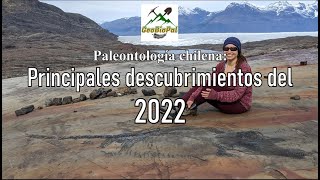
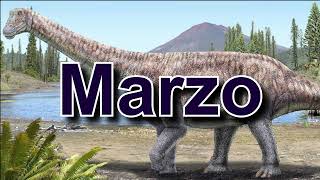
A year filled with significant discoveries that may lay the groundwork for future research in paleontology. This video highlights thirteen notable papers, including the unique Stegouros elengassen, an armoured dinosaur…
This video explores ancient microbes and phages found in glacier ice, crucial for understanding past climates and predicting future climate change. Advanced metagenomic approaches reveal diverse microbial communities…
Published on this year by Santiago Brizuela, Daniel A. Tassara
Check out the paper below and let's hope they find more.
https://t.co/xVlSmelWcY
Oct 15, 2021 · 3 likes · 2,516 followersView post →
BI
B i y o t e k n o l o j i
@Biyoteknolojitr · X
Bilim insanları 100 bin yıl önce yaşamış bir vampir yarasının kalıntılarını keşfetti. Yeni araştırmada Arjantin’de bulunan çene kemiğinin, soyu tükenmiş bir dev vampir yarasa türüne ait olduğu doğrulandı.
Aug 15, 2021 · 2 likes · 2,835 followersView post →