The discussions reflect a keen interest in the methodologies, such as μCT-scanning, and their implications for understanding Euchambersia's venom system, with comments suggesting the study could redefine views on therapsid biology. The tone varies from analytical to enthusiastic, emphasizing the research's importance and challenging previous assumptions about these ancient animals.
AgreementModerate agreement
Most posts acknowledge the significance of the research, with some highlighting its contribution to understanding the venomous capabilities of Euchambersia.
InterestModerate interest
Discussion indicates moderate curiosity, especially about the novel use of CT scans and implications for venom evolution.
EngagementModerate engagement
Posts engage by mentioning specific methods like μCT-scanning and debating anatomical interpretations, showing a moderate level of analysis.
ImpactModerate impact
Posts recognize the research's potential influence on paleontology and evolutionary biology, considering the possibility that Euchambersia was venomous.
Abstract in brief
This study uses CT scans to re-evaluate whether Euchambersia mirabilis, a Permo-Triassic therapsid, could produce and deliver venom, focusing on its facial anatomy and teeth.
The findings suggest that the maxillary fossa, previously thought to house a venom gland, might instead be connected to the facial nerve, indicating a different organization of the sensory system, possibly involving a ganglion rather than venom production.
Despite this, the research still supports the idea that Euchambersia was venomous because it has a ridged dentition and features like a maxillary canal and sulcus that could help deliver venom, aligning with characteristics seen in venomous animals.]
Nice little feature of our @PLOSONE article about the envenoming capacity of Euchambersia.
#OpenAccess paper available here: https://t.co/bMAX0YHhqo https://t.co/Z1wXNjATI2
This study uses CT scans to reassess if Euchambersia mirabilis, a Permo-Triassic therapsid, could produce venom. Findings suggest the facial anatomy may include a ganglion rather than a venom gland, but dentition and…
This video explores the origins and emergence of mammals, highlighting key evolutionary developments and anatomical features integral to mammalian emergence. Discover how these creatures evolved from ancestors and what…
Nice little feature of our @PLOSONE article about the envenoming capacity of Euchambersia.
#OpenAccess paper available here: https://t.co/bMAX0YHhqo https://t.co/Z1wXNjATI2
 LN
LN ヤ
ヤ 四
四 冠諸
冠諸 ビ
ビ モ
モ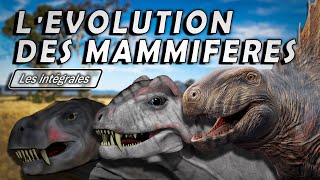

 タ太
タ太 ねA
ねA く
く H
H S
S C
C