The group shows strong interest and engagement through supportive comments and references to scientific studies, highlighting the novelty and environmental relevance of caterpillars digesting plastic. Words like 'discovery,' 'measured,' and mentions of environmental issues reflect excitement and recognition of the potential impact, though some posts also question why mainstream media haven't widely covered this breakthrough.
AgreementModerate agreement
Most discussions express support or fascination with the idea that caterpillars can biodegrade polyethylene, indicating general agreement with the significance of the research.
InterestHigh interest
The posts show high curiosity, with many highlighting the surprising potential of insects in waste management and emphasizing the novelty of biological plastic degradation.
EngagementHigh engagement
Several posts reference specific studies, mention the discovery of this process, and discuss its environmental implications, demonstrating active curiosity and deeper engagement.
ImpactModerate impact
The posts suggest that this finding could have important environmental and waste management implications, but some express surprise rather than asserting definitive breakthrough impact.
Abstract in brief
The text explains that plastics like polyethylene (PE) and polypropylene (PP) are made from fossil fuels and are very resistant to breaking down naturally, leading to significant environmental harm due to landfill waste, recycling, and burning.
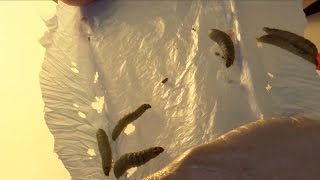
It highlights the rapid biodegradation of PE using larvae of the wax moth Galleria mellonella, which can produce ethylene glycol as a result of this process, offering a potential new solution for plastic waste management.
The increase in plastic production over the past 50 years, coupled with high landfill rates in the EU and related environmental issues, underscores the urgent need for innovative methods like this biological approach to reduce plastic pollution.]
#biopunk #environment #biotecn #insects
Polyethylene bio-degradation by caterpillars of the wax moth Galleria mellonella
https://t.co/Zg5hM03c32 https://t.co/lkrHP02MIO
Mar 11, 2019 · 2 likes · 1 share · 944 followersView post →
T
Tupinambrabo
@SenseiDoMato · X
Bombelli, P., Howe, C. J., & Bertocchini, F. (2017). Polyethylene bio-degradation by caterpillars of the wax moth Galleria mellonella. Current biology, 27(8), R292-R293.
https://t.co/BwKRzzcmFn
Aug 6, 2021 · 1 like · 27,281 followersView post →
LD
Luis O. Nieves, Ph.D.
@lonieves2 · X
Polyethylene bio-degradation by caterpillars of the wax moth Galleria mellonella. #plasticpollution #plasticfree
https://t.co/qU0ilSz1yL
Mar 8, 2020 · 1 like · 1 share · 751 followersView post →
This study demonstrates that mealworms can efficiently biodegrade and mineralize polystyrene within 24 hours, with nearly 48% of the ingested plastic carbon converted into CO2 over 16 days, showing active degradation…
Researchers discovered that the wax worm Galleria mellonella can digest polyethylene, a common and durable plastic. This innovative process could lead to biotechnological solutions for managing polyethylene waste on an…
Bombelli, P., Howe, C. J., & Bertocchini, F. (2017). Polyethylene bio-degradation by caterpillars of the wax moth Galleria mellonella. Current biology, 27(8), R292-R293.
https://t.co/BwKRzzcmFn
Aug 6, 2021 · 1 like · 27,281 followersView post →
@kill_th_plastic La nature est immense, elle nous réserve des surprises. Par exemple, la découverte récente des capacités d'une larve de lépidoptère a biodégrader du polyéthylène , bien plus vite que des bactéries déjà connues: https://t.co/ipUmOVXMax
@Dechets_Infos @scubacutcha Il se trouve quon a au moins un exemple. Les vers mangeurs de cire . Des chercheurs ont prouvé et mesure la quantité de plastique détruit. L'étude a été publiée en 2017 https://t.co/CaD5UZY8hd. Comment se fait il question mass medias n'en aient pas parlé
#biopunk #environment #biotecn #insects
Polyethylene bio-degradation by caterpillars of the wax moth Galleria mellonella
https://t.co/Zg5hM03c32 https://t.co/lkrHP02MIO
Mar 11, 2019 · 2 likes · 1 share · 944 followersView post →
N
Polymer and Its Effect On Environment - Khare 2023 | PDF | Plastic ...
News
Cellulose plastics-made from plants cellulose, and the sources of https://doi.org/10.1016/j.cub.2017.02.060. cellulose are wood pulp, cotton etc [88] ...
1 s2.0 S0734975022000878 Main | PDF | Polyethylene | Plastic
News
https://doi.org/10.1016/j.cub.2017.02.060. 2015. Discovery and characterization of thermophilic limonene-1,2-epoxide. Bonhomme, S., Cuer, A., Delort, A.M. ...
Gut Bacteriaof Achroiagrisella Lesser Wax Moth Larvaeas Biological ...
News
... 10.1016/j.cub.2017.02.060 review.pdf 19. Khyade V. “Review on biodegradation. DOI:10.1371/journal.pone.0071720. of plastic through waxworm (Order: 15 ...
Biorem of Plast | PDF | Polymerase Chain Reaction | Gram Positive ...
News
These isolates showed varying http://dx.doi.org/10.1016/j.cub.2017.02.060 PMID: 28441558. percentages of PE and PET degradation. SJ1 and WJ3 [7] Koshti R ...
 B
 T
 LD
 DS
 D
 浜

 WU
 ヤ
 P
 ネス
 OB
 PT
 AA
 LB
 YS
 JP