May 2017 PMID 28515202

Does coevolution with a shared parasite drive hosts to partition their defences among species?

Eleanor M Caves, Martin Stevens, Claire N Spottiswoode

Download social card

Mentions

3
Peak: 3 in Sep 2022
across 2 sources since Sep 2022

Extended reach

5,914,683
potential audience

Total likes

164,096

Video views

5,914,683

Mentions per month

Sep 2022

All 3 dated mentions so far are from Sep 2022.

Where it's discussed

  • YouTube2 videos
  • Bluesky1 posts

AI synopsis

What people are saying

We're still gathering social media discussions on this article. A synopsis appears once there are enough posts to summarize.

AgreementNeither agree nor disagree
InterestNeutral interest
EngagementNeutral engagement
ImpactNeutral impact

Abstract in brief

  • When parasites exploit multiple host species, hosts tend to evolve different egg appearances to avoid parasitism, leading to distinct egg traits among sympatric species.
  • In Zambia, warbler species parasitized by cuckoo finches show more diverse egg features compared to unparasitized warblers, and cuckoo finches tend to mimic their specific host more closely.
  • Conversely, in the weaver family, parasitized species are more similar and overlapping in eggs, and cuckoo diederik prefer hosts not based on their specialization, indicating that the broader community context influences coevolution between hosts and parasites.]

Top posts

Most liked on X and Bluesky
ivacheung.com
@ivacheung.com · Bluesky

https://www.youtube.com/watch?v=9TZQDA2yabg

Sep 8, 2022 View post →

All mentions

Mimicry Strategies of Brood Parasite Finches Explained

Brood parasites like Vidua finches use mimicry to deceive host birds into raising their offspring. This study highlights how these finches mimic both visual and auditory traits of their grassfinch hosts, showcasing the…
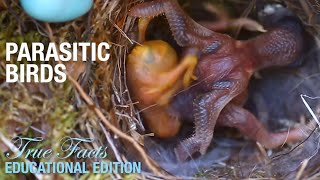
Ze Frank · Sep 8, 2022 4,970,766 views
ivacheung.com
@ivacheung.com · Bluesky

https://www.youtube.com/watch?v=9TZQDA2yabg

Sep 8, 2022 View post →