Overall, the social discussions reflect strong agreement and interest, with users quoting specific findings like the increased mortality risk for evening chronotypes and mentioning that late sleepers are more prone to health issues. The tone ranges from casual mentions of sleep habits to detailed references to statistical analyses, showing both broad recognition and in-depth engagement with the research's implications.
AgreementStrong agreement
Most discussions strongly agree with the study’s findings, emphasizing the health risks associated with being a night owl.
InterestHigh interest
Posts demonstrate high curiosity about the topic, mentioning personal experiences, related studies, and implications for health and lifestyle.
EngagementHigh engagement
Many users reference scientific details, share links to the original publication, and discuss statistical models, indicating deep engagement.
ImpactHigh impact
The dialogue highlights the significance of the research, with some posts framing it as evidence for lifestyle changes and public health awareness.
Abstract in brief
Evening preferencers or those with a later sleep schedule tend to have higher rates of health issues like metabolic problems, heart disease, and mental health disorders.
Being a definite evening type is linked to a slightly increased risk of death from all causes and specifically from cardiovascular disease, even after considering other factors like age, sex, lifestyle, and existing health conditions.
The study suggests that having an evening chronotype is associated with greater prevalence of various illnesses and a modestly higher risk of mortality, especially from cardiovascular reasons.]
The second most read #OpenAccess research of 2018 article investigates whether chronotype is associated with mortality risk. Read the conclusions for FREE here: https://t.co/r1DDBuE6GD @klknut @mvonschantz @tandfbiosci @TandFOpen https://t.co/D6inYuSgZZ
Jan 28, 2019 · 4 likes · 3 shares · 4,202 followersView post →
This video examines how staying up late or sleeping in affects health. Evening-oriented individuals tend to face higher risks of metabolic, heart, and mental health issues, with a slight increase in mortality risk…
This video explains what chronotherapy is, its importance in aligning biological rhythms, and how social jet lag impacts health. It covers the influence of sleep timing on hormonal, metabolic, and cancer-related factors…
Being a #NightOwl might come with a higher risk of Psychological disorders, Diabetes, Neurological issues and respiratory issues and early death according to a massive UK Biobank study tracking over 430,000 people for more than six years. Link to Study: https://t.co/0hzsTPiYfq
@LauraMarkis @sickdangles23 @cescabeckett @ascended_trader @GAinvestigate @anothercohen No one said anything about being "morally superior" lol.
Here's one study though
https://t.co/Zy4aBXcpd2
@Paraic_O_S @BrainBehavImm @EHS_Research @EHSFacultyAtUL @SASHLab @HRI_UL @PSI_DHP @ULPsych @PsychSocIreland @UL @UL_Research Morning types also live longer/less mortality risk than evening types (who are higher in neuroticism). https://t.co/pXDGhpTgzT
Feb 17, 2021 · 1 like · 1,567 followersView post →
P
Pedro
@another_pedro · X
@marbblue_ @moonlightIynx Irresponsabilidade comentar algo assim sem nem ter lido o estudo (https://t.co/0126M5VpBf). O risco está em ter hábitos noturnos (e outras variáveis) e não, necessariamente, na quantidade de sono. Dormir de 4 até meio-dia, mesmo sendo 8 horas, não é um hábito saudável.
É por isso que o Brasil tá uma bosta. Gente que acha que se refuta estudo científico assim. O estudo foi categórico em dizer que o risco está em ter hábitos noturnos, não em dormir menos de 8 horas.
Notícia completa: https://t.co/M5V6Oj03bq
O estudo: https://t.co/0126M5VpBf https://t.co/xPg5t2AslD
@SleepJunkies Perhaps! Colleagues of mine @klknut @mvonschantz have done proper regression models on the UK Biobank to suggest later chronotype is associated with higher all cause mortality risk (important to look at the hazard ratio). Proper statistical models matter. https://t.co/HMV0B68ibS
Jun 12, 2020 · 1 like · 1,027 followersView post →
青
青島周一
@syuichiao89 · X
RT @syuichiao89: Associations between chronotype, morbidity and mortality in the UK Biobank cohort. - PubMed - NCBI https://t.co/KjnDPoVNmX
RT @mhkryger: @KaminskiMed @KlarYaggi @WonChristine @KnauertMKnauert @PulmCCSleep I wish I were also in the wrong time zone. Sunshine late…
Jun 25, 2019 · 1 share · 13,420 followersView post →
MD
Meir Kryger M.D.
@mhkryger · X
@KaminskiMed @KlarYaggi @WonChristine @KnauertMKnauert @PulmCCSleep I wish I were also in the wrong time zone. Sunshine late into the evening! However, there is a dark (no pun intended) side). Evening chronotypes have higher morbidity and mortality at least in the U.K. https://t.co/hAh1oIXfVZ
Jun 25, 2019 · 1 like · 1 share · 1,828 followersView post →
MB
Michael R Barrett
@Wellness_Wonk · X
Going to bed late is unhealthy. Night owls’re: 10% more likely to die prematurely; 90% more likely to have a #Mentalhealth disorder; 30% more likely to have #diabetes; & more prone to #gastrointestinal & #neurological illnesses reports https://t.co/VHAl2hhYnj. @JamesTGallagher https://t.co/mO4XDcV12t
RT @tandfmedicine: The second most read #OpenAccess research of 2018 article investigates whether chronotype is associated with mortality r…
Jan 28, 2019 · 3 shares · 1,319 followersView post →
TB
T&F Bioscience
@tandfbiosci · X
RT @tandfmedicine: The second most read #OpenAccess research of 2018 article investigates whether chronotype is associated with mortality r…
Jan 28, 2019 · 3 shares · 2,601 followersView post →
MS
Malcolm von Schantz
@mvonschantz · X
RT @tandfmedicine: The second most read #OpenAccess research of 2018 article investigates whether chronotype is associated with mortality r…
Jan 28, 2019 · 3 shares · 2,447 followersView post →
TH
T&F Medicine & Healthcare
@tandfmedicine · X
The second most read #OpenAccess research of 2018 article investigates whether chronotype is associated with mortality risk. Read the conclusions for FREE here: https://t.co/r1DDBuE6GD @klknut @mvonschantz @tandfbiosci @TandFOpen https://t.co/D6inYuSgZZ
Jan 28, 2019 · 4 likes · 3 shares · 4,202 followersView post →
N
Vol 26.4 - Sleep Neurology.2020 | PDF | Neurology | Sleep Medicine
Ritual Daily Practices For Wellness, Beauty Bliss (Vasudha Rai ...
News
(2018): 1045-1053, DOI: 10.1080/07420528.2018.1454458. SLEEP AND CIRCADIAN RHYTHM— Huang, Tianyi, et al. 'Cross- sectional and Prospective Associations of ...
2005. 35(8):1045–1053. Association of birth weight with adult lung function: doi:10.1080/07420528.2018.1454458. findings from the British Women's Heart and
10.1080/07420528.2018.1454458, 2018. Chronobiologie. Morgenmenschen leben länger. Viele Nachteulen müssen morgens ins Büro, während ihre innere Uhr noch im ...
 HP
HP NM
NM TH
TH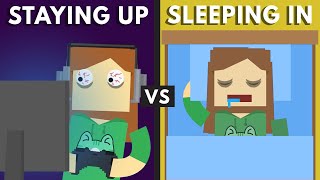

 ED
ED AR
AR Z
Z NB
NB わ
わ 암반
암반 NR
NR 아
아 은
은 R
R N
N 양
양 Q
Q D
D PH
PH WM
WM AC
AC P
P K
K JS
JS R
R AB
AB 青
青 NK
NK MD
MD MB
MB ア魂
ア魂 LB
LB ID
ID GR
GR J
J DP
DP AQ
AQ LC
LC Y
Y DK
DK TB
TB MS
MS