ANU Earth Sciences
@anuearthscience · X
Oldest lifeform all lit up!
Mar 8, 2023 · 10 likes · 2 shares · 3,387 followers
View post →
Mentions
Extended reach
Total likes
Video views
AI synopsis
The overall analysis reflects a strong positive sentiment, with many posts discussing the significance of lipid biomarkers as evidence for early animals, using words like 'amazing' and emphasizing the study’s potential to illuminate the origins of complex life. The tone and context underscore the scientific community’s recognition of this discovery as a notable breakthrough with meaningful impact.
Most discussions express support or excitement about the significance of the research, especially emphasizing the finding that these fossils contained animal-like lipid biomarkers.
Posts show high curiosity, with many comments highlighting the importance of the discovery, usage of terms like 'amazing,' and focus on the implications for understanding early animal life.
Various discussions delve into the methods used, such as chemical fossil analysis and molecular evidence, indicating active engagement with the scientific details.
The posts suggest that the discovery could reshape understanding of life's origins, evidenced by phrases like 'game changer' and references to its relevance in the broader context of evolution.
Oldest lifeform all lit up!
@InamedSciart @ogu_bristol @YizhouHuang6 Molecular fossils are organic molecules derived from once living organisms. For example, if we measure cholesterol (or cholesteroids) in ancient sediments, we can infer that animals were present at that time. See this paper as example https://t.co/R58AG86Jli
@MassCheck Hi Alan! Here you go: https://t.co/QQefSpmgAz What do you like most about this: the idea or the results? :)
RT @anuearthscience: Oldest lifeform all lit up!
RT @anuearthscience: Oldest lifeform all lit up!
@starkicus @GlennCarr6 @MLeiter42 @rln_nelson @TWTThisIsNow @CDCollins5269 @JimBowersclimb @WayneAllanH @jimdtweet @6lennybravo @jgatta06 @josiejessop631 @BenKoby1911 @GeorgeJeff9804 @Kenneth72712993 @MedBennett @Vulcan_hobo @BubbasRanch @ChrisBBacon3 @pauladamsalber1 @Gabwbw181237 @Stephen90045069 @NoelTurner194 @nxgrs73 @NewNormality20 @ChrisManuell @priscian @Michael_D_Crow @icarus62 @freddie07068768 @Veritatem2021 @automatrix66_KC @0Sundance @JustinGrant923 @evenminded121 @TopAlliedAceWW1 @MikeDel21893959 @njbtweet @MisinformNoMore @philbaylisss @shicks_sam @bomac_macbo @onefromtexas @SZOMB @Vlaamse_Zaak @CrispyCX @aSinister @variegated2 @mugger124 Who said it was algae? https://t.co/cI4A9iFMot

The transition from the Ediacaran to the Cambrian period was a major event in Earth's history, involving the first major crisis for large, complex eukaryotic life and leading to a huge burst of evolutionary diversity…
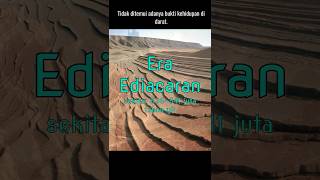
The Ediacaran Era, dating back 571 to 541 million years, showcases some of the earliest complex organisms. Recent studies reveal these fossils produced cholesteroids, indicating they were among the oldest macroscopic…
This video explores the fascinating history of the animal kingdom, from simple invertebrates to Homo sapiens, highlighting key evolutionary milestones and the origin of complex organisms, including recent discoveries…
@starkicus @GlennCarr6 @MLeiter42 @rln_nelson @TWTThisIsNow @CDCollins5269 @JimBowersclimb @WayneAllanH @jimdtweet @6lennybravo @jgatta06 @josiejessop631 @BenKoby1911 @GeorgeJeff9804 @Kenneth72712993 @MedBennett @Vulcan_hobo @BubbasRanch @ChrisBBacon3 @pauladamsalber1 @Gabwbw181237 @Stephen90045069 @NoelTurner194 @nxgrs73 @NewNormality20 @ChrisManuell @priscian @Michael_D_Crow @icarus62 @freddie07068768 @Veritatem2021 @automatrix66_KC @0Sundance @JustinGrant923 @evenminded121 @TopAlliedAceWW1 @MikeDel21893959 @njbtweet @MisinformNoMore @philbaylisss @shicks_sam @bomac_macbo @onefromtexas @SZOMB @Vlaamse_Zaak @CrispyCX @aSinister @variegated2 @mugger124 Who said it was algae? https://t.co/cI4A9iFMot
RT @anuearthscience: Oldest lifeform all lit up!
RT @anuearthscience: Oldest lifeform all lit up!
Oldest lifeform all lit up!
@katiedigsdinos Here is a pretty amazing study that came out of my PhD supervisor's lab extracting chemical fossils from some of the oldest body fossils https://t.co/gGOT5nCHsk
@InamedSciart @ogu_bristol @YizhouHuang6 Molecular fossils are organic molecules derived from once living organisms. For example, if we measure cholesterol (or cholesteroids) in ancient sediments, we can infer that animals were present at that time. See this paper as example https://t.co/R58AG86Jli
@MassCheck Hi Alan! Here you go: https://t.co/QQefSpmgAz What do you like most about this: the idea or the results? :)