 DB
DB GO
GO EL
EL S
S LC
LCPreviewpdf | PDF | Significant Figures | Mass Spectrometry
News
DOI: 10.1021/acschemneuro.8b00651. Waring, R. H. , Cytochrome P450: Genotype to phenotype, Xenobiotica 50 (1) (2020) 9–18. DOI: 10.1080 ...
Dec 13, 2025
View →
Mentions
Extended reach
Total likes
Video views
AI synopsis
The collective discussions reflect strong interest in understanding THC's effects, exemplified by mentions of educational videos and questions about its medicinal properties, aided by a tone that is curious and somewhat enthusiastic. While some posts critique legal and scientific debates, others highlight its cultural significance, indicating a balanced but engaged dialogue about the publication's themes.
Most discussions acknowledge the significance of the publication and recognize THC's complex effects, with some references to scientific research and public perceptions aligning positively.
The posts demonstrate high curiosity about THC's mechanisms, medical potential, and controversies, indicating active engagement and interest.
Comments range from sharing videos explaining how THC works to discussions about societal and legal issues, showing moderate to deep engagement with the topic.
The discussions suggest the publication influences both scientific curiosity and public understanding, but the overall impact on policy or broader knowledge remains moderate.
@RobbinsGroupLLC Interesting article Curt. I couldn't find much research on delta-10 THC. Does it have activity at cannabinoid receptors? But I did find this cool figure showing the regioisomers of THC & the location of the double bond from @samuel_b_phd's dark classic: https://t.co/mzqHtjepHH https://t.co/zxalZU1t1B
Dark Classics in Chemical #Neuroscience Δ9‑Tetrahydrocannabinol https://t.co/1bgW0d9Yql https://t.co/o4D2APtRN0
@Stefanb92121943 Man behöver inte vara expert för att ifrågasätta det som går emot internationell forskning. En del av oss gör infofilmer, men vi föredrar att hålla oss internationella. https://t.co/VnP1Xd5V8o
While cannabis an ancient medicament, contemporary use is embroiled in legal, scientific, and social controversy, much of which relates to the potential hazards and benefits of Δ9-THC itself. Dark Classics in Chemical Neuroscience: Δ9-Tetrahydrocannabinol https://t.co/LzMiqoGNLX
2-Minute Neuroscience: THC https://t.co/rixYzT5Cu4 via @YouTube
2-Minute Neuroscience: THC https://t.co/rixYzT5Cu4 via @YouTube
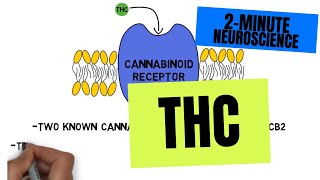
THC is the main psychoactive component of cannabis and affects the nervous system by acting as a partial agonist at CB1 receptors, causing intoxication and therapeutic effects. It remains controversial due to potential…

THC is the main psychoactive component of cannabis, affecting the brain by binding to CB1 receptors. Its effects include euphoria, sedation, increased appetite, and impaired cognition. This video explains THC's role and…
https://t.co/kH9oT2q3Wy
So like 4 to 15grams is a potential LD50. prob around 35 grams https://t.co/nk02h9Uunw
2-Minute Neuroscience: THC https://t.co/mso2gCha7o via @YouTube
2-Minute Neuroscience: THC https://t.co/TqIu8aiQYT via @YouTube
#notanewindustry Dark Classics in Chemical Neuroscience (full-text) Δ9-Tetrahydrocannabinol https://t.co/1bgW0dawfT https://t.co/Vl5mfztNA5
Dark Classics in Chemical #Neuroscience Δ9‑Tetrahydrocannabinol https://t.co/1bgW0d9Yql https://t.co/o4D2APtRN0
Here is a quick video to help explain how THC works. 2-Minute Neuroscience: THC https://t.co/K7IjYfN8Ut via @YouTube
https://t.co/iQwwRH3Eix
https://t.co/iQwwRH4c85
RT @MaritsuNeuro: @Stefanb92121943 Man behöver inte vara expert för att ifrågasätta det som går emot internationell forskning. En del av o…
@Stefanb92121943 Man behöver inte vara expert för att ifrågasätta det som går emot internationell forskning. En del av oss gör infofilmer, men vi föredrar att hålla oss internationella. https://t.co/VnP1Xd5V8o
2-Minute Neuroscience: THC https://t.co/hRFrY90VUx @YouTube
https://t.co/rco4PaeZxv
@stclairashley Does this help? https://t.co/M6BFXgFPJH
2-Minute Neuroscience: THC https://t.co/si3Ofk7DZO via @YouTube this is such a brilliant subject and the basics are easy to follow into the benefits of it all I’d say
MAYANA https://t.co/Ya3FXK8WXp
2-Minute Neuroscience: THC https://t.co/rixYzT5Cu4 via @YouTube
2-Minute Neuroscience: THC https://t.co/rixYzT5Cu4 via @YouTube
RT @491CBDLC: Happy THC Day!
Happy THC Day!
2-Minute Neuroscience: THC https://t.co/WVkXDO0PuU https://t.co/mVa3kfjLvB https://t.co/Hz4H4SRYpf
@RobbinsGroupLLC Interesting article Curt. I couldn't find much research on delta-10 THC. Does it have activity at cannabinoid receptors? But I did find this cool figure showing the regioisomers of THC & the location of the double bond from @samuel_b_phd's dark classic: https://t.co/mzqHtjepHH https://t.co/zxalZU1t1B
2-Minute Neuroscience: THC https://t.co/rixYzT5Cu4 via @YouTube
@gamwajohnston @Kitengulle https://t.co/zS4l3Ki880
2-Minute Neuroscience: THC https://t.co/rixYzT5Cu4 via @YouTube
Please eat the green leafy vegetable #Cannabis it is the most nutrient dense vegetable on earth ~ New word of today is #Medicament aka eat your Greens Americans ~ Dark Classics in Chemical Neuroscience: Δ9-Tetrahydrocannabinol https://t.co/NUmftml801
While cannabis an ancient medicament, contemporary use is embroiled in legal, scientific, and social controversy, much of which relates to the potential hazards and benefits of Δ9-THC itself. Dark Classics in Chemical Neuroscience: Δ9-Tetrahydrocannabinol https://t.co/LzMiqoGNLX
CANNABIS
CANNABIS
DOI: 10.1021/acschemneuro.8b00651. Waring, R. H. , Cytochrome P450: Genotype to phenotype, Xenobiotica 50 (1) (2020) 9–18. DOI: 10.1080 ...
... 10.1021/acschemneuro.8b00651. 7. Waring, R. H., Cytochrome P450: Genotype to phenotype, Xenobiotica 50 (1) (2020) 9–18. DOI: 10.1080/00498254. 2019.1648911 ...