Meat Head
@markeatsmeat · X
@carnivoretravis Check out @tnseyfried
Sep 3, 2025 · 24 likes · 1 share · 45,929 followers
View post →
Mentions
Extended reach
Total likes
Video views
AI synopsis
Numerous discussions highlight key points from the research, such as the role of mitochondrial substrate-level phosphorylation in glioblastoma metabolism, with phrases like 'missing link' and 'groundbreaking' indicating both recognition of the research's importance and a call for deeper exploration. Posts like 'What if cancer isn’t primarily a genetic disease but metabolic one?' show a shift in perspective that stimulates further interest and dialogue on this topic.
The majority of discussions show a supportive attitude towards the publication and its findings.
There is a marked curiosity about the concepts presented, as many users reference related resources and express enthusiasm.
While some posts share general links, a few delve into specifics, discussing the implications of mitochondrial substrate-level phosphorylation and its relevance to cancer metabolism.
Many users believe this research could lead to significant advancements in understanding and treating glioblastoma.
@carnivoretravis Check out @tnseyfried
@manwithahammer @Mangan150 Most if not all cancers use fermentation for energy. Fats cannot be fermented. Fats, however, can stimulate uptake of glucose and glutamine that are fermented. Here is the reference DOI: 10.1177/1759091418818261.
"Mitochondrial substrate-level phosphorylationm (SLP) could represent the missing link in Warburg’s central theory that OxPhos insufficiency with compensatory fermentation is the origin of #cancer." -> https://t.co/tSBSWweRXr #medicine https://t.co/pTKcfFnVaC
Mitochondrial Substrate-Level Phosphorylation as Energy Source for Glioblastoma: Review and Hypothesis https://t.co/IEOQZPOM1F
Did you know that there are abnormalities in the number, structure and function of mitochondria in glioblastoma multiforme? https://t.co/d4U93vQoQ4 #ASN #YIAC #ASNNeuro #mitochondria #glioblastoma #neurochemistry #neuroscience https://t.co/Za5qdR5bXC
@FrigoCoder @MaryanneDemasi @CrossFitHealth Discussed here. https://t.co/fyzhkzvCGz

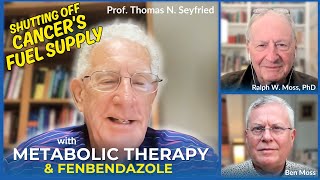
What if cancer isn't primarily a genetic disease but a metabolic one? In this video, Professor Thomas Seyfried discusses how glioblastoma and other cancers utilize glucose and glutamine for energy. He emphasizes…

Professor Seyfried discusses the potential of ketogenic metabolic therapy as a new standard for glioblastoma treatment, focusing on targeting tumor metabolism while preserving healthy tissue.
RT @boretrol: Mitochondrial Substrate-Level Phosphorylation as Energy Source for Glioblastoma: Review and Hypothesis https://t.co/IEOQZPOM1F
RT @tnseyfried: Dr. Christos Chinopoulos & I have identified mitochondrial substrate level phosphorylation as the missing link in Warburg’s…
The Metabolic Theory of Cancer: Glucose, Glutamine & Anti-Parasitics, Fe... https://t.co/A40YOzmYnZ via @YouTube
The Metabolic Theory of Cancer: Glucose, Glutamine & Anti-Parasitics, Fe... https://t.co/FIHRXzsZY0 via @YouTube
@YouTube The Metabolic Theory of Cancer: Glucose, Glutamine & Anti-Parasitics, Fe... https://t.co/K8SgRhaDtN @YouTube
がんの代謝理論:グルコース、グルタミン、抗寄生虫薬、フェンベンダゾール — トーマス・セイフリード https://t.co/bKNTRnVmA2 @YouTube
RT @markeatsmeat: @carnivoretravis Check out @tnseyfried
The Metabolic Theory of Cancer: Glucose, Glutamine & Anti-Parasitics, Fenbendazole — Thomas Seyfried - YouTube https://t.co/lHkUG2PBsO
@carnivoretravis Check out @tnseyfried
RT @chuisti: La teoría somática del cáncer,arrumbada. Al igual q la teoría del cambio climático de origen antropogénico, sólo se mantienen…
La teoría somática del cáncer,arrumbada. Al igual q la teoría del cambio climático de origen antropogénico, sólo se mantienen en pie por intereses económicos La teoría metabólica del cáncer: glucosa, glutamina y antiparasitarios, ... https://t.co/s5C5OQeLaG a través de @YouTube
https://t.co/GypU0sQq3G
https://t.co/3dQfXJukrs
The Metabolic Theory of Cancer: Glucose, Glutamine & Anti-Parasitics, Fe... https://t.co/Z8Zrfy8sUz via @YouTube
The Metabolic Theory of Cancer: Glucose, Glutamine & Anti-Parasitics, Fenbendazole Thomas Seyfried: Rethinking Cancer at Its Core https://t.co/4FpPqieEki via @YouTube https://t.co/iZEH4MEEON
"What if cancer isn’t primarily a genetic disease — but a metabolic one? ... Dr. Seyfried explains how cancer cells depend on glucose and glutamine as their dual fuel supply — and how cutting off both pathways may be the key to shutting cancer down." https://t.co/fthV7jLovS
https://t.co/HdTfO9wk5p
Hey @LanceRoberts check this doctor out about cancer. https://t.co/Fif7ovJToR
The Metabolic Theory of Cancer: Glucose, Glutamine & Anti-Parasitics, Fe... https://t.co/ZmnTkVyApg via @YouTube
What if cancer isn’t primarily a genetic disease but metabolic one? In this groundbreaking conversation, Thomas N. Seyfried, PhD, author "Cancer as a Metabolic Disease" joins Ralph Moss, PhD & Ben Moss to discuss Mitochondrial & Metabolic Theory of Cancer. https://t.co/ap1beZKzY4
Mitochondria, the oxidative powerhouse of our cells, can also produce ATP using the fermentation of some amino acids, especially glutamine. https://t.co/lYRhFmTmdS
The Metabolic Theory of Cancer: Glucose, Glutamine & Anti-Parasitics, Fenbendazole — Thomas Seyfried https://t.co/dldtxEDbvQ
@soxaholick @Hughes8178 @Royston56428882 @MakisMD @tnseyfried https://t.co/MBGWpb4dvn
@skybluelaw @JoshuaB42069 @CovidConfusion @drdenwalker It saddens me deeply that some people would rather die than explore all the potential cures available Same with the jabero and talking people out of that. Maybe keto she could do? https://t.co/M3UezT8JSH
@raphaels7 @AlexJLeaf https://t.co/3vTrKDJaGl
Mitochondrial Substrate-Level Phosphorylation as Energy Source for Glioblastoma: Review and Hypothesis https://t.co/IEOQZPOM1F
RT @tnseyfried: Dr. Christos Chinopoulos & I have identified mitochondrial substrate level phosphorylation as the missing link in Warburg’s…
RT @tnseyfried: Dr. Christos Chinopoulos & I have identified mitochondrial substrate level phosphorylation as the missing link in Warburg’s…
RT @tnseyfried: Dr. Christos Chinopoulos & I have identified mitochondrial substrate level phosphorylation as the missing link in Warburg’s…
RT @tnseyfried: Dr. Christos Chinopoulos & I have identified mitochondrial substrate level phosphorylation as the missing link in Warburg’s…
https://t.co/JVHbfYzVel
Notable Article Highlight: Mitochondrial substrate-level phosphorylation as energy source for glioblastoma: review and hypothesis https://t.co/qNQnpweiND
https://t.co/JVHbfYzVel
@Chrest_brett @Pcyryl @tnseyfried Great sluthing. Seems the only way to reconsile the observation of oxphos in malignant cells with Warburgs hypotheisis is with the ability of mito to undergo subtrate level phos in the mito. Its an intersting idea. https://t.co/Y31RqClmDt
RT @tnseyfried: Dr. Christos Chinopoulos & I have identified mitochondrial substrate level phosphorylation as the missing link in Warburg’s…
RT @tnseyfried: Dr. Christos Chinopoulos & I have identified mitochondrial substrate level phosphorylation as the missing link in Warburg’s…
https://t.co/CYZPfN3zGs
Can the Ketogenic Diet Cause Brain Tumors (Glioblastomas)? https://t.co/QkloIlyW0g via @YouTube
Can the Ketogenic Diet Cause Brain Tumors (Glioblastomas)? https://t.co/tJMN2vdKMd via @YouTube
Can the Ketogenic Diet Cause Brain Tumors (Glioblastomas)? https://t.co/2Xz91co3N4 via @YouTube
Dr. BERG discusses the MISUNDERSTOOD study the media will use WRONGLY to lie about Ketogenic diet-the actual Harvard Doctor who did the study did so on specialized, genetically challenged mice-this doctor actually has AMAZING health results w Keto&cancer https://t.co/O3k3UgifJq
A typical think tank smear: Can the Ketogenic Diet Cause Brain Tumors (Glioblastomas)? https://t.co/ZYrRL7wqzX via @YouTube
Watch "Can the Ketogenic Diet Cause Brain Tumors (Glioblastomas)?" on YouTube https://t.co/XoFdK4c2lN Keto Diet and Intermittent Fasting has changed my life. Get off sugar.
New video by Dr. Eric Berg DC: Can the Ketogenic Diet Cause Brain Tumors (Glioblastomas)? https://t.co/sO8aRWcZWn
RT @tnseyfried: Dr. Christos Chinopoulos & I have identified mitochondrial substrate level phosphorylation as the missing link in Warburg’s…
RT @tnseyfried: Dr. Christos Chinopoulos & I have identified mitochondrial substrate level phosphorylation as the missing link in Warburg’s…
Check out this ASN Neuro article: Mitochondrial Substrate-Level Phosphorylation as Energy Source for Glioblastoma: Review and Hypothesis. https://t.co/d4U93vQoQ4 https://t.co/98DCYtW8bW
@FrigoCoder @MaryanneDemasi @CrossFitHealth Discussed here. https://t.co/fyzhkzvCGz
Did you know that there are abnormalities in the number, structure and function of mitochondria in glioblastoma multiforme? https://t.co/d4U93vQoQ4 #ASN #YIAC #ASNNeuro #mitochondria #glioblastoma #neurochemistry #neuroscience https://t.co/Za5qdR5bXC
I just posted "Mitochondrial Substrate-Level Phosphorylation as Energy Source for Glioblastoma: Review and Hypothesis - December 2018" on Reddit https://t.co/vr620SatXh
RT @tnseyfried: @manwithahammer @Mangan150 Most if not all cancers use fermentation for energy. Fats cannot be fermented. Fats, however,…
RT @tnseyfried: @manwithahammer @Mangan150 Most if not all cancers use fermentation for energy. Fats cannot be fermented. Fats, however,…
RT @tnseyfried: @manwithahammer @Mangan150 Most if not all cancers use fermentation for energy. Fats cannot be fermented. Fats, however,…
RT @tnseyfried: @manwithahammer @Mangan150 Most if not all cancers use fermentation for energy. Fats cannot be fermented. Fats, however,…
RT @tnseyfried: @manwithahammer @Mangan150 Most if not all cancers use fermentation for energy. Fats cannot be fermented. Fats, however,…
@manwithahammer @Mangan150 Most if not all cancers use fermentation for energy. Fats cannot be fermented. Fats, however, can stimulate uptake of glucose and glutamine that are fermented. Here is the reference DOI: 10.1177/1759091418818261.
RT @tnseyfried: Dr. Christos Chinopoulos & I have identified mitochondrial substrate level phosphorylation as the missing link in Warburg’s…
RT @tnseyfried: Dr. Christos Chinopoulos & I have identified mitochondrial substrate level phosphorylation as the missing link in Warburg’s…
Mitochondrial Substrate-Level Phosphorylation as Energy Source for Glioblastoma: Review and Hypothesis - Christos Chinopoulos, Thomas N. Seyfried, 2018 https://t.co/yHJn7mHLGR
RT @tnseyfried: Dr. Christos Chinopoulos & I have identified mitochondrial substrate level phosphorylation as the missing link in Warburg’s…
Mitochondrial Substrate-Level #Phosphorylation as Energy Source for #Glioblastoma: Review and Hypothesis https://t.co/e6ehOHgBri
RT @tnseyfried: Dr. Christos Chinopoulos & I have identified mitochondrial substrate level phosphorylation as the missing link in Warburg’s…
RT @tnseyfried: Dr. Christos Chinopoulos & I have identified mitochondrial substrate level phosphorylation as the missing link in Warburg’s…
RT @tnseyfried: Dr. Christos Chinopoulos & I have identified mitochondrial substrate level phosphorylation as the missing link in Warburg’s…
RT @DominicDAgosti2: Mitochondrial Substrate-Level Phosphorylation as Energy Source for Glioblastoma: Review and Hypothesis. https://t.co/K…
"Mitochondrial substrate-level phosphorylationm (SLP) could represent the missing link in Warburg’s central theory that OxPhos insufficiency with compensatory fermentation is the origin of #cancer." -> https://t.co/tSBSWweRXr #medicine https://t.co/pTKcfFnVaC
RT @tnseyfried: Dr. Christos Chinopoulos & I have identified mitochondrial substrate level phosphorylation as the missing link in Warburg’s…