Discussions highlight the innovative nature of using cellulose fibers in sensors, with words like 'cooler,' 'cutting down waste,' and 'game changer' indicating strong enthusiasm and perceived high impact. References to the sensor's low cost and easy-to-understand benefits demonstrate interest and recognition of practical implications, while mentions of media coverage and application breadth reflect deep engagement and acknowledgment of the research's significance.
AgreementModerate agreement
Most discussions express support and enthusiasm for the research, highlighting its potential to reduce waste and improve food safety, indicating a strong agreement with the implications of the publication.
InterestHigh interest
Postings show high curiosity and excitement, mentioning the innovative use of household materials, low cost, and real-world applications such as food packaging and spoilage detection.
EngagementHigh engagement
Many discussions delve into the technical aspects of the sensors, with references to their design, rapid detection capabilities, and potential commercial applications, reflecting deep engagement.
ImpactHigh impact
The conversations emphasize the significant potential impact, such as lowering food waste, enabling real-time monitoring, and transforming packaging technologies, suggesting a perception of high societal and economic importance.
Abstract in brief
This article introduces a new type of low-cost printed gas sensors that use the natural moisture in paper made from cellulose fibers to detect water-soluble gases like ammonia, offering high sensitivity and rapid, reversible responses.
These sensors perform well even in high humidity conditions, matching or surpassing commercial ammonia sensors, but at a fraction of the cost (around $0.02 each).
Potential applications include integrating these sensors into food packaging to monitor freshness and reduce waste, as well as embedding them into wireless tags that can be read by smartphones without batteries.
We are incredibly happy that one of the first publications, that came out of our group since its establishment, is one of the most read original research articles on @ACS_Sensors in the last 12 months with nearly 7000 downloads. https://t.co/ECehODivsr #foodwaste #food #sensors https://t.co/ZhNRChq2dK
May 11, 2020 · 27 likes · 13 shares · 967 followersView post →
GG
Guder Research Group
@gudeResearch · X
Our work on low-cost food sensors (https://t.co/SLQvfsv8Mi) found coverage in a cool publication by Imperial:"6 ways Imperial can help you achieve your New Year’s resolutions" https://t.co/HzMkrUc7H6. @Blakbear_ and the lab are working hard to scale this idea to reduce food waste
So as promised, more on our paper. We have just published our work on near zero-cost paper-based electrical gas sensors in @ACS_Sensors https://t.co/dfJTXZTGuw This work attracted a lot of attention and we are overwhelmed (in a completely good way) by the media including TV.
Jun 11, 2019 · 8 likes · 2 shares · 967 followersView post →
GG
Guder Research Group
@gudeResearch · X
Our recent paper, "Cellulose fibers enable near-zero-cost electrical sensing of water-soluble gases", is currently trending at #3 across all @ACSPublications articles. In just one month, it has already had nearly 2500 views! We are very happy :) https://t.co/dfJTXZTGuw https://t.co/diwxYe0oG9
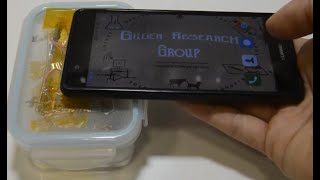
This video discusses a new class of printed electrical gas sensors made from cellulose fibers that detect water-soluble gases like ammonia. These sensors are cost-effective, highly sensitive, and can be integrated into…
This article introduces a new type of low-cost printed gas sensors that use the natural moisture in paper made from cellulose fibers to detect water-soluble gases like ammonia, offering high sensitivity and rapid…
A concept is infinitely cooler if it can be done with household materials. So this week's highlight (though from last year) uses hand-drawn IDEs on paper to sense gases.
https://t.co/fiFbtK5PKP
RT @gbarandu: In our latest article @gudeResearch use cellulose paper to detect food spoilage and potentially reduce food waste.
https://t…
Jun 29, 2020 · 2 shares · 6,903 followersView post →
RR
Robert Dorsey- also Known as: Rodor1960
@rodor1960 · X
RT @gudeResearch: We are incredibly happy that one of the first publications, that came out of our group since its establishment, is one of…
Jun 29, 2020 · 13 shares · 6,903 followersView post →
GG
Guder Research Group
@gudeResearch · X
and @Blakbear_ (the spinout from our lab that is commercializing this technology) and described it with an easy-to-understand language.
The link to his article: https://t.co/XkY3aYGulr
Our publication: https://t.co/gwk2HxaeTm
#research #food #sensors #foodwaste
RT @gudeResearch: We are incredibly happy that one of the first publications, that came out of our group since its establishment, is one of…
May 12, 2020 · 13 shares · 240 followersView post →
MG
Max Grell
@MaxMGrell · X
RT @gudeResearch: We are incredibly happy that one of the first publications, that came out of our group since its establishment, is one of…
May 12, 2020 · 13 shares · 4,371 followersView post →
MS
Matteo Soprani
@SopraniMatteo · X
RT @gudeResearch: We are incredibly happy that one of the first publications, that came out of our group since its establishment, is one of…
May 12, 2020 · 13 shares · 43 followersView post →
CD
Can Dincer
@CanDincer83 · X
RT @gudeResearch: We are incredibly happy that one of the first publications, that came out of our group since its establishment, is one of…
May 11, 2020 · 13 shares · 3,122 followersView post →
Y
ysnctr
@ysnctr · X
RT @gudeResearch: We are incredibly happy that one of the first publications, that came out of our group since its establishment, is one of…
May 11, 2020 · 13 shares · 495 followersView post →
G
Giandrin
@gbarandu · X
RT @gudeResearch: We are incredibly happy that one of the first publications, that came out of our group since its establishment, is one of…
May 11, 2020 · 13 shares · 216 followersView post →
GG
Guder Research Group
@gudeResearch · X
We are incredibly happy that one of the first publications, that came out of our group since its establishment, is one of the most read original research articles on @ACS_Sensors in the last 12 months with nearly 7000 downloads. https://t.co/ECehODivsr #foodwaste #food #sensors https://t.co/ZhNRChq2dK
May 11, 2020 · 27 likes · 13 shares · 967 followersView post →
GG
Guder Research Group
@gudeResearch · X
Our work on low-cost food sensors (https://t.co/SLQvfsv8Mi) found coverage in a cool publication by Imperial:"6 ways Imperial can help you achieve your New Year’s resolutions" https://t.co/HzMkrUc7H6. @Blakbear_ and the lab are working hard to scale this idea to reduce food waste
Our recent paper, "Cellulose fibers enable near-zero-cost electrical sensing of water-soluble gases", is currently trending at #3 across all @ACSPublications articles. In just one month, it has already had nearly 2500 views! We are very happy :) https://t.co/dfJTXZTGuw https://t.co/diwxYe0oG9
Really interesting paper based sensors for food security https://t.co/fEZpcxFgxs.
this could help with one of my optical water sensors which detects the amount of moisture in paper in a non contact way. Thanks to @AdamRutherford at BBC inside Science for bringing this to my ears.
New class of electrochemical gas sensor printed onto cellulose fibers allows fast and reversible ammonia detection at very low cost https://t.co/8nRVCo4hRy
So as promised, more on our paper. We have just published our work on near zero-cost paper-based electrical gas sensors in @ACS_Sensors https://t.co/dfJTXZTGuw This work attracted a lot of attention and we are overwhelmed (in a completely good way) by the media including TV.
Jun 11, 2019 · 8 likes · 2 shares · 967 followersView post →
GI
Grantham Institute Imperial
@Grantham_IC · X
@ctolmie @imperialcollege @LyonsIzzy Hi Chris, you can find out more about the sensors and what they are made of here: https://t.co/cmTBE2aXS8 And here is a link to the research paper will more details: https://t.co/kWbv6BeUt4
Jun 10, 2019 · 1 like · 14,930 followersView post →
IE
Imperial Engineering
@ImpEngineering · X
@EPSRC-funded @ImperialBioeng researchers have developed low-cost, #smartphone-linked, #ecofriendly spoilage #sensors based on #cellulose fibres for meat and fish #packaging.
Read their work https://t.co/DyPwYB85lk published in @ACS_Sensors
https://t.co/phAMSp5uzf
 GG
 MF
 G

 PI
 RR
 IS
 AS
 TA
 D
 UT
 MG
 MS
 CD
 Y
 S
 PB
 DB
 Kช
 GI
 IE