Several posts discuss the basics of tDCS, such as its ability to modify brain activity and influences on behavior and cognition, with language like 'temporarily change brain activity' and 'influence behavior' indicating a focus on understanding the technology. The tone combines curiosity and cautious optimism, especially in the comment questioning its use to boost IQ, which underscores both interest and awareness of its experimental status.
AgreementNeither agree nor disagree
The posts acknowledge the potential of tDCS but emphasize its experimental nature, showing neither full agreement nor disagreement with the research conclusions.
InterestModerate interest
The discussions reflect curiosity about tDCS's applications and mechanisms, particularly around cognition and behavioral effects, indicating moderate interest.
EngagementModerate engagement
Some comments provide educational explanations and explore the technology's impact, demonstrating active engagement, but not deeply analytical or critical.
ImpactNeutral impact
The social discussions highlight awareness of tDCS’s possibilities, yet they mainly focus on general knowledge and future potential, suggesting a modest perceived impact.
Abstract in brief
Transcranial direct current stimulation (tDCS) has potential for influencing neural activity, cognition, and psychiatric symptoms like depression and schizophrenia, but many questions remain about how it works and its effects.
The review emphasizes the need for future research on the mechanisms of tDCS at neuronal and system levels, its cognitive impacts, and its clinical effectiveness, highlighting progress such as its influence on neural oscillations and improving performance when applied to the prefrontal cortex during tasks.
The authors suggest further studies to clarify how tDCS affects brain function and behavior, which could lead to more effective treatments for psychiatric conditions.]
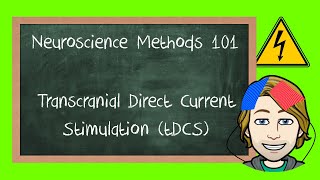
Transcranial direct current stimulation (tDCS) can temporarily change brain activity, which may consequently influence behavior.
For everyone who is not familiar with tDCS, we posted an educational introduction video to tDCS. #scicomm #tdcs
https://t.co/Y4em4sOOAD
Aug 20, 2021 · 8 likes · 2 shares · 1,252 followersView post →
PD
Phedias Diamandis
@pdiamandisii · X
Today we are exploring if you can increase your #IQ by using transcranial direct current stimulation. #tdcs. Spoiler: cool #tech but still experimental, stick to #sleep #studying and a healthy #diet (for now). #brain #CNS #neurology #cognitiveehancement https://t.co/UwNw0nc6zx
La tDCS es una técnica de neuromodulación que se aplica para modificar la actividad cerebral. Se administra de forma catódica o anódica, en función del objetivo del tratamiento. Te contamos la diferencia⬇️
Ref:
Transcranial direct current stimulation or tDCS is a noninvasive brain stimulation technique applying low intensity current to alter activation of the brain. It influences neuronal firing likelihood and holds promise…
Transcranial direct current stimulation (tDCS) influences neural activity, cognition, and psychiatric symptoms like depression and schizophrenia. Research focuses on understanding its mechanisms at neuronal and system…
La tDCS es una técnica de neuromodulación que se aplica para modificar la actividad cerebral. Se administra de forma catódica o anódica, en función del objetivo del tratamiento. Te contamos la diferencia⬇️
Ref:
Transcranial direct current stimulation (tDCS) can temporarily change brain activity, which may consequently influence behavior.
For everyone who is not familiar with tDCS, we posted an educational introduction video to tDCS. #scicomm #tdcs
https://t.co/Y4em4sOOAD
Aug 20, 2021 · 8 likes · 2 shares · 1,252 followersView post →
PD
Phedias Diamandis
@pdiamandisii · X
Today we are exploring if you can increase your #IQ by using transcranial direct current stimulation. #tdcs. Spoiler: cool #tech but still experimental, stick to #sleep #studying and a healthy #diet (for now). #brain #CNS #neurology #cognitiveehancement https://t.co/UwNw0nc6zx