The overall tone reflects interest and appreciation for the research, with examples such as references to the brain's neural circuits responsive to sunrise and sunset, and mentions of the study being highlighted in scientific articles. Phrases like 'excited to see' and references to personal habits demonstrate enthusiasm, while some comments pointing out how many people stare at screens during these times suggest a concern for practical impacts. The tone indicates curiosity about the biological processes and their relevance to everyday life.
AgreementModerate agreement
Most discussions highlight the importance of the study, with some expressing enthusiasm for its implications, indicating general agreement.
InterestHigh interest
Posts show high enthusiasm and curiosity about the subject, especially related to natural light and brain function.
EngagementModerate engagement
Comments include mentions of the research findings, personal reactions, and shared articles, reflecting moderate active engagement.
ImpactModerate impact
There is recognition of the potential significance of understanding biological light circuits, but the discussion remains somewhat preliminary in terms of real-world change.
Abstract in brief
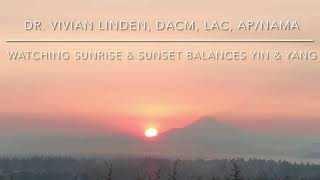
A new study identifies the retinal circuit responsible for detecting light patterns typical of sunrise and sunset.
This circuit sends information to the brain's main circadian clock, which regulates our internal biological rhythms.
The subconscious processing of changing sky colors could be crucial for signaling the brain about morning and evening times.
@PipFoweraker A paper from my lab about another paper (see subtweet above). https://t.co/5eRisWQdqv
Jan 19, 2023 · 31 likes · 2 shares · 1,692,294 followersView post →
AL
A Rooted Life
@TheRootCauseCo · X
Your brain has biological neural circuits dependent on natural light most prominent during sunrise and sunset.
Yet many stare into a screen during those crucial hours
https://t.co/pNxJsKaaAx
Jun 15, 2022 · 12 likes · 4 shares · 41,679 followersView post →
SP
Sara Patterson
@SaraSPatterson · X
Excited to see our recent @CurrentBiology article highlighted in this great Dispatch from the Huberman lab!
Neuroscience: A Chromatic Retinal Circuit Encodes Sunrise and Sunset for the Brain https://t.co/w2ttuzX2VS https://t.co/qRSuykVxjz
Why do we love sunsets? This video explores how a retinal circuit detects sunrise and sunset patterns, signaling the brain's circadian clock. Discover how subconscious sky color perception influences our biological…
This video discusses how the retinal circuit detects sunrise and sunset patterns, informing the brain's circadian clock, which regulates biological rhythms. It highlights the importance of light cues in aligning health…
RT @TheRootCauseCo: Your brain has biological neural circuits dependent on natural light most prominent during sunrise and sunset.
Yet man…
Jun 15, 2022 · 4 shares · 12,608 followersView post →
AL
A Rooted Life
@TheRootCauseCo · X
Your brain has biological neural circuits dependent on natural light most prominent during sunrise and sunset.
Yet many stare into a screen during those crucial hours
https://t.co/pNxJsKaaAx
Jun 15, 2022 · 12 likes · 4 shares · 41,679 followersView post →
D
DrRPalmquist
@DrPalmquist · X
Neuroscience: A Chromatic Retinal Circuit Encodes Sunrise and Sunset for the Brain: Current Biology https://t.co/QzApFKYlgu
Excited to see our recent @CurrentBiology article highlighted in this great Dispatch from the Huberman lab!
Neuroscience: A Chromatic Retinal Circuit Encodes Sunrise and Sunset for the Brain https://t.co/w2ttuzX2VS https://t.co/qRSuykVxjz
 AD
AD AL
AL SP
SP HC
HC KW
KW CL
CL
 S
S D
D MN
MN S
S A
A CG
CG C
C OM
OM CS
CS SP
SP