The collective reactions demonstrate strong agreement with the research, as users cite scientific studies, such as Konda et al. (2020), to support fabric masks and emphasize multilayered designs, using technical terms and referencing specific filtration efficiencies. The tone varies from scientific analysis to skepticism, reflecting active engagement and a shared desire to understand mask efficacy, which underscores the importance and influence of the publication.
AgreementModerate agreement
Most discussions support the article, highlighting fabric combinations and real-world mask effectiveness.
InterestHigh interest
Participants show high interest by referencing detailed studies and debating mask performance.
EngagementHigh engagement
Many users critically analyze findings, cite scientific papers, and respond to differing opinions.
ImpactModerate impact
While discussions reinforce masks' benefits, some skepticism about their effectiveness limits overall influence.
Abstract in brief
The study evaluates how well different common fabrics used in cloth masks can filter aerosol particles ranging from tiny viruses to larger droplets, especially relevant for preventing respiratory illnesses like COVID-19.
Single layers of fabrics like cotton, silk, chiffon, and flannel have filtration efficiencies between 5% and 80%, but layering and combining different fabrics significantly improve performance, with hybrid masks reaching up to 90% efficiency for certain particle sizes.
Proper fit of the mask is crucial; gaps or poor fit can reduce the mask's filtration efficiency by over 60%, highlighting the importance of designing masks that ensure a good seal and proper airflow while still allowing for breathability.]
Die #Studie "#Aerosol #Filtration Efficiency of Common Fabrics Used in Respiratory Cloth #Masks" belegte, das #Baumwolle, #Naturseide und #Chiffon >50 Prozent abschied, und dichter gewebte #Baumwolle eine Abscheidung von 79 bis 98 Prozent erreichte https://t.co/V1yCieYwi1 https://t.co/oEqqai4EZ2
Mar 11, 2021 · 72 likes · 6 shares · 3,586 followersView post →
AO
Ahmed Ibrahim Osman
@DrChemist2 · X
بلازما المتعافين لعلاج الكورونا https://t.co/ZlO4dR9kld via @YouTube
Jun 14, 2020 · 29 likes · 2,087 followersView post →
PR
Penny Reid
@ReidRomance · X
SOME FACTS: You can go to https://t.co/lxuRvTOCdj and do a search if you're looking for peer reviewed science rather than infotainment. Here's a few that might be of interest after a 3 second search:
https://t.co/iNUZezGviP
https://t.co/a5vb3xSH7w
https://t.co/KDdEDUGgiv
Nov 20, 2020 · 12 likes · 1 share · 17,389 followersView post →
AO
Ahmed Ibrahim Osman
@DrChemist2 · X
امتى نخلص من الكورونا ؟ https://t.co/GdDrVwQdW0 via @YouTube
Jun 25, 2020 · 11 likes · 1 share · 2,087 followersView post →
A
Ant
@M0kujin · X
@nlmb_uchiha @Ch4ryXp Hmmmm, the science says otherwise, particularly when you understand the difference between close contact, clinical settings, and being indoors in public spaces
https://t.co/LgOaLm7Led
Aug 28, 2020 · 7 likes · 1 share · 2,419 followersView post →
MI
MESTRE iago
@iaagosch · X
@angelicaguirele @brunocavasana @soth37 @EricaOlvsantos @oatila https://t.co/98HN63VW19
https://t.co/EHz88PoTzk
https://t.co/0AsqFmy7RX
Nenhum artigo fala que a transmissão é reduzida em 100% utilizando máscaras de tecido, mas é significativa quando comparada a não utilizar nenhuma máscara.
This video demonstrates how to make a lighter, more comfortable mask that offers improved safety. It explores fabric filtration efficiencies and emphasizes proper fit for optimal protection against aerosols and…
This video discusses the importance of diverse evidence in evaluating face coverings during COVID-19. It emphasizes scientific, epidemiological, and real-world data, defending conclusions against critics and urging a…
The author emphasizes the importance of diverse types of evidence, including science, epidemiology, and real-world case studies, rather than relying solely on systematic reviews. They defend their conclusions supported…
The video discusses the increasing number of people ending COVID restrictions, highlighting debates over mask policies. It emphasizes the importance of diverse scientific evidence and real-world data in shaping public…
This video emphasizes the importance of diverse scientific and observational evidence in assessing the effectiveness of face coverings during COVID-19, advocating for a comprehensive approach to public health…
Learn to make a safe and comfortable face mask using two different materials. The video covers fabric choices, construction tips, and emphasizes proper fit to improve filtration efficiency and reduce virus transmission.
Self-reported olfactory loss has emerged as a key indicator in the outpatient care of COVID-19 patients. This video delves into the relationship between anosmia and clinical outcomes, highlighting findings from a study…
Self-reported olfactory loss is a significant indicator of the outpatient care for COVID-19 patients. A study showed that anosmia correlates with a milder clinical course, where patients retaining their sense of smell…
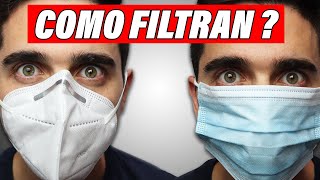
This video explores how masks filter particles and whether they effectively protect against respiratory illnesses like COVID-19. Filtration efficiency varies across fabrics, with layered masks offering better…
This video examines state mandates for face masks during the COVID-19 pandemic, highlighting their significant impact on reducing infection rates. It references studies that show these measures may have helped prevent…
On this episode of Science Sundays, we discuss the effectiveness of cloth masks in reducing COVID-19 transmission. Proper use and hygiene are vital for public health. Join us as we explore the evidence supporting…
This video explains the types of masks for COVID-19, proper selection, and usage, highlighting that widespread mask adoption significantly reduces disease spread and hospitalizations, even when masks aren't perfect.
Dr Sheila Dobee discusses how different fabrics in cloth masks filter aerosol particles, emphasizing the importance of proper fit and layering to enhance protection. This information is useful for both healthcare…
Researchers from the Australian University found that a single layer of fabrics does not offer good protection, but layered fabrics can block over 80% of particles below 300 nanometres, including viruses like COVID-19…
This video evaluates the efficacy of cloth masks in protecting against the coronavirus. Research shows varying filtration efficiencies, with some materials filtering only 5-25%. Understanding these findings can inform…
Amidst the COVID-19 pandemic, we provide comprehensive information about facemasks, their types, usage, and disposal. This video discusses the effectiveness of cloth masks in reducing transmission and their critical…
ShapeMask95 fabrics are high-quality 3-ply materials designed for effective respiratory protection. They are anti-air, anti-microbial, anti-noda, washable, and provide a high level of filtration efficiency, making them…
This study evaluates how well different common fabrics used in cloth masks can filter aerosol particles, emphasizing the importance of layering, fabric type, and mask fit in optimizing protection against respiratory…
This video discusses a study on how well common fabrics used in cloth masks filter aerosol particles, which is crucial for preventing respiratory illnesses like COVID-19. Proper fit also significantly impacts mask…
This video evaluates the aerosol filtration efficiency of common fabrics used in cloth masks. It discusses how layering and fabric combinations can significantly improve mask performance, emphasizing the importance of a…
This video discusses the filtration efficiency of common fabrics used in masks, emphasizing the importance of fabric layers, combinations, and proper fit to improve protection against respiratory particles and prevent…
RT @EmilyVBurns: 7/
This is why N-95’s are fit-tested, b/c they offer virtually NO protection with even a 1% gap—as noted in this paper fr…
Oct 28, 2025 · 135 shares · 4,355 followersView post →
TB
Thinning not Balding
@BaldingNot · X
@SebF344235 @AlainPatenaude7 Konda, A., et al. (2020). Aerosol Filtration Efficiency of Common Fabrics Used in Respiratory Cloth Masks. ACS Nano. — Measured filtration across particle sizes for many fabrics and fabric combinations; found some multilayer combinations approach surgical-mask performance
In addition, any cloth mask can be made better by multiple differing layers. Besides Marr's recommended 3 layers shown below,
https://t.co/mpdNYxP1I7
A combination of silk and cotton as from this study for electrostatic goodness.
https://t.co/VfM1U0Ex6M https://t.co/jXKzE2AjJ6
@3rdworldAmerika @AaronBlake T shirts are made out of cloth. He didn't pull it out of his butt, there was research prior to the covid outbreak on DIY masks and how they can help in a gen pop to reduce spread. Early pandemic, some engineering studies were done also: https://t.co/QM3XX6CCx3
@mecandacie @WendesMuniz @luiz99818 @ludmilagrilo11 Desonesta, não adianta, refuta mais
"Aiiinnn meu deus mascara precisa ser eficiente"
boa sorte em defender burrices
Dessa vez leia antes de dizer bobagem
https://t.co/h5m9IBIC0l
https://t.co/5n1G4hvsPk
https://t.co/rkhWbR7G2J https://t.co/k6Sd6qsPQq
Übersicht über Aerosol-Filterleistung von Masken von 2020 https://t.co/q40G5E2CQT
#Gesundheit #HealthAwareness #Covid @Karl_Lauterbach @MASFG_SL
Sep 29, 2024 · 1 like · 1,643 followersView post →
JS
J.B. Shaw
@RefocusOpen · X
@psychunseen @acritschristoph @MichaelWorobey @angie_rasmussen @flodebarre Joe Pierre, MD, “Pangolins Harbor SARS-CoV-2 Related Coronaviruses” (pub. 10April2020) https://t.co/L1mzm9rgVf Also, we already by knew then that SARS-CoV-2 was spread by airborne transmission. “ACS Nano…”https://t.co/cRTsNwGUWM Enjoy
@ChronicBabak @Francien_NL @HundredCarWar @quay_dr You go tell the ACS that, because that is what they measured. And with NaCl (salt) aerosols. Hint: they respond very nicely to electrostatic effects. Virons, not so much.
https://t.co/CxbZBC3eNw
@ChronicBabak @HundredCarWar @Francien_NL @quay_dr Shit, you are dense. Try reading the litterature I reference. Here they use N95 as a baseline.
https://t.co/CxbZBC3eNw https://t.co/Zt4VbvXbnW
@AViperDen Overall, combinations of various commonly available fabrics used in cloth masks can potentially provide significant protection against the transmission of aerosol particles.
https://t.co/IgjHEvUBUq
@Sam3352 Here’s the next one cited in the thread, which compared different types of mask fabrics (not N95s) https://t.co/YJFoF3VkQD https://t.co/uQwnr9tfzr
@VirusSmThanHole @RagToo We knew they were effective way before Covid-19 came around. Nothing changed.
https://t.co/cyYD5ORswx
https://t.co/YaLpvUlqfi
https://t.co/FZHVCCaVvT
https://t.co/wOwaiQn9Yz
https://t.co/CuqzAXkpt3
https://t.co/p1UjSPnPVO
https://t.co/85XbVtmT8A
https://t.co/YQzxFuvh0z
@Seph_Nagatman @MixtUpMixy @floofadootz This paper talks about cloth masks but the efficiency is much better with n95s. And the mechanisms are the same. Namely brownian motion and elecrostatic attraction.
https://t.co/wIzleSvMit https://t.co/p4DhAJOlyD
Mar 14, 2024 · 3 likes · 3,166 followersView post →
S
Susan
@UnMaskd_Truth · X
@booyah2yah @ianmSC @targettories @ScholerinED performance is higher in the lab than it would be expected to be for use in the real world.
For example:
https://t.co/MY4vUHwxNQ
https://t.co/G2UzIQ9MR2
https://t.co/to9EM1u4uL
https://t.co/vJSp1swPOb
https://t.co/PUIU0OGa8N
https://t.co/y7itcyiWdX
3/3 https://t.co/rYqiYfv5Vl
@OpticalMagician @ThatDudesMother @JohnKleinRegina @KayleWarkentin @barniefh1999 @trainwithtish 1) see link below
2) the gentleman died of Covid
https://t.co/JJZier1K3N
@Vasserbee @jessyroos @steadybacon1 N95s are certified based on testing of 300nm particles. When tested against particles/aerosols in the relevant size range for respiratory viruses, they perform poorly, even under ideal conditions in labs (clamped to a test tube for a few mins)
@AnnadeBuisseret @juanlibre1950 This one states otherwise
https://t.co/eM4BLoGJip
Jan 8, 2024 · 2 likes · 1,265 followersView post →
TO
Tony Owen
@RagToo · X
@AnnadeBuisseret Yes the masks do work, the research backs it.
The PCR is accurate, & you are more likely to be struck by lightning than affected by a vaccine.
Back to your old ways of spouting total & utter bollocks
https://t.co/eM4BLoGJip
@katariinatwi @caritarauha Jo alussa '20-'21 VTT:n tutkija Ari Harlin selitti sitä tv:ssä. Ja kansakin saattoi hätävarana tehdä itse vastaavan jos yhdisti eri aineita, esim. puuvilla+sifonki:
https://t.co/tlESHceFtq https://t.co/jacdaoDy7z
@LegalizeItLala_ @katieappleseed7 Hi Lauren, since you clearly don’t have mental illness, can you provide your evidence- because your claim goes against actual studies https://t.co/JJZier1K3N
@GerardoRiordan8 @turdsley @teachertwit2 @LongCovidHell 'reduce' and 'eliminate' do not mean the same thing. They do reduce transmission, but not as well. High thread count cotton cloth masks do a pretty good job. Here's a study https://t.co/cBRj1V0oTl
@trutharmyfilms Masks do work, time to read actual research rather than something someone else posted on twitter
https://t.co/eM4BLoHh7X
Dec 29, 2023 · 1 like · 1,265 followersView post →
A
aeon
@AeonCoin · X
@ghhughes @mkarolian @TaylorLorenz @amazon @masknerd @CriticalAerosol I had some of these made and used them when supplies were tight on everything else. Never had the ability to test them formally but I didn't get covid
Dec 28, 2023 · 1 like · 6,951 followersView post →
S
Susan
@UnMaskd_Truth · X
@FusionProgGuy @DirtyBalls1350 @MsJulieSLam @Uber @TogetherWeMask That's false. It's well-known that the MPPS for N95s is lower than 0.3 microns and rather in the relevant range for respiratory viruses.
https://t.co/6Iy57A2xVG
https://t.co/MY4vUHwxNQ https://t.co/fdp9Ku88Al
@BigKazy8_50 @Patrickdery Do you actually have a link? Or just trust me bro? Because this precious study is objective and disproves your claim https://t.co/JJZier2hTl
@crosscheck93441 Why is it only antivaxers abd antimaskers that call masks useless? This study predates Covid so it is objective. https://t.co/JJZier2hTl
@suzy_redd @catfish8888 And with that we see you are basically an idiot.
Despite the evidence you think you know better, but you don’t. All this is doing is showing your ignorance on this matter.
https://t.co/eM4BLoGJip
Dec 11, 2023 · 1 like · 1,265 followersView post →
TO
Tony Owen
@RagToo · X
@KLVeritas But they do work & you’re just some grifting kook that should have all accreditation removed
https://t.co/eM4BLoGJip
@Nahanchi7068 @CPCDouches @IanCopeland5 Funny how you avoid answering such a simple question and funny how you do t offer any proof of your claim and funny how this study pre Covid negates your claim https://t.co/JJZier1K3N
@Rod__Mason @paulvmarks Ah there’s the level of stupidity we have come to expect from conspiracy fools.
They can’t form a valid argument so resort to other unfounded BS.
https://t.co/eM4BLoGJip
@JoeClemente1 @stkirsch It obviously offends as why mention it. As for critical thinking, you really don’t have the skill set as seen by your post.
How do you know what their status is or any comorbidities they may have. Or simply you fail to understand how a mask works https://t.co/tc2DZU7kh2
@svemirsko_jaje @Branka0505050 @Serbona2 i medicini to primetili. Ne možete baš da žustro pričate jer se zagreva taj predeo ali to je to. Disanje je slobodno.
1. Aerosol Filtration Efficiency of Common Fabrics
https://t.co/grr75SbPAS
2.Modes of transmission of virus causing C-19 https://t.co/EDEuAkAieZ
@CovidConfusion That's the story, but the actual science shows they aren't effective against respiratory viruses - every single RCT on N95s has failed to find any effect.
Even clamped to a test tube in a lab for a few minutes they don't work in the nano (<300nm) range
@LRMC_C @shawneriksmith @anon_welsh @DocAhmadMalik Sweetie I referenced multiple global countries in there, not just Japan. Wow you are narrow minded. And here, knock yourself out https://t.co/JJZier1K3N
@BKofke @shawneofthedead Wearing a mask is kind. This is because, as studies show, cloth masks are effective for protecting others from the wearer’s aerosol sprayed germs during coughing and sneezing. https://t.co/YrN03FVFuK
@DJJonnyTravieso Oh you haven't seen any of the lab studies that use equipment that can measure particles/aerosols in the relevant range for airborne viruses? Are you going to see if you can find opinion pieces to refute them?!
https://t.co/MY4vUHwxNQ
Here's a few more if you're interested
@LoonaOT124ever @sameo416 That's the only study I've seen that doesn't give any setup/measurement specifics... no info about what size particles they use or what filtration is at different size ranges! Based on the commentary, it appears they measure only mech filtration (>300nm).
https://t.co/MY4vUHwxNQ
@canadastrong @DrJ56013122 @RachelEph77 @deonandan Nope, not flawed at all. Results are similar for N95s clamped to a test tube using NaCl aerosols.
Did you know that N95s are tested using 300nm aerosols and that in studies when they are tested on smaller aerosols/particles, they fail?
https://t.co/MY4vUHwxNQ https://t.co/JT3eJTltXE
@DrEricDing Masks (even N95s clamped to a test tube for a few minutes in a lab) don't block fine aerosols/particles in the relevant size range for respiratory viruses (<300nm)...
That's why in all of the highest quality studies (RCTs) they fail every single time.
https://t.co/MY4vUHwxNQ https://t.co/ZJxd3YtNz4
@3DiMMUNE @jljcolorado Well, the actual science shows that masks (even N95s clamped to a test tube for a few minutes in a lab) don't block fine aerosols/particles in the relevant size range for respiratory viruses (<300nm)...
https://t.co/MY4vUHwxNQ https://t.co/KDo0HvpIR1
@fritsander @jljcolorado Well the actual science shows that masks (even N95s clamped to a test tube for a few minutes in a lab) don't block fine aerosols/particles in the relevant size range for respiratory viruses (<300nm)...
https://t.co/MY4vUHwxNQ https://t.co/IOcZ3DePcR
@ProfEmer @jljcolorado Well the actual science shows that masks (even N95s clamped to a test tube for a few minutes in a lab) don't block fine aerosols/particles in the relevant size range for respiratory viruses (<300nm)...
https://t.co/MY4vUHwxNQ https://t.co/PkHwMzgZ4v
@ghhughes @jljcolorado Except the actual science shows that masks (even N95s clamped to a test tube for a few minutes in a lab) don't block fine aerosols/particles in the relevant size range for respiratory viruses (<300nm)...
https://t.co/MY4vUHwxNQ https://t.co/WuaXkTWFI4
@DrEricDing @ABridgen @jljcolorado Except the actual science shows that masks (even N95s clamped to a test tube for a few minutes in a lab) don't block fine aerosols/particles in the relevant size range for respiratory viruses (<300nm)...
https://t.co/MY4vUHwxNQ https://t.co/2TbWwhtohg
@jljcolorado Except the actual science shows that masks (even N95s clamped to a test tube for a few minutes in a lab) don't block fine aerosols/particles in the relevant size range for respiratory viruses (<300nm)...
https://t.co/MY4vUHwxNQ https://t.co/L4uEPP3fus
@RichardWWard1 @ID_Denmark @greg_travis https://t.co/MY4vUHwxNQ
The issue is that the claim that the MPPS is 300nm is based on instruments that don't properly/accurately measure particles/aerosols <300nm.
@UnMaskd_Truth @SeattleiteLeo @willcollier Also, Fig 4A => ↑ efficiency of fabrics (no gaps) and authors say "Overall, we find that combinations of various commonly available fabrics used in cloth masks can potentially provide significant protection against the transmission of aerosol particles." https://t.co/YkmdijQMXA
@ID_Denmark @granit29 @SeattleiteLeo It really doesn't make sense for anyone, once you realise that even N95s (clamped to a test tube for a few minutes in a laboratory environment) don't block smaller aerosols...
https://t.co/MY4vUHwxNQ https://t.co/6NcY18olol
@EbonyJHilton_MD @projectn95 I'm not scientifically educated enough to know if this article proves that high thread count cotton 3 layer masks are as good as N95 but I think it might be saying so: https://t.co/cBRj1V0oTl
@ColinDebunks @FLSurgeonGen this study (below) used a separate technology for that range & found that far more than 5% of particles in some of these lower size ranges penetrated the N95, even under lab conditions (a new/clean/dry mask clamped to a test tube for a few minutes).
2/2
https://t.co/MY4vUHwxNQ https://t.co/azwTbRGnaB
@Sarahjanecares @Silver_Lining76 @Paul38722059 @aftab_usa That's a propaganda video. It's based on the theory that 300nm is the MPPS for N95s (which is based on limitations of the equipment typically used to measure particle penetration) and other theories that don't hold true in practice.
For eg., see... https://t.co/MY4vUHvZYi
1/3 https://t.co/LHGuR0tMa8
@KristenMeghan @JDVance1 Did you see this study? It's dated 2020, but I hadn't seen it. It seems to show N95s (clamped to a tube in a lab) let through a significant proportion of particles <300nm (weighted ave FE 85% in this range, but goes much lower) even at low flow rates...
https://t.co/MY4vUHwxNQ https://t.co/jJsxuYWcxO
@DanCoop33206515 @patgotweet @ThomasPaineBand @RandPaul Scientists change their views based on the latest data. Coronaviruses were studied in bats at Wuhan by Shi Zenghli. Natural immunity mimics the vaccine, as both start waning around 6 months. Masks work.
https://t.co/eJjypz6X3U
https://t.co/qPfLNaw2PN
https://t.co/qaiao6aZEE
@ClayTravis @CNN One study out of many doesn't prove anything.
https://t.co/cdGDxv2sIY
https://t.co/eJjypz6X3U
https://t.co/qPfLNaw2PN
https://t.co/qaiao6aZEE
https://t.co/rQxa1zrarE
@Shimmering777 @stkirsch If you layer silk with cotton (both tightly woven), you can get a mask with a static charge that has comparable effectiveness to N95s (assuming very good fit).
Very early on when supplies were tight, I had some homemade masks like this.
https://t.co/YuQ5cCnfTF
@toddmodem @DrEliDavid No, you need to wake up, comparing the virus size is useless as masks work by trapping the droplets and particles that are contaminated with the virus, not free floating virus. That masks can stop aerosols and droplets are well researched. https://t.co/xhvmisXPMz
@DanishScience @AmiriKing Here's a study that shows that mask fabric stops droplets and aerosols in the air that may contain virus. https://t.co/xhvmisXPMz
RT @Emily_Burns_V: 7/
This is why N-95’s are fit-tested, b/c they offer virtually NO protection with even a 1% gap—as noted in this paper…
Aug 15, 2023 · 135 shares · 164 followersView post →
と
とよくん
@toyokun777 · X
Konda, A. et al. (2020) - "Aerosol Filtration Efficiency of Common Fabrics Used in Respiratory Cloth Masks" - この研究では、一般的な生地を使用した布製マスクのエアロゾル除去効率について評価されています。
@AXELKAISER Aun no se como estas en la testera
Estudio 1: "Aerosol Filtration Efficiency of Common Fabrics Used in Respiratory Cloth Masks" (2020) Este estudio, publicado en la revista ACS Nano, evaluó la eficiencia de filtración de aerosoles de diferentes tipos de telas.
@dubbyruntle N95 obviously best, as I think most people know these days. But anything better than nothing if that’s all people have.
https://t.co/dPb43CYMIS
@MetalChick616 @Rodney_ii_back @Metsfan281 @nypost above 50% in the entire 10 nm (0.01 micron) to 6.0 micron range, provided they have a tight weave." -National Center for Biotechnology Information, Aerosol Filtration Efficiency of Common Fabrics Used in Respiratory Cloth Masks." https://t.co/NMeiCGQ30r
@JerLeff @aaronsimpson @nathaliejacoby1 This one is interesting too:
“Aerosol Filtration Efficiency of Common Fabrics Used in Respiratory Cloth Masks”
https://t.co/Cc5k6FIrR6
@VyvyFindsWords @catladyactivist @kdqd3 N-95 and other masks also provide some filtration as well, per "Aerosol Filtration Efficiency of Common Fabrics Used in Respiratory Cloth Masks" that also compared to #N95 masks.
https://t.co/6fxFeNL2Wm https://t.co/3i1mSoak3O
RT @WeingartenDE: Die #Studie "#Aerosol #Filtration Efficiency of Common Fabrics Used in Respiratory Cloth #Masks" belegte, das #Baumwolle,…
Jan 11, 2023 · 6 shares · 771 followersView post →
SW
Shaun Wing
@shaunmwing · X
@DellAnnaLuca @ClarkeMicah Again the 'EC' property is irrelevant; duly as the populous use cloth masks, why I referred to standardMasks earlier in our exchange. In ref to *aerosol filtration efficiency of common fabrics used in respiratory cloth mask there's no viral barriers = hence, 0.175 micron gap (s).
@Djenr8 @richdatasci 13/70"Aerosol Filtration Efficiency of Common Fabrics Used in Respiratory Cloth Masks" Konda et al., ACS Nano, April 24 2020: https://t.co/YYY6gYWDyP …
@Gigi51669370 @czar19842012 Here's a few studies. There are a lot more studies on the efficacy of masks where these came from. I guess you side with the CDC.
https://t.co/7SjxflN460
https://t.co/PwPtJqZpg3
https://t.co/eJjypzo05U
https://t.co/eKg6pO4uIN
https://t.co/cdGDxvjvKY
https://t.co/eJjypzo05U
@BU_Tweets Boston University, https://t.co/cRTsNwYvOk Four layer silk mask >80 vs. KN-95 mask >95 . Materials Science, location, setting, crowd density, time duration, room air filtration, wearability, durability, comfort, fashion & more…someone is developing an App for it. Enjoy :-)
@__elDuderino_ @andrewbostom @benshapiro Aerosol Filtration Efficiency of Common Fabrics Used in Respiratory Cloth Masks https://t.co/R8ZyD8eLMs https://t.co/oQD1s5OuBX
@Asta_de_B @joeyfox85 Study for them. Cloth mask vs N-95 mask debate, during #COVID19 pandemic, has been studied. Cloth mask advocates miss obvious data #N95 masks should be used. N-95 mask designed for 300 nm filtration efficiency function of aerosol particles https://t.co/ktKW1LDVkY
@balinda0906 @JTornbury @Stealthfs @ElectionWiz According to a study called "Aerosol Filtration Efficiency of Common Fabrics Used in Respiratory Cloth Masks" (funded by the NIH) the efficacy rate of standard 2-layer cloth masks is only roughly 82%.
@jDaz @DanCrenshawTX Read a study or two before making a misinformed comment like that. Let me help you out:
https://t.co/qaiao5SQqw
https://t.co/U1IdvxhDom
https://t.co/dtpiy944JG
https://t.co/qPfLNaN5RN
https://t.co/eJjypzo05U
https://t.co/cdGDxvjvKY
https://t.co/rQxa1zIdtE
@fabulasbab @MPretekin @CatBennett77 @CoventryShayne @jasimanski "One recent study looked at the aerosol filtration efficiency of common fabrics used in respiratory cloth msks, finding that efficacy varied widely, from 12 to 99.9%,at flow rates lower than at-rest respiration (89).Many materials had ≥96% filtration..."
https://t.co/Lizg7imRz4
13/70"Aerosol Filtration Efficiency of Common Fabrics Used in Respiratory Cloth Masks" Konda et al., ACS Nano, April 24 2020: https://t.co/YYY6gYWDyP …
Nov 29, 2021 · 5 likes · 1,482 followersView post →
K
Kazi
@kazi2015kazi · X
@therockett @Femi_Sorry Here is a paper which explains exactly that https://t.co/nZky95WOeO Looks at "Aerosol Filtration Efficiency of Common Fabrics Used in Respiratory Cloth Masks"
@reygriva @eugen_trischke @princemyshkinnn @msvetov https://t.co/lHjd0GwN2k давно не участвовал в твиттер срачах, забыл о такой дикой твиттерской плотности уязвленных троллей.
#COVID19 #Masques
Je pose ça là... pour y réfléchir ultérieurement.
Efficacité des masques en population générale
https://t.co/Gae3e2OoQ4
https://t.co/GoxavZ1pKF
https://t.co/sRNBqRH7uj
Sur les masques en coton
https://t.co/bltxMlnY5m
Réutilisation NK95
https://t.co/HzoNxpMpa1
@dragonflies999 @LeGunnerDoc @mcfadzean_neil @NathanMackBrown @JamesBurnie2 Aerosol Filtration Efficiency of Common Fabrics Used in Respiratory Cloth Masks
Abhiteja Konda, Abhinav Prakash, Gregory A. Moss, Michael Schmoldt, Gregory D. Grant, and Supratik Guha*
There’s two. You can do your o review if you want more. BotirtedBAerosol Filtration Effici
@OHAinContext @ORhunter @RockHound47 One recent study looked at the aerosol filtration efficiency of common fabrics used in respiratory cloth masks, finding that efficacy varied widely, from 12 to 99.9%, at flow rates lower than at-rest respiration
@priyology Especially when there are papers out there demonstrating that masks with combos of fabric (like cotton + silk, cotton + chiffon, cotton + flannel) are on par with N95s & better than surgical masks at blocking aerosols! Konda et al. 2020! https://t.co/kcvIkGwcmJ
@Remindme2forget @KXAN_News 25. Konda A., Prakash A., Moss G.A., Schmoldt M., Grant G.D., Guha S. Aerosol Filtration Efficiency of Common Fabrics Used in Respiratory Cloth Masks. ACS Nano. 2020;14:6339–6347. PMC Article
@The_Poolshark Here’s one from the NIH. This is with diesel particles testing. https://t.co/xNalpblId7
And this one is for mask type material: https://t.co/gaiS6585NO
Somethin I never thought I’d be researching,aerosol filtration efficiency of common fabrics used in respiratory cloth masks in an effort to avoid polypropylene inhalation &its affects on the respiratory system. In short ima bout to make a bunch of masks to peer reviewed standards
@farmboy8655 @JackieGolub @laurenboebert You don't know what you are talking about.
Here's a FEW of the studies on mask wearing. I can't wait to see your studies.
https://t.co/PwPtJqZpg3
https://t.co/cdGDxvjvKY
https://t.co/eJjypzo05U
https://t.co/gFKwlZVvwX
https://t.co/qaiao5SQqw
https://t.co/rQxa1zIdtE
Jul 29, 2021 · 1 like · 2,846 followersView post →
W
Wayne
@Wayno1966 · X
@GooseButter00 @leibofestsdad @henryjdavid @DonaldJTrumpJr @laurenboebert Prevent 100%? No. They do reduce the amount of virus inhaled and lower the risk. When combined with the reduction of the amount of virus expelled, masks wearing helps a lot to reduce spread and risk. https://t.co/jNqgQhHkR4
@EAHippie @AlanSmi16732190 @TDuuuuval @KatTimpf Masks work. Let's see your studies. BTW, there are many more studies than these .
https://t.co/qaiao5SQqw
https://t.co/eJjypzo05U
https://t.co/rQxa1zIdtE
https://t.co/cdGDxvjvKY
https://t.co/S0Ix5MamXU
https://t.co/U1IdvxhDom
@pkasyanov_wos Химия и науки о материалах:
https://t.co/MD7564I4OH
https://t.co/CPvMnke6lu
https://t.co/yajmQzbA5o
https://t.co/khOPU3UNIg
https://t.co/3XzXgLjybd
.
RT @WeingartenDE: Die #Studie "#Aerosol #Filtration Efficiency of Common Fabrics Used in Respiratory Cloth #Masks" belegte, das #Baumwolle,…
May 27, 2021 · 6 shares · 489 followersView post →
MS
Michael stilling
@Soulwhistle · X
@russnelson @porterguy1 @aninthe1 @Shadowbird Aerosol Filtration Efficiency of Common Fabrics Used in Respiratory Cloth Masks - Konda et al. 2020
Effectiveness of Face Masks in Preventing Airborne Transmission of SARS-CoV-2 - Ueki et al. 2020
@J2KChoiceCuts @PartyPlayusa @AnnastaciaMP @LeeanneEnoch @DiFarmerMP Might pay to read the corrections "Comment on “Aerosol Filtration Efficiency of Common Fabrics Used in Respiratory Cloth Masks” | ACS Nano" https://t.co/PByyUKzr5V
@ieatthetacos @AJMovieMaker @PlateauUkok @JackPosobiec 110. A Konda, et al., Response to letters to the editor on aerosol filtration efficiency of common
fabrics used in respiratory cloth masks: Revised and expanded results. ACS Nano 14,
10764–10770 (2020).
Another study he linked (#25) only discusses the efficacy of different types of fabrics in face masks. https://t.co/WqmS8NGnF3
Another trial (#19) concluded that cloth face masks were not sufficient for health care workers and that medical grade masks performed better,
@oproprioguto Leia e verá que a máscara com várias camadas resolve sim .Não sei pq a resistência em usar ! Isso poderia evitar outras coisas.
https://t.co/aMsTeZijCW
@renato_aloi @Sg12712258 @oproprioguto @levisback Leia e verá que a máscara com várias camadas resolve sim .Não sei pq a resistência em usar ! Isso poderia evitar outras coisas.
https://t.co/aMsTeZijCW
@NatFilosof @tjonesy_14 @BenjaminCurran5 @therecount You should really read this from the National Institutes of Health regarding masks and aerosol particles to educate yourself a bit.
https://t.co/807CwzGYos
@ATLbpckr @AP https://t.co/3lQsH4IXpY
https://t.co/3lQsH4IXpY
https://t.co/9ONRPM7h3c
https://t.co/T6z9t1eHGm
https://t.co/YQQdWgNwCp
https://t.co/RoVd8U7t39
https://t.co/UNckWhrenN
https://t.co/8ApHFZiOxI
https://t.co/jEJF6cUcLB
A year into the pandemic & still debating mask use
Mar 31, 2021 · 1 like · 20,916 followersView post →
SL
spain.libertarians
@SpLibertarians · X
En este vídeo de un tal Sergio Hidalgo lo explica muy bien basándose en 8 documentos de diferentes fuentes:
https://t.co/3u5O0fMHXT
RT @WeingartenDE: Die #Studie "#Aerosol #Filtration Efficiency of Common Fabrics Used in Respiratory Cloth #Masks" belegte, das #Baumwolle,…
Mar 12, 2021 · 6 shares · 5,865 followersView post →
BW
Bert Weingarten
@WeingartenDE · X
Die #Studie "#Aerosol #Filtration Efficiency of Common Fabrics Used in Respiratory Cloth #Masks" belegte, das #Baumwolle, #Naturseide und #Chiffon >50 Prozent abschied, und dichter gewebte #Baumwolle eine Abscheidung von 79 bis 98 Prozent erreichte https://t.co/V1yCieYwi1 https://t.co/oEqqai4EZ2
Mar 11, 2021 · 72 likes · 6 shares · 3,586 followersView post →
CB
Chris Bach
@DFSInfluencer · X
@Saville1559 @ReformedBroHood @LutheranKlinean @seamuscmacaoidh @TWRjack I’m glad you asked.
May this season be a humbling experience, seeing
Mar 10, 2021 · 1 like · 1,627 followersView post →
LH
Lord Mighty Humanzee
@HZardoz · X
@memorybutter @tamaravotes @kroger The masks don't work.
https://t.co/2eZhYc8B3Y
https://t.co/Z1WMscAw1W
@Cvyrtlick Konda A, Prakash A, Moss GA, Schmoldt M, Grant GD, Guha S. Aerosol filtration efficiency of common fabrics used in respiratory cloth masks. ACS Nano. 2020;14:6339–47
@PeterSu18080286 @mikelovestweets @Gilead2020 @LLorraine_lolly @BorisJohnson @MattHancock @MarkDrakeford @vaughangething @NicolaSturgeon Well Peter, here is the very first paper I pulled off a site called PubMed where we often publish our peer reviewed papers.
This one deals just with material masks and their benefits. There are hundreds of others. Institutions and authors are listed.
https://t.co/nXQrAgW4Wh
(覚書)早期(5月)の布マスクとメルトブローン不織布マスクについての比較論文についての所感覚書:
// Aerosol Filtration Efficiency of Common Fabrics Used in Respiratory Cloth
Masks[ https://t.co/8eUPEn9JDR] https://t.co/8dECuiDGWt
Feb 6, 2021 · 3 likes · 1 share · 1,017 followersView post →
JS
J.B. Shaw
@RefocusOpen · X
@triplea87 Ahmed Abdul Azim, It's a good thread. 24 April 2020, "Aerosol Filtration Efficiency of Common Fabrics Used in Respiratory Cloth Masks"ACS Nano https://t.co/DbMYDyKpgO Enjoy :-)
RT @lorene1voice: Aerosol Filtration Efficiency of Common Fabrics Used in Respiratory Cloth Masks https://t.co/UtDD9W2GR9 Differences with…
Jan 31, 2021 · 1 share · 2,028 followersView post →
LO
Lorene Oikawa
@lorene1voice · X
Aerosol Filtration Efficiency of Common Fabrics Used in Respiratory Cloth Masks https://t.co/UtDD9W2GR9 Differences with fabrics + fit of mask. Gaps significantly reduce effectiveness.
Jan 31, 2021 · 1 share · 4,060 followersView post →
JS
John Sam
@JohnSam57668631 · X
RT @ElinSilveous: Correction to Aerosol Filtration Efficiency of Common Fabrics Used in Respiratory Cloth Masks | ACS Nano https://t.co/HsK…
Jan 30, 2021 · 2 shares · 777 followersView post →
GB
Gary Beane
@pollinus66 · X
RT @ElinSilveous: Correction to Aerosol Filtration Efficiency of Common Fabrics Used in Respiratory Cloth Masks | ACS Nano https://t.co/HsK…
Jan 30, 2021 · 2 shares · 2,028 followersView post →
ES
Elin Silveous
@ElinSilveous · X
Correction to Aerosol Filtration Efficiency of Common Fabrics Used in Respiratory Cloth Masks | ACS Nano https://t.co/HsKGBnXSqU
Jan 30, 2021 · 2 shares · 7,777 followersView post →
B
BoDiddly
@Bo_Diddly · X
@michael_kisner @Code_Her @laurenboebert You are confusing the concept of ideal use and actual practice. Multi-layer cloth masks with a good fit reduce 80% of particles <300nm and 90% >300nm. Masks work if used correctly. https://t.co/91xOZpMsgg
@Reeshofwarmte @hugodejonge @rivm @Nieuwsuur Aerosol Filtration Efficiency of Common Fabrics Used in Respiratory Cloth Masks | ACS Nano.
https://t.co/CKUY9FPySU
@mamacoleman63 @CDCgov Yeah I looked at the ones linked in that article:
Low Confidence (more confident on n95s vs cloth)
https://t.co/TzvmkkuBm5
Looks like a lab test vs community test:
https://t.co/pib2WU5M5T
https://t.co/cj8crceVVc
@alonsoMant1 @Pamerz06 @1_sandracortes @Mister_Wolf_0 @Pajarobere Estudio de la efectividad de mascarillas de tela, obviamente no todas sirven, su efectividad bordea el 80% cuando esta confeccionada con doble tela ( de diferentes tipos).
-Aerosol Filtration Efficiency of Common Fabrics Used in Respiratory Cloth Masks
https://t.co/sPzCJeUt3K
@BuilderKapono The viruses don't travel on their own, they are in aerosolized particles of mucus and saliva, which are much larger and are stopped by masks.
Here's an actual scientific journal:
https://t.co/fR62s2X45Q
@DriversAmerican @SanDiegoCounty @fox5sandiego Konda A, Prakash A, Moss GA, Schmoldt M, Grant GD, Guha S. Aerosol Filtration Efficiency of Common Fabrics Used in Respiratory Cloth Masks. ACS Nano. 2020;14(5):6339-6347.10.1021/acsnano.0c03252. https://t.co/Zn6Rz4zCBw
@eleonorasfalcon Maybe you haven't been looking?https://t.co/XNHmkO8wE2
https://t.co/k0Jt6JZwsQ
https://t.co/wDjotnIH8j
https://t.co/D30vqd4QIp
https://t.co/KxtOYRAttu
et al, etc. etc.
Dec 1, 2020 · 3 likes · 1 share · 37,845 followersView post →
ML
Matías Leonel
@MatiasArlia · X
Hay gente que dice que los tapabocas caseros no sirven. Es falso. Sólo que hay que usar los que tienen doble o triple capa.
https://t.co/lQQwbCoWCE
SOME FACTS: You can go to https://t.co/lxuRvTOCdj and do a search if you're looking for peer reviewed science rather than infotainment. Here's a few that might be of interest after a 3 second search:
https://t.co/iNUZezGviP
https://t.co/a5vb3xSH7w
https://t.co/KDdEDUGgiv
Nov 20, 2020 · 12 likes · 1 share · 17,389 followersView post →
MI
MESTRE iago
@iaagosch · X
@angelicaguirele @brunocavasana @soth37 @EricaOlvsantos @oatila https://t.co/98HN63VW19
https://t.co/EHz88PoTzk
https://t.co/0AsqFmy7RX
Nenhum artigo fala que a transmissão é reduzida em 100% utilizando máscaras de tecido, mas é significativa quando comparada a não utilizar nenhuma máscara.
RT @NanoSceal: Aerosol Filtration Efficiency of Common Fabrics Used in Respiratory Cloth Masks https://t.co/ODM2KeNcxF
Nov 16, 2020 · 2 shares · 777 followersView post →
GB
Gary Beane
@pollinus66 · X
RT @NanoSceal: Aerosol Filtration Efficiency of Common Fabrics Used in Respiratory Cloth Masks https://t.co/ODM2KeNcxF
Nov 16, 2020 · 2 shares · 2,028 followersView post →
N
Nanoscéal
@NanoSceal · X
Aerosol Filtration Efficiency of Common Fabrics Used in Respiratory Cloth Masks https://t.co/ODM2KeNcxF
Nov 16, 2020 · 2 shares · 666 followersView post →
S
Sarah25675718
@Sarah25675718 · X
@Mightyanchove @fakeriwnl @ShowElisabeth @LaraLeaTrump ACS Nano: Aerosol Filtration Efficiency of Common Fabrics Used in Respiratory Cloth Masks
https://t.co/thapINEhDy
@the_ghost_hosts @nyjerrykane @sean_antrim @stillgray Konda A, Prakash A, Moss GA, Schmoldt M, Grant GD, Guha S. Aerosol
Filtration Efficiency of Common Fabrics Used in Respiratory Cloth Masks. ACS
Nano. 2020;14(5):6339-47. https://t.co/2MBaLrbqt1
@DancerDad @duckford10 Aerosol Filtration Efficiency of Common Fabrics Used in Respiratory Cloth Masks
Abhiteja Konda, Abhinav Prakash, Gregory A. Moss, Michael Schmoldt, Gregory D. Grant, and Supratik Guha
ACS Nano 2020 14 (5), 6339-6347
DOI: 10.1021/acsnano.0c03252 https://t.co/sWXCItp27U
@Rachelswims68 @genleyai @TimSmithMP Give it a go for yourself:
https://t.co/zRAUwD2CWl,
https://t.co/z8sSeccrzW,
https://t.co/UzpUDKNint,
https://t.co/a0k0av4FHJ,
https://t.co/4N2nIb0KkK.
https://t.co/jSVDx1YyU4,
https://t.co/Xpo4DaMGjb,
https://t.co/TIW6hzSQrV,
https://t.co/itoSXTDA0E,
https://t.co/AkvvscGcru
@AdorDNI @CarlosMaslaton @ImNotValenArias Es falso que los tapabocas caseros no sirvan de nada. Sólo que hay que usar los que tienen doble o triple capa.
https://t.co/lQQwbCoWCE
LG7 fan of reading, walking & democratic republics
@Lechatbon · X
@Trumplican17 @nateduchene @CarlosHappyNPO ...“cloth masks can potentially provide significant protection against the transmission of particles in the aerosol size range.”
Aerosol Filtration Efficiency of Common Fabrics Used in Respiratory Cloth Masks.
#masks #clothmasks #PPE
https://t.co/bJESlt4yhR
@DrBibu @doofy_duck @DIEZEIT oder auch noch mehr Studien für Maskenverweigerer:
https://t.co/zIypkeVNQi
https://t.co/Ek81tV6liW
https://t.co/4zKnumhLBG
https://t.co/dT8l1JjlsY
https://t.co/cqovNSPwyk
@WildFotos agreed, but the recommendation still appears to be to wear a mask. Other studies have they are effective to reduce the likelihood of transmission even if it doesn't eliminate all risk.
https://t.co/S8DBnmnnq4
linked source from the CDC
@WoodyChestnut @CNNSotu @jaketapper I had already read this one before. It was in your article. Notice everything they say is, might help. No definitives. That cdc study I posted had randomized controlled studies. They have a definitive, no significant effect...
Masks are near useless
https://t.co/TZne2prv2L
@DanBrino @907tweeter @realDonaldTrump Abhiteja Konda, Abhinav Prakash, Gregory A. Moss, Michael Schmoldt, Gregory D. Grant, and Supratik Guha. Aerosol Filtration Efficiency of Common Fabrics Used in Respiratory Cloth Masks. ACS Nano Article https://t.co/dfCTJKG0OV
@shrimperbhoy @Bullwinkle19 @RestorerStone @DPJHodges through it, then it will be of no benefit’
Aerosol Filtration Efficiency of Common Fabrics Used in Respiratory Cloth Masks
The effect of gaps between the contour of the face and the mask as caused by an improper fit will affect the efficiency of any face mask. 1/
@TULlP_Ohare عن رو متخصص نیستم، ولی این لینک یه مقاله که میگه:
Significantly reduces the chance of catching it
Link: https://t.co/MbSHUL1Jvu https://t.co/55XNs44zS2
@CheckOrphan @AndrewAtter @DrAseemMalhotra There are numerous studies that confirm filtration efficiencies for aerosols of different size.
https://t.co/lr2yoUbVcs
... and additional studies linked on this page.
1/The Evidence Behind: Fit Matters
Our graphic is based two scientific articles that measures and compares the filtration efficiency of various types of masks.
https://t.co/EbTk8gK76s
https://t.co/kyXlDExXMu
#Science #WearAMask
@DianaAlaska1 @JReinerMD Not true. CDC, WHO studies and OSHA guidelines say otherwise https://t.co/fYQpuiseXL… N95 masks are designed to filter bacteria eg. TB not viruses 20x smaller. Cloth is worthless https://t.co/ynbMpS3GIG Respirators better & must be fitted, properly handled & changed regularly. https://t.co/cKCgh4DCdA
RT @M0kujin: @nlmb_uchiha @Ch4ryXp Hmmmm, the science says otherwise, particularly when you understand the difference between close contact…
Aug 28, 2020 · 1 share · 1,341 followersView post →
A
Ant
@M0kujin · X
@nlmb_uchiha @Ch4ryXp Hmmmm, the science says otherwise, particularly when you understand the difference between close contact, clinical settings, and being indoors in public spaces
https://t.co/LgOaLm7Led
Aug 28, 2020 · 7 likes · 1 share · 2,419 followersView post →
@Matter_of_Grey @ruprechtsfork @IngrahamAngle Well, here's a recent study:
https://t.co/aBDqtqp2Lz
And this:
https://t.co/u3O4n2dDEu
Not sure why the government of the Netherlands is somehow more trustworthy than the CDC. Especially given the recent upswing in infections in the Netherlands (no masks) vs UK (mandate) https://t.co/8E1t2eo3Yo
@WeatherManCoder @blogNekoRandom @Kimmi1965 @haileybranson If you don’t wear a seatbelt and you get in a car crash, the person most likely to die is you. Seatbelts are also mandatory by law.
Your point about masks is objectively incorrect. Source 1: https://t.co/GEgxuu9poG
Source 2: https://t.co/INmGtbqML1
@AntibioticDoc @imgrund @SaskHealth @drsusanshaw Also see this previously published paper.
As expected, in addition to intrinsic filtration efficiency of the materials, *fit* (ie. amount of leakage) affect actual performance of homemade masks.
Cotton quilt performed well due to the batting fiber.
https://t.co/5baBreLp7C
Jul 23, 2020 · 1 like · 1 share · 1,773 followersView post →
NS
Not satisfied
@Notsatisfied6 · X
@Texas_Ginger @cain_nate Again, spewing ignorance. You should step outside of your box and attempt to disprove your assumptions.
Cloth masks are effective filtration with an electrostatic and a tight weave layer. The concerns are fit and proper wear.
https://t.co/f0jrKrlMAN
@JonatanSchloss @beth_lilja @Apotekerne Ift. det spørgsmål er her to af de kilder CDC henviser til i forbindelse med deres anbefaling af dem: https://t.co/8h83BEHCNH
https://t.co/8ePQ7SBF4T
@opticpros Asking for pre-COVID-19 studies about COVID-19 doesn't make sense.
CDC cited this:
"We find that (...) available fabrics used in cloth masks can potentially provide significant protection against the transmission of aerosol particles."
https://t.co/rP5G9597fw
@JasonRHoney These are too
https://t.co/mue7q1gS7q
https://t.co/O5pUXxbmFc
https://t.co/SM7t3yYKTm
https://t.co/gQwsaGkOuf
https://t.co/iEmcJYeYvx
https://t.co/O5pUXxbmFc
Jul 17, 2020 · 1 like · 8,510 followersView post →
S
SoDakSportsFan
@SoDakSportsFan · X
@josh_barrie @graceemilydoug @JtESPN991 Hey man - hope these studies clear some of the questions you might have up. I know I always like to read the primary sources too.
https://t.co/QEEoxjbrSh
https://t.co/eD1HfSZlM9
https://t.co/kj2jBbxxg6
https://t.co/kCkRAKGgwu
https://t.co/PARoMpS98g
https://t.co/eD1HfSZlM9
@StevenHughes129 @royboy_78 @stephenfell0ws @dibbbling @BBCBreaking It’s important to discuss it and tackle the issues people have directly so we can all learn.
Jul 13, 2020 · 1 like · 4,207 followersView post →
PA
Patrick Almhjell
@patrickalmhjell · X
@glencoco4u @ChrisSugar4 @GloriaD53469398 @xinjing999 @ABCDefg14571023 @peaceandhvac @meldub79 @GavinNewsom While I'd love to discuss more, I'm not a materials scientist (biochemistry PhD student), so this isn't exactly my expertise. But this article suggests that they are still effective: https://t.co/cb1qEt9NIW
@NormiesProgress Couple of standouts cited by the CDC, since politicians aren't in the business of "data" so much as scientists: https://t.co/7cW7r8Ltye and https://t.co/LRQu6keHo7. What's it to me is that people not wearing masks means more potential spread of this virus.
Aerosol Filtration Efficiency of Common Fabrics Used in Respiratory Cloth Masks | Gaps from improper fit, resulting in bidirectional airflow around the mask’s periphery, can result in >60% decrease in filtration efficiency. https://t.co/2QO1DlJg7W
Filtration efficiencies of hybrids (e.g.; cotton-chiffon) was >80% (for particles <300 nm) and >90% (for particles >300 nm). The enhanced performance of the hybrids is likely due to the combined effect of mechanical and electrostatic-based filtration. https://t.co/2QO1DlJg7W
@richdavisphd @PaoloViscardi @providence_phc A paper showed that adding a chiffon or silk layer to a mask made from tightly-woven cotton would block almost all droplets by adding an electrostatic trap
https://t.co/OjSaaoasOZ
Jun 28, 2020 · 2 likes · 36,524 followersView post →
مگ
منو گال
@BasrHass313 · X
@Kenan_muhala1 @sahaider75 ليس تهويلا إنما هو إطلاع على الحقائق بحجمها الفعلي و اتخاذ الحيطه والحذر افضل من دس الراس في الرمال
https://t.co/GVV6pQr6qb
Mascherine fai da te: i migliori tessuti low-cost da utilizzare. Uno studio mostra che mascherine con strati di cotone a trama stretta e chiffon/seta hanno prestazioni comparabili a quelle FFP3. Attenzione comunque alla perfetta vestibilità. https://t.co/xgyVfL2jdc
COVID-19 Research Papers: My Three Favourites
https://t.co/4J1hIt113f
#COVIDー19 #COVID19 #CoronaVirusPakistan #Corona #coronavirusuk #Coronavirusireland https://t.co/Ix8cFDBWqS
@nicoletranger @absinor @medicalaxioms See: Konda A et al., Aerosol Filtration Efficiency of Common Fabrics Used in Respiratory Cloth Masks; https://t.co/8yBZZr9HDs
(1) BEST MATERIALS & MANUFACTURE FOR CLOTH FACEMASKS
The American Chemical Society Journal, ACS Nano, has published the latest research study on the subject, with the recommendations of its authors (21/04/2020):
Free access during the Covid pandemic:
https://t.co/vlJqyG1PtM
@temiokomi @RitaOnwurah @seleijewere Published article April 24 2020
Title:Aerosol Filtration Efficiency of common Fabrics Used in Respiratory Cloth Mask
https://t.co/YCxP9w5PIx
This is not by MIT sha
















 M
M TB
TB DS
DS