 NN
NN GB
GB DG
DG PC
PC LM
LM JP
JP NR
NR RR
RR RW
RW EL
EL EK
EK HY
HY HZ
HZ MJ
MJ LH
LH MS
MS FT
FT KK
KK M
M M
M JC
JCA Sense of Culture and Community Sparked a Passion in ...
News
doi:10.1186/s13059-020-02045-9; Fizazi K, Prow DM, Do KA, et al. Alternating dose-dense chemotherapy in patients with high volume ...
Dec 27, 2024
View →
Mentions
Extended reach
Total likes
Video views
AI synopsis
The collective discussions show strong support and fascination with the study's novel approach, such as references to 'decoding evolutionary dynamics' and phrases like 'significant breakthroughs,' reflecting excitement about how plasma genome sequencing could improve understanding and management of prostate cancer over time.
All discussions highlight the significance of the research, emphasizing its innovative approach and positive outlook towards the findings.
Comments demonstrate high engagement with the topic, referencing specific methods like plasma DNA sequencing and its implications for prostate cancer treatment.
Postings involve detailed mentions of the study’s methodology, such as tracking tumor evolution and genetic patterns, indicating deep involvement.
The discussions frequently describe the research as transformative or groundbreaking, suggesting high perceived impact on cancer diagnostics and treatment strategies.
New paper from our group out in @GenomeBiology on decoding evolutionary dynamics of prostate cancer in response to therapy https://t.co/FxUuAvNIDY thanks to hard work from @Naveen_Ramesh1
Study of prostate cancer response to therapy from @Naveen_Ramesh1, @azursaa, @nicholas_navin and co. They sequence plasma DNA, and find changes that match changes in metastases, and which respond after chemotherapy https://t.co/VndMJdBhoX https://t.co/lEqCz7qyA9
Decoding the evolutionary response to prostate cancer therapy by plasma genome sequencing @MDAndersonNews @OPENoncology @OncoAlert @GenomeBiology #CáncerdePróstata https://t.co/SwhVAcLubo https://t.co/RYjzvmpEr1
Decoding the evolutionary response to prostate cancer therapy by plasma genome sequencing.
RT @nicholas_navin: New paper from our group out in @GenomeBiology on decoding evolutionary dynamics of prostate cancer in response to ther…
RT @nicholas_navin: New paper from our group out in @GenomeBiology on decoding evolutionary dynamics of prostate cancer in response to ther…
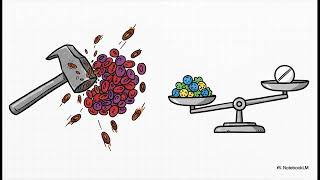
Explore cancer as an accelerated evolution within the human body, examining how mutation, natural selection, and adaptation inform tumor behavior and treatment strategies based on Darwinian medicine.
RT @nicholas_navin: New paper from our group out in @GenomeBiology on decoding evolutionary dynamics of prostate cancer in response to ther…
RT @CaP_pubs: Decoding the evolutionary response to prostate cancer therapy by plasma genome sequencing.
Decoding the evolutionary response to prostate cancer therapy by plasma genome sequencing.
RT @Dr_Ivanoncologo: Decoding the evolutionary response to prostate cancer therapy by plasma genome sequencing @MDAndersonNews @OPENoncolo…
Decoding the evolutionary response to prostate cancer therapy by plasma genome sequencing @MDAndersonNews @OPENoncology @OncoAlert @GenomeBiology #CáncerdePróstata https://t.co/SwhVAcLubo https://t.co/RYjzvmpEr1
RT @nicholas_navin: New paper from our group out in @GenomeBiology on decoding evolutionary dynamics of prostate cancer in response to ther…
RT @nicholas_navin: New paper from our group out in @GenomeBiology on decoding evolutionary dynamics of prostate cancer in response to ther…
RT @nicholas_navin: New paper from our group out in @GenomeBiology on decoding evolutionary dynamics of prostate cancer in response to ther…
RT @nicholas_navin: New paper from our group out in @GenomeBiology on decoding evolutionary dynamics of prostate cancer in response to ther…
RT @nicholas_navin: New paper from our group out in @GenomeBiology on decoding evolutionary dynamics of prostate cancer in response to ther…
RT @nicholas_navin: New paper from our group out in @GenomeBiology on decoding evolutionary dynamics of prostate cancer in response to ther…
RT @nicholas_navin: New paper from our group out in @GenomeBiology on decoding evolutionary dynamics of prostate cancer in response to ther…
RT @nicholas_navin: New paper from our group out in @GenomeBiology on decoding evolutionary dynamics of prostate cancer in response to ther…
RT @nicholas_navin: New paper from our group out in @GenomeBiology on decoding evolutionary dynamics of prostate cancer in response to ther…
RT @GenomeBiology: Study of prostate cancer response to therapy from @Naveen_Ramesh1, @azursaa, @nicholas_navin and co. They sequence plasm…
RT @GenomeBiology: Study of prostate cancer response to therapy from @Naveen_Ramesh1, @azursaa, @nicholas_navin and co. They sequence plasm…
RT @nicholas_navin: New paper from our group out in @GenomeBiology on decoding evolutionary dynamics of prostate cancer in response to ther…
New paper from our group out in @GenomeBiology on decoding evolutionary dynamics of prostate cancer in response to therapy https://t.co/FxUuAvNIDY thanks to hard work from @Naveen_Ramesh1
Decoding the evolutionary response to prostate cancer therapy by plasma genome sequencing https://t.co/T93UCgzpgI
RT @GenomeBiology: Study of prostate cancer response to therapy from @Naveen_Ramesh1, @azursaa, @nicholas_navin and co. They sequence plasm…
RT @GenomeBiology: Study of prostate cancer response to therapy from @Naveen_Ramesh1, @azursaa, @nicholas_navin and co. They sequence plasm…
RT @GenomeBiology: Study of prostate cancer response to therapy from @Naveen_Ramesh1, @azursaa, @nicholas_navin and co. They sequence plasm…
Study of prostate cancer response to therapy from @Naveen_Ramesh1, @azursaa, @nicholas_navin and co. They sequence plasma DNA, and find changes that match changes in metastases, and which respond after chemotherapy https://t.co/VndMJdBhoX https://t.co/lEqCz7qyA9
doi:10.1186/s13059-020-02045-9; Fizazi K, Prow DM, Do KA, et al. Alternating dose-dense chemotherapy in patients with high volume ...