 J
J PM
PM PO
PO EP
EP H
H S
S JT
JT ED
ED IJ
IJ JS
JS S
S N
NPiyatida Ponghanchai - Facebook
Facebook
com/doi/full/10.1002/alr.22661 Ref 2: https://www.cdc.gov/coronavirus/2019- ncov/hcp/dental-settings.html Ref 3: https://www.bangkokhospital. com/en/content ...
Jan 10, 2026
View →
Mentions
Extended reach
Total likes
Video views
AI synopsis
Several discussions focus on the importance of airflow and ventilation, citing specific factors like ACHs and suspension times, indicating engagement with the scientific details. The tone combines technical insights with practical concerns, such as the role of shared indoor spaces in virus transmission, emphasizing the article's relevance to indoor safety strategies.
Most discussions acknowledge the importance of aerosol behavior and control measures, aligning with the article's emphasis on understanding aerosol transport and indoor airflow for safety.
Posts demonstrate high curiosity about aerosol mechanics, ventilation, and implications for indoor safety, reflecting strong engagement with the topic.
Commenters discuss specific factors such as airflow rates, aerosol suspension times, and mitigation strategies, indicating active interest and deeper analysis.
The discussions highlight practical applications, like ventilation rates and aerosol mitigation, suggesting the article influences safety protocols and awareness about indoor infection risks.
@mariotestillano @sergiopages28 @laurichuxd @policia https://t.co/BxVE2Ghs3B es un estudio, está en inglés no sé qué tal se te dará pero por si te interesa, el tema no es la distancia, sino el estar en un espacio cerrado compartiendo humos y vapores (aerosoles), una de las principales vías de propagación del virus
"Review of indoor #aerosol generation, transport, and control in the context of #COVID19" in @ifar_journal was co-authored by our @Penn_ENT colleague, Dr. Kohanski: https://t.co/eLwvuVgawx
Check out the full article here: https://t.co/bueKiMKms7
“At 3 ACHs, the outdoor air dilution is able to remove about 95% of the contaminants indoors within 1 hour, assuming the space is well mixed.” https://t.co/blnjbUB2aI
@nieandersson @ms_MariaB @AgnesWold @hanifbali https://t.co/2wLR7JkWKN https://t.co/uMlW9RfGKZ https://t.co/V7t5tLhNtk https://t.co/kFEiQTz70k https://t.co/5O5DcBBWAd
@GOP @Mike_Pence No plexiglass?

This video reviews indoor aerosol generation, transport, and control in the context of COVID-19, highlighting how aerosols and droplets contribute to virus transmission and strategies to mitigate risks during indoor…
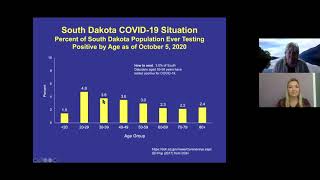
A COVID-19 update summarizing aerosol generation, transport, and control. The video highlights key factors influencing indoor viral spread and discusses strategies to reduce transmission in indoor environments.
@JanSobi75655909 @ScottAdamsSays It depends on many factors. Air flow, humidity, specific particle size, etc though generally suspension time is minutes to hours though for the smallest particles in low flow environments suspension could be weeks. https://t.co/hV5yC0AUFa https://t.co/RxEZ1ETRWw
RT @ecolonzavala: “At 3 ACHs, the outdoor air dilution is able to remove about 95% of the contaminants indoors within 1 hour, assuming the…
“At 3 ACHs, the outdoor air dilution is able to remove about 95% of the contaminants indoors within 1 hour, assuming the space is well mixed.” https://t.co/blnjbUB2aI
@mariotestillano @sergiopages28 @laurichuxd @policia https://t.co/BxVE2Ghs3B es un estudio, está en inglés no sé qué tal se te dará pero por si te interesa, el tema no es la distancia, sino el estar en un espacio cerrado compartiendo humos y vapores (aerosoles), una de las principales vías de propagación del virus
@nieandersson @ms_MariaB @AgnesWold @hanifbali https://t.co/2wLR7JkWKN https://t.co/uMlW9RfGKZ https://t.co/V7t5tLhNtk https://t.co/kFEiQTz70k https://t.co/5O5DcBBWAd
@GOP @Mike_Pence No plexiglass?
RT @PennMDForum: "Review of indoor #aerosol generation, transport, and control in the context of #COVID19" in @ifar_journal was co-authored…
RT @PennMDForum: "Review of indoor #aerosol generation, transport, and control in the context of #COVID19" in @ifar_journal was co-authored…
"Review of indoor #aerosol generation, transport, and control in the context of #COVID19" in @ifar_journal was co-authored by our @Penn_ENT colleague, Dr. Kohanski: https://t.co/eLwvuVgawx
Check out the full article here: https://t.co/bueKiMKms7
Review of Indoor Aerosol Generation, Transport and Control in the Context of COVID-19. https://t.co/4pAV01Zb3b https://t.co/qw4eHq8mzm
New article: Review of Indoor Aerosol Generation, Transport and Control in the Context of COVID-19. https://t.co/dUboKduHBz #coronavirus #COVID19 #2019ncov https://t.co/iI8iUdg9IC
com/doi/full/10.1002/alr.22661 Ref 2: https://www.cdc.gov/coronavirus/2019- ncov/hcp/dental-settings.html Ref 3: https://www.bangkokhospital. com/en/content ...
DOI: 10.1002/alr.22661. View this article online at wileyonlinelibrary.com. self-inoculation of the eyes, nose, or mouth), droplet. International Forum of ...
1–12, 2021, doi: https://doi.org/10.1002/lary.28400.Peak. You might also like ... Alr 22661. 7 pages. Reducing Airborne Exposure of COVID 19 Using Air ...
wiley.com/doi/abs/10.1002/alr.22661. [49] K. He, G. Gkioxari, P. Dollar, R. Girshick, Mask R-CNN, in: Proceedings of [27] B. Cantwell, D. Coles, An ...
10 variability, Nature 443 (2006) 439–443, https://doi.org/10.1038/nature05132. (2020) 1173–1179, https://doi.org/10.1002/alr.22661. [86] M.U.G. Kraemer, C ...
... online ahead of print, 2020 Jul 11]. Int Forum Allergy Rhinol. 2020;10.1002/alr.22661. doi:10.1002/alr.22661".
com/doi/full/10.1002/alr.22661 Ref 2: https://www.cdc.gov/coronavirus/2019- ncov/hcp/dental-settings.html Ref 3: https://www.bangkokhospital ...