Sho(歯科医師)
@sho_el · X
エンモー先生が言ってた選択的切削に関するリクッチの論文はこれかな。 色んなパターンの組織切片が載っていておもしろい。 選択的とはいえもうちょい取るっしょ、みたいなのもあるな(笑) アウトカムは臨床所見に持ってくるべきとはいえ、こういう検証はおもしろいね。 https://t.co/By9t8nvEzj
Oct 20, 2023 · 2 likes · 20,520 followers
View post →
Mentions
Extended reach
Total likes
Video views
AI synopsis
While some participants highlight the persistence of bacteria in dentine that seems sound, others discuss implications for treatment techniques, such as pulpotomy procedures, suggesting a nuanced understanding of the study’s influence on dental practices. The tone varies from curiosity to professional interest, reflecting moderate engagement with the research’s clinical significance.
Most discussions acknowledge the relevance of the study to dental practice, with some emphasizing the importance of bacterial presence even in firm dentine.
Participants show moderate interest, discussing both the study's findings and related dental procedures, indicating engagement but not overwhelming curiosity.
Several posts include specific mentions of teeth and treatment methods, reflecting some depth in their discussions about dental responses and procedures.
The discussions suggest that the study impacts clinical approaches, especially concerning the assessment of infected dentine and bacterial infiltration during excavation.
エンモー先生が言ってた選択的切削に関するリクッチの論文はこれかな。 色んなパターンの組織切片が載っていておもしろい。 選択的とはいえもうちょい取るっしょ、みたいなのもあるな(笑) アウトカムは臨床所見に持ってくるべきとはいえ、こういう検証はおもしろいね。 https://t.co/By9t8nvEzj
Spannend. DRendo - Full (pulp chamber) pulpotomy in a mandibular second molar https://t.co/wbIfnj8D7Y

This video illustrates the partial pulpotomy procedure in a molar with deep caries and irreversible pulpitis. High magnification imaging shows the ideal appearance of the pulp wound post-procedure, with calcium…

Continuing the discussion on Vital Pulp Therapy, this video shows the treatment of a mandibular second molar diagnosed with irreversible pulpitis. A full pulpotomy was performed up to the orifices, with histological…

In this video I am showing the procedure of nonselective or complete caries excavation in a tooth with the diagnosis of reversible pulp inflammation. Strictly removing all decayed tissue with manual tools is emphasized…

This video demonstrates clinical and laboratory procedures to restore a severely damaged maxillary molar with a ceramic onlay while preserving pulp vitality. It emphasizes cautious caries removal, meticulous preparation…

In cases with the diagnosis of irreversible pulpitis the choice to perform a partial pulpotomy can only be made after removal of carious tissue and access to the superficial pulp. The extent of pulp degeneration cannot…

This video demonstrates successful partial pulpotomy procedures in two maxillary premolars diagnosed with irreversible pulpitis. Layers of pulp were removed until ideal wound conditions were achieved, then capped with a…

This video discusses the challenges of diagnosing and treating irreversible pulpitis, emphasizing the importance of removing infected tissue and understanding bacterial presence in pulp and dentine during partial…

This video illustrates a partial pulpotomy in a maxillary second premolar with caries penetrating the pulp chamber. It emphasizes the importance of assessing pulp tissue health and introduces a clinical parameter…
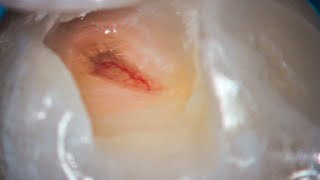
This video demonstrates the importance of removing all infected dentin to prevent bacterial threat to the pulp, showing that dentin perceived as firm may still be infected and metabolically active, emphasizing thorough…
エンモー先生が言ってた選択的切削に関するリクッチの論文はこれかな。 色んなパターンの組織切片が載っていておもしろい。 選択的とはいえもうちょい取るっしょ、みたいなのもあるな(笑) アウトカムは臨床所見に持ってくるべきとはいえ、こういう検証はおもしろいね。 https://t.co/By9t8nvEzj
Spannend. DRendo - Full (pulp chamber) pulpotomy in a mandibular second molar https://t.co/wbIfnj8D7Y