The discussions collectively demonstrate high interest in early intervention strategies, supported by strong language like 'substantial reduction' and 'treatment earlier,' which underscores the perceived importance and potential impact of the research. Posts referencing modeling data and clinical implications show depth of engagement, while repeated emphasis on 'when' rather than 'if' to start treatment highlights the potential influence on future healthcare decisions.
AgreementModerate agreement
Most discussions emphasize the benefits of early lipid-lowering, with many supporting the idea that earlier intervention can substantially reduce future cardiovascular risks.
InterestHigh interest
The topic of when to begin preventive treatments sparks high interest, especially around specific ages and cholesterol levels, indicating engagement with practical implications.
EngagementModerate engagement
Posts reference modeling studies, clinical guidelines, and debates about treatment timing, reflecting thoughtful engagement with the article's content.
ImpactHigh impact
Several discussions highlight the potential for significant long-term health benefits, pointing to broad implications for clinical practices and guidelines.
Abstract in brief
Starting lipid-lowering treatment earlier in life (around ages 40-49) significantly reduces the risk of cardiovascular disease over the next 30 years compared to delaying treatment by 10 or 20 years.
The benefits of early intervention are greater for individuals with higher non-HDL cholesterol levels and older age within the 30-59 range.
Delaying treatment results in a residual risk that increases with the length of delay, emphasizing the importance of early prevention to maximize health benefits.
Reduction in 30 year atherosclerotic #CVD risk is achievable by intensive lipid-lowering in individuals in their 40s and 50s, with non-HDL cholesterol ≥160 mg/dL https://t.co/t9RM485Fn1 #AHAJournals https://t.co/M1J01VfQET
Aug 31, 2020 · 21 likes · 12 shares · 77,377 followersView post →
TD
Thomas Dayspring
@Drlipid · X
@tola2252 @society_eas @drpablocorral @skathire Every case is different but with respect to apoB (or its surrogate lipid metrics) not only is "lower is better" but "earlier is better." Review these papers https://t.co/tfG5EEr1bO and https://t.co/8TguCuXc4F https://t.co/J3DEBZVI80
Nov 6, 2022 · 8 likes · 2 shares · 41,948 followersView post →
C
Circulation
@CircAHA · X
#CircOnTheRun episode with Corresponding Author, Dr. Allan Sniderman, and Associate Editor, @dranandrohatgi discussing early versus delayed prevention. Listen here: https://t.co/PcFGDZ2JOg Featured article: https://t.co/FlT5aSmRZd #AHAJournals https://t.co/cxaC1fi47W
The Expected 30-Year Benefits of Early Versus Delayed Primary Prevention of Cardiovascular Disease by Lipid Lowering
Nov 9, 2022 · 5 likes · 1 share · 41,432 followersView post →
F
fipco
@fipco · X
Should those in 40s or 50s w moderately hi lipids be treated despite low 10y PCE risk? Pencina et al ( @ThanassoulisMD Sniderman @dmljmd Catapano) modeling suggests “yes” based on long term benefit. Treating 20yr’s earlier potentially triples benefit.
https://t.co/ZTgBZCSSW3 https://t.co/AmGfjN9zTs
The Expected 30-year Benefits of Early Versus Delayed Primary Prevention of Cardiovascular Disease by Lipid Lowering | Circulation https://t.co/LzN32ja0xM
Aug 1, 2020 · 3 likes · 1 share · 1,056 followersView post →
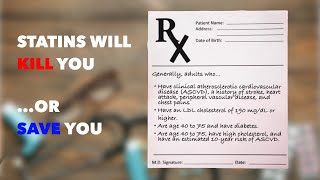
Do statins really reduce risk of heart disease and by how much? This video explores their efficacy, safety, and the importance of timing in lipid-lowering treatment to maximize long-term cardiovascular health benefits.
This video explores the benefits and risks of statins in cholesterol control, including muscle pain, diabetes risk, and liver effects. It emphasizes the importance of early intervention for long-term cardiovascular…
https://t.co/EnKzzW66mM
"Substantial ⬇️ in ASCVD risk in next 30 years is achievable by intensive lipid lowering in indiv. in their 40s and 50s with non–HDL-C ≥160 mg/dL. For many, Q of when to start lipid lowering might be more relevant than whether to start lipid lowering."
Jun 14, 2023 · 1 like · 1 share · 783 followersView post →
JG
John Gillespie
@DrGillespie_GP · X
@jonesmedcardiff @DrSelvarajah @drmckeown The later. The former question is an interesting one- I don't tknow what the answer is but I have seen in a interesting study that modelled the 30yr ARR in low risk individuals with early statin vs delayed by 10 or 20 yrs.
https://t.co/ivdtVDjXjN
Jan 14, 2023 · 1 like · 1,058 followersView post →
M
Mesha
@cosmautic · X
RT @agingdoc1: The Expected 30-Year Benefits of Early Versus Delayed Primary Prevention of Cardiovascular Disease by Lipid Lowering
RT @Drlipid: @tola2252 @society_eas @drpablocorral @skathire Every case is different but with respect to apoB (or its surrogate lipid metri…
Nov 6, 2022 · 2 shares · 1,758 followersView post →
TD
Thomas Dayspring
@Drlipid · X
@tola2252 @society_eas @drpablocorral @skathire Every case is different but with respect to apoB (or its surrogate lipid metrics) not only is "lower is better" but "earlier is better." Review these papers https://t.co/tfG5EEr1bO and https://t.co/8TguCuXc4F https://t.co/J3DEBZVI80
Nov 6, 2022 · 8 likes · 2 shares · 41,948 followersView post →
JB
Josh Beckman
@JoshuaBeckmanMD · X
@djc795 @cpcannon @CMichaelGibson @ScottGrundy @DrMarthaGulati @hvanspall @SVRaoMD C’mon. They recommend a lot of stuff with no proved benefit. Example: screening for gonorrhea in women. Also, why a 5 year time window? Benefit accrues over time. https://t.co/c7hp0ve7Y6
Aug 23, 2022 · 1 like · 2,156 followersView post →
F
fipco
@fipco · X
@gcfmd @pnatarajanmd @MaxJordan_N @HeartDocSadiya @boback @kewatson @AnnMarieNavar @NMHheartdoc @HeartBobH @cpcannon I support broader statin use than current guidelines, however, I can imagine younger adult with low long term risk & optimal risk factors. Multi-decade benefit could be modest.
https://t.co/E4Tnmuomyb
Balanced discussion of unknowns of LT Rx on p9 here.
https://t.co/G6ZWuMVMbL https://t.co/1aSFdFzBlQ
@lowcarbGP @rcgp One of the problems with using NNT from a relatively short RCTs is that longer treatment durations dramatically increase the absolute risk reduction. Plrase dont mislead patients to think the benefits of statins are not substantial. https://t.co/ivdtVDjXjN
@raphaels7 Why post such misinformation? Completely irresponsible. When the long term effects are modelled from those RR over a longer treatment durarion the absolute risk reductions are substantial. https://t.co/ivdtVDjXjN
Maybe everyone should start on a lifelong statin drug therapy when they reach age 30? See:Pencina MJ, Pencina KM, et al. The expected 30-year benefits of early versus delayed primary prevention of cardiovascular disease by lipid lowering. Circulation. 2020;142:827–837.
#CircOnTheRun episode with Corresponding Author, Dr. Allan Sniderman, and Associate Editor, @dranandrohatgi discussing early versus delayed prevention. Listen here: https://t.co/PcFGDZ2JOg Featured article: https://t.co/FlT5aSmRZd #AHAJournals https://t.co/cxaC1fi47W
¿Quién se beneficia de tomar una estatina?¿Y a partir de qué momento? Interesante editorial https://t.co/l1BmsJBX65
a propósito de este, a su vez, interesante trabajo - https://t.co/sUHDXuUCcX
en el que se plantea que ...
The Expected 30-Year Benefits of Early Versus Delayed Primary Prevention of Cardiovascular Disease by Lipid Lowering | Circulation https://t.co/CX3Wt0bM4P
RT @CircAHA: Reduction in 30 year atherosclerotic #CVD risk is achievable by intensive lipid-lowering in individuals in their 40s and 50s,…
Aug 31, 2020 · 12 shares · 2,420 followersView post →
A
ANTON
@DRAMENHEART · X
RT @CircAHA: Reduction in 30 year atherosclerotic #CVD risk is achievable by intensive lipid-lowering in individuals in their 40s and 50s,…
Aug 31, 2020 · 12 shares · 255 followersView post →
SF
Sean Fleming
@Dranelik · X
RT @CircAHA: Reduction in 30 year atherosclerotic #CVD risk is achievable by intensive lipid-lowering in individuals in their 40s and 50s,…
Aug 31, 2020 · 12 shares · 430 followersView post →
CH
Claire Holden
@claire_holden_7 · X
RT @CircAHA: Reduction in 30 year atherosclerotic #CVD risk is achievable by intensive lipid-lowering in individuals in their 40s and 50s,…
Aug 31, 2020 · 12 shares · 59 followersView post →
AM
Antonio Hernandez Mijares
@AntmijAntonio · X
The Expected 30-Year Benefits of Early Versus Delayed Primary Prevention of Cardiovascular Disease by Lipid Lowering | Circulation https://t.co/4qJhgyZWCu
RT @CircAHA: Reduction in 30 year atherosclerotic #CVD risk is achievable by intensive lipid-lowering in individuals in their 40s and 50s,…
Aug 31, 2020 · 12 shares · 301 followersView post →
C
Circulation
@CircAHA · X
Reduction in 30 year atherosclerotic #CVD risk is achievable by intensive lipid-lowering in individuals in their 40s and 50s, with non-HDL cholesterol ≥160 mg/dL https://t.co/t9RM485Fn1 #AHAJournals https://t.co/M1J01VfQET
Aug 31, 2020 · 21 likes · 12 shares · 77,377 followersView post →
M
MedicureClinic
@MedicureClinic · X
The Expected 30-year Benefits of Early Versus Delayed Primary Prevention of Cardiovascular Disease by Lipid Lowering | Circulation // Pencina et al @ThanassoulisMD @dmljmd #HeartHealth https://t.co/t2eQkJKECY
RT @TGijonConde: The Expected 30-year Benefits of Early Versus Delayed Primary Prevention of Cardiovascular Disease by Lipid Lowering | Cir…
Aug 1, 2020 · 1 share · 5,828 followersView post →
TC
Teresa Gijon Conde
@TGijonConde · X
The Expected 30-year Benefits of Early Versus Delayed Primary Prevention of Cardiovascular Disease by Lipid Lowering | Circulation https://t.co/LzN32ja0xM
Aug 1, 2020 · 3 likes · 1 share · 1,056 followersView post →
ÁC
Álvaro González-Cantero
@Alvaro_Gonza · X
RT @jvillacastin: REDUCTION in atherosclerotic CV disease risk in the next 30 years is achievable by intensive lipid-lowering in individual…
Aug 1, 2020 · 3 shares · 1,789 followersView post →
DD
Dr Gomez Doblas
@DrDoblas · X
The Expected 30-year Benefits of Early Versus Delayed Primary Prevention of Cardiovascular Disease by Lipid Lowering | Circulation https://t.co/SIFsjbCUqf
Should those in 40s or 50s w moderately hi lipids be treated despite low 10y PCE risk? Pencina et al ( @ThanassoulisMD Sniderman @dmljmd Catapano) modeling suggests “yes” based on long term benefit. Treating 20yr’s earlier potentially triples benefit.
https://t.co/ZTgBZCSSW3 https://t.co/AmGfjN9zTs
Commonly used CVD Risk scores underpredict in some young grps.--> Tx initiation delay. This paper shows the 'cost' of such delay.
Initiation of statins in 40-49 yo w/ non-HDL ≥160 mg/dL w'd reduce 30-year risk ~ARR 5-10%
It's not IF, it's WHEN.
https://t.co/3JOiE0mUtE https://t.co/LyhXfYaRI3