Stathopoulos Lab
@stathlab · X
We've seen the light, and with great spatial and temporal resolution, too!
May 17, 2021 · 22 likes · 4 shares · 171 followers
View post →
Mentions
Extended reach
Total likes
Video views
AI synopsis
The discussions reveal strong support and excitement about the study's advancements, such as the development of the photoNdegron system, with users emphasizing its potential to enhance research modalities. Words like 'excited,' 'collaborate,' and 'game changer' illustrate enthusiasm, while mentions of specific applications showcase deep engagement and recognition of the article's significance.
Most discussions express enthusiasm and support for the publication, highlighting its novelty and potential applications.
Posts show high interest, with many users excited about the new light-controlled protein degradation techniques and their implications.
Several comments reference technical details, collaborations, and future use cases, reflecting deep engagement.
While the enthusiasm is clear, the perceived immediate practical impact is positive but not groundbreaking for all users.
We've seen the light, and with great spatial and temporal resolution, too!
Excited that our @PLOSGenetics paper is out! A new photo-N-degron that can be used in Optogenetic in vivo studies is now available https://t.co/tGMu95pDFx! Fun to collaborate with the Stein lab! Also, thank you @Angela_Stathop, David Stein and James McGehee
Stevens et al identify and describe a new #peptide degradation signal, the photo-N-degron When fused to the N-terminus of a protein, it can induce N-end rule-mediated degradation in response to blue-light illumination
Congratulations, @ut_mbs @TexasScience Dr. Leslie Stevens, Prof. David Stein & the Team for publication in @PLOSGenetics "Light-dependent N-end rule-mediated disruption of protein function in Saccharomyces cerevisiae and Drosophila melanogaster" https://t.co/yDW6vfIQVE https://t.co/l7Npt0gLz2
#PLOSGenetics: Light-dependent N-end rule-mediated disruption of protein function in Saccharomyces cerevisiae ... https://t.co/htzq7kxxFM
#PLOSGenetics: Light-dependent N-end rule-mediated disruption of protein function in Saccharomyces cerevisiae ... https://t.co/sR2ANgzKh4

This tutorial covers DNA sequence alignment using SnapGene, Benchling, and NCBI BLAST, providing essential tools for genetic analysis and research.

This week Dr Fenelon is under the weather so Julia is covering the important topic of glycerol stock preparation. Basic protocol involves adding glycerol to a bacterial sample for preservation and future use.

This video discusses the development of the photoNdegron, a peptide tag that enables precise, light-controlled degradation of proteins in living organisms like yeast and fruit flies, facilitating advanced research on…

The video explains the development of the photoNdegron, a peptide tag enabling precise light-controlled degradation of proteins in yeast and fruit flies, facilitating advanced research on protein function and regulation.

This week Dr Fenelon reviews recent developments in transgenic optical tools, including genetically encoded sensors and optogenetics, enabling real-time visualization and control of cellular processes and protein…
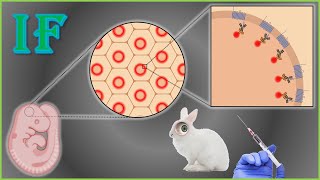
This tutorial covers the basics of immunofluorescence, including fixation, washing, blocking, antibody incubation, and counterstaining. Learn essential steps for preparing samples to study protein localization in cells.

This week Dr Fenelon reviews a study on transgenic mouse strains with FRET-based tension sensors to quantify force transmission across the nuclear envelope, advancing understanding of nuclear mechanotransduction in…
RT @ut_mbs: Congratulations, @ut_mbs @TexasScience Dr. Leslie Stevens, Prof. David Stein & the Team for publication in @PLOSGenetics "Light…
RT @ut_mbs: Congratulations, @ut_mbs @TexasScience Dr. Leslie Stevens, Prof. David Stein & the Team for publication in @PLOSGenetics "Light…
Congratulations, @ut_mbs @TexasScience Dr. Leslie Stevens, Prof. David Stein & the Team for publication in @PLOSGenetics "Light-dependent N-end rule-mediated disruption of protein function in Saccharomyces cerevisiae and Drosophila melanogaster" https://t.co/yDW6vfIQVE https://t.co/l7Npt0gLz2
RT @PLOSGenetics: Stevens et al identify and describe a new #peptide degradation signal, the photo-N-degron When fused to the N-terminus o…
RT @PLOSGenetics: Stevens et al identify and describe a new #peptide degradation signal, the photo-N-degron When fused to the N-terminus o…
RT @PLOSGenetics: Stevens et al identify and describe a new #peptide degradation signal, the photo-N-degron When fused to the N-terminus o…
Stevens et al identify and describe a new #peptide degradation signal, the photo-N-degron When fused to the N-terminus of a protein, it can induce N-end rule-mediated degradation in response to blue-light illumination
RT @t_koromila: Excited that our @PLOSGenetics paper is out! A new photo-N-degron that can be used in Optogenetic in vivo studies is now av…
RT @DouganLab: #PLOSGenetics: Light-dependent N-end rule-mediated disruption of protein function in Saccharomyces cerevisiae ... https://t.…
Light-dependent N-end rule-mediated disruption of protein function in Saccharomyces cerevisiae and Drosophila melanogaster https://t.co/rn8Jyg0j46
#PLOSGenetics: Light-dependent N-end rule-mediated disruption of protein function in Saccharomyces cerevisiae ... https://t.co/sR2ANgzKh4
RT @StefanLuschnig: #PLOSGenetics: Light-dependent N-end rule-mediated disruption of protein function in Saccharomyces cerevisiae ... https…
RT @stathlab: We've seen the light, and with great spatial and temporal resolution, too!
RT @t_koromila: Excited that our @PLOSGenetics paper is out! A new photo-N-degron that can be used in Optogenetic in vivo studies is now av…
RT @stathlab: We've seen the light, and with great spatial and temporal resolution, too!
RT @stathlab: We've seen the light, and with great spatial and temporal resolution, too!
#PLOSGenetics: Light-dependent N-end rule-mediated disruption of protein function in Saccharomyces cerevisiae ... https://t.co/htzq7kxxFM
RT @stathlab: We've seen the light, and with great spatial and temporal resolution, too!
We've seen the light, and with great spatial and temporal resolution, too!
RT @t_koromila: Excited that our @PLOSGenetics paper is out! A new photo-N-degron that can be used in Optogenetic in vivo studies is now av…
RT @t_koromila: Excited that our @PLOSGenetics paper is out! A new photo-N-degron that can be used in Optogenetic in vivo studies is now av…
Excited that our @PLOSGenetics paper is out! A new photo-N-degron that can be used in Optogenetic in vivo studies is now available https://t.co/tGMu95pDFx! Fun to collaborate with the Stein lab! Also, thank you @Angela_Stathop, David Stein and James McGehee