The discussion highlights specific elements like the use of leg weights and the flailing motion to understand self-righting, with language showing curiosity and appreciation. The tone and focus on detailed mechanics suggest moderate agreement and engagement, but the impact remains neutral due to the exploratory and illustrative nature of the comments.
AgreementModerate agreement
The discussion shows moderate agreement, as the post appreciates the study’s insights into animal and robot self-righting behaviors.
InterestModerate interest
Interest is evident through curiosity about methods like adding leg weights and the emphasis on flailing, indicating engagement with the research details.
EngagementModerate engagement
Participants are actively analyzing the mechanisms and implications, such as the use of kinetic energy and movement strategies, demonstrating a moderate level of engagement.
ImpactNeutral impact
While the post highly values the experimental approach, it does not explicitly suggest a major influence on broader fields or applications, resulting in a neutral impact score.
Abstract in brief
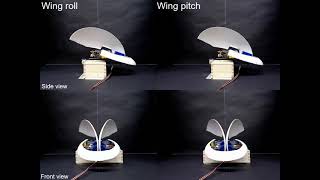
The study investigates how propelling and perturbing appendages, like wings and legs, work together to help animals like cockroaches self right after overturning, showing that combined actions increase their chances of success.
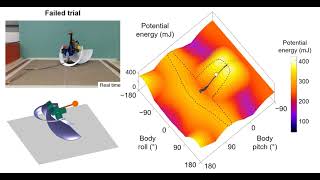
By adding mass to increase leg flailing energy and creating a robot that mimics the cockroach's movement, the researchers found that greater appendage movement improves selfrighting probabilities, and a potential energy landscape model explains how these actions reduce barriers to rolling over.
The findings suggest that the interactions between the body, appendages, and ground create specific body motions, and modeling these processes with potential energy landscapes helps understand the physical mechanisms behind effective selfrighting behaviors.]
this one unpacks how cockroaches & robots-made-to-act-like-cockroaches flail & land upright when overturned. oh, they also added leg weights to the cockroaches to study the effect on kinetic energy when flailing. just luv the use of “flailing” in this one
This study explores how propelling and perturbing appendages like wings and legs work together to improve animals' ability to self-right after overturning, highlighting the role of combined movements and robotic models…
This study examines how propelling and perturbing appendages like wings and legs work together to improve ground self-righting in cockroaches. Enhanced appendage movement increases success rates, explained through a…
This study examines how propelling and perturbing appendages like wings and legs work together to improve self-righting success, supported by robotic models and energy landscape analysis.
This video explores how propelling and perturbing appendages like wings and legs work together to enhance self-righting in robots, based on research into animal behavior such as cockroaches, highlighting interactions…
This video explores how combining propelling and perturbing appendages enhances self-righting capabilities in robots and animals. Using a potential energy landscape model, researchers analyze physical mechanisms that…
This video explores how propelling and perturbing appendages, like wings and legs, work together to enhance self righting in animals and robots. Using a potential energy landscape model, it shows how increased appendage…
this one unpacks how cockroaches & robots-made-to-act-like-cockroaches flail & land upright when overturned. oh, they also added leg weights to the cockroaches to study the effect on kinetic energy when flailing. just luv the use of “flailing” in this one