 GS
 SW
 DR
 D
 WT
 AC
 P
 FQ
 C
 IH
 BS
 HN
 DR
 P
 HN
 H
 HP
Lecz holistycznie
Facebook
Odpowiedź w dzisiejszej karuzeli DOI: 10.1016/j.eatbeh.2017.08.003 10.2196/17039 10.1016/j.jand.2021.06.311.
Jan 4, 2026
View →
Mentions
Extended reach
Total likes
Video views
AI synopsis
The overall tone of the discussions reflects a cautious yet reassuring attitude towards calorie counting, with phrases like 'no significant effect,' 'not increase risk,' and 'shows little cause for concern,' which illustrate scientific legitimacy and reassurance. Some comments, such as 'Für Leute, die Tendenzen zu Essstörungen aufweisen, kann Tracken schädlich sein,' raise concerns about vulnerable populations, adding depth to the conversation. The tone balances factual summaries with personal considerations, contributing to a moderate but engaged discourse on the article's implications.
Most discussions agree with the study's findings that calorie tracking does not increase disordered eating risk, with some emphasizing the safety or neutrality of calorie counting especially for those without tendencies towards eating disorders.
Participants show moderate interest, highlighting the relevance of the research for understanding mental health and health behaviors among college women, although some comments are brief and informational.
Many posts delve into nuances of the research, referencing various perspectives and evidence, indicating a significant level of thoughtful engagement.
The conversations suggest that these discussions could influence perceptions about dieting tools and mental health, though it remains primarily supportive rather than transformative.
Für Leute, die Tendenzen zu Essstörungen aufweisen, kann Tracken schädlich sein. Für Leute, die keine solchen Tendenzen aufweisen, scheint es problemlos zu sein. Kalorienzählen direkt führt also wohl nicht zu Essstörungen. https://t.co/CnC0akvRbz
@RPuddick Available prospective evidence (although scarce) shows little cause for concern for calorie tracking and eating disorder risk and other markers of mental health. https://t.co/pxusVqh1bH
Introducing Dietary Self-Monitoring to Undergraduate Women via a Calorie Counting App Has No Effect on Mental Health or Health Behaviors: Results From a Randomized Controlled Trial https://t.co/qBP57RmqvE
Aquí el estudio
Dietary self-monitoring (Calorie Counting) doesn't increase eating disorder risk https://t.co/1L4VpvFYyP https://t.co/J7CDSB193u
Dietary self-monitoring (Calorie Counting) doesn't increase eating disorder risk https://t.co/40eNo8J1hL

Today, we discuss whether fitness is permissible for individuals with eating disorders, focusing on symptoms, behaviors, and perceptions. The conversation explores how fitness can influence eating disorder symptoms…
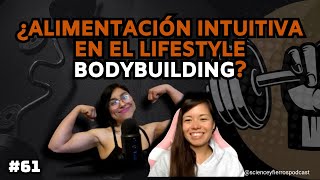
This episode compares intuitive eating and lifestyle bodybuilding, discussing their benefits and challenges. We explore how each method impacts health, mental well-being, and goal achievement, emphasizing individual…
Für Leute, die Tendenzen zu Essstörungen aufweisen, kann Tracken schädlich sein. Für Leute, die keine solchen Tendenzen aufweisen, scheint es problemlos zu sein. Kalorienzählen direkt führt also wohl nicht zu Essstörungen. https://t.co/CnC0akvRbz
Aquí el estudio
@SolitudinarianA https://t.co/1LcLHMoUuw heres an RCT showing that undergrad women did not develop eating disorders when told to count calories. This is fine.
@RPuddick Available prospective evidence (although scarce) shows little cause for concern for calorie tracking and eating disorder risk and other markers of mental health. https://t.co/pxusVqh1bH
Introducing Dietary Self-Monitoring to Undergraduate Women via a Calorie Counting App Has No Effect on Mental Health or Health Behaviors: Results From a Randomized Controlled Trial https://t.co/Hoial4mj30
@lizzywol I think what confuses people is that people with disordered eating often count calories and are on some sort of diet, but the little direct evidence we have says that measuring food intake probably doesn't cause disordered eating. https://t.co/inxTcmSAo8
Dietary self-monitoring (Calorie Counting) doesn't increase eating disorder risk https://t.co/40eNo8J1hL
Calorie Counting App Has No Effect on Mental Health or Health Behaviors https://t.co/GwBpDh2pej comm: https://t.co/OcEGdRmK0s
Study finds that dietary self-monitoring by undergraduate women via MyFitnessPal for 1 month did not alter health behaviors including dietary intake. https://t.co/sLKexQuHF7
Dietary self-monitoring (Calorie Counting) doesn't increase eating disorder risk https://t.co/VhaVh79pdE (https://t.co/PebRL1yFSD)
RT @Presbot1: Dietary self-monitoring (Calorie Counting) doesn't increase eating disorder risk https://t.co/GXYqkbZHq0 #technews #chatbots…
Dietary self-monitoring (Calorie Counting) doesn't increase eating disorder risk https://t.co/GXYqkbZHq0 #technews #chatbots #automation #AI #ML
Dietary self-monitoring (Calorie Counting) doesn't increase eating disorder risk https://t.co/7C7QPPxZgP (https://t.co/7XH7s9qcSB)
Dietary self-monitoring (Calorie Counting) doesn't increase eating disorder risk Link: https://t.co/Ab9enUiRwE Comments: https://t.co/QCC7YV3v6S
Dietary self-monitoring (Calorie Counting) doesn't increase eating disorder risk https://t.co/1L4VpvFYyP https://t.co/J7CDSB193u
Dietary self-monitoring (Calorie Counting) doesn't increase eating disorder risk L: https://t.co/VxWu3184j6 C: https://t.co/55RHFEGK7b
Introducing Dietary Self-Monitoring to Undergraduate Women via a Calorie Counting App Has No Effect on Mental Health or Health Behaviors: Results From a Randomized Controlled Trial https://t.co/qBP57RmqvE
Odpowiedź w dzisiejszej karuzeli DOI: 10.1016/j.eatbeh.2017.08.003 10.2196/17039 10.1016/j.jand.2021.06.311.